Calamity Islands

Calamity Islands 

by
Calamity Islands book by Oleg Klimov

Sakhalin forced-labour colony in 1890–1895 photographs

Originally, Anton Chekhov planned the first edition of his book Sakhalin Island to be illustrated. The writer wanted to use drawings even before the journey began. Artists charged too much, however, and the cost of a joint trip was unaffordable. Chekhov was pressed for money and was unable to even pay a small part of the sum.

On Sakhalin, the writer met the local civil servant Innokenty Pavlovsky. He worked at the tele- graph office but happened to be a photography aficionado. The idea then came to life to furnish the book with photographs, not drawings.

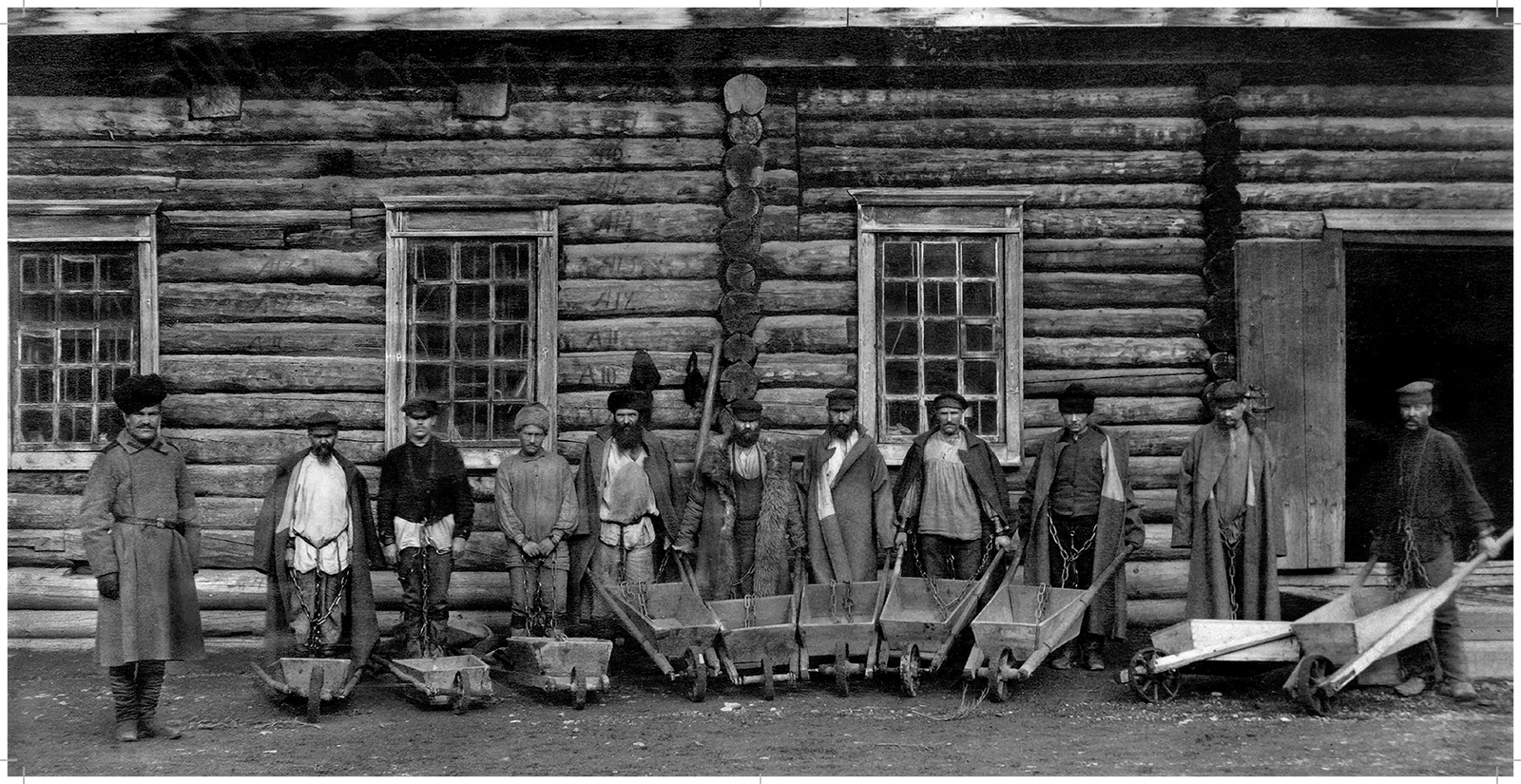
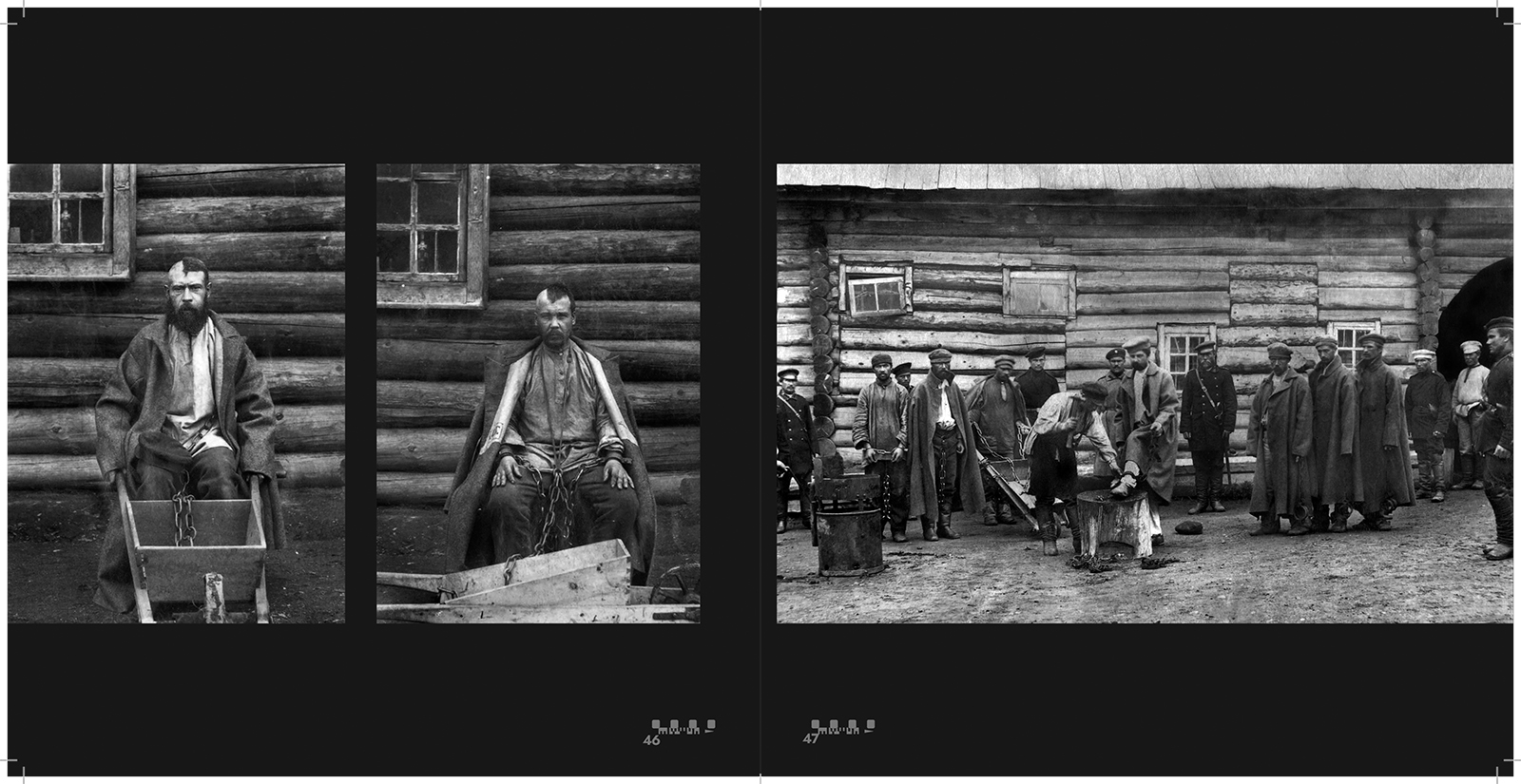
Prisoners of Aleksandrovsk-Sakhalin prison. As a punishment, some prisoners were chained to their wheelbarrows with which they were forced to sleep, among other things. Ordinary prisoners as a normaly chained shackled. 1890-1891. Photo by Innokenty Pavlovsky. Calamity Islands Book by Oleg Klimov

‘The rods punishment has, because of being used excessively, become supremely banal on Sakhalin, so that many are no longer repulsed or afraid, and they say there are quite a few prisoners who do not even feel any pain during the execution.’ - Anton Chekhov, Sakhalin Island. Moscow, Edition of 1895.
Chekhov made a list of stories for Pavlovsky to shoot. This becomes clear from the personal correspondence, in which the photographer asks to facilitate obtaining an official permit, to shoot in prisons and in forced labourers’ residential areas.

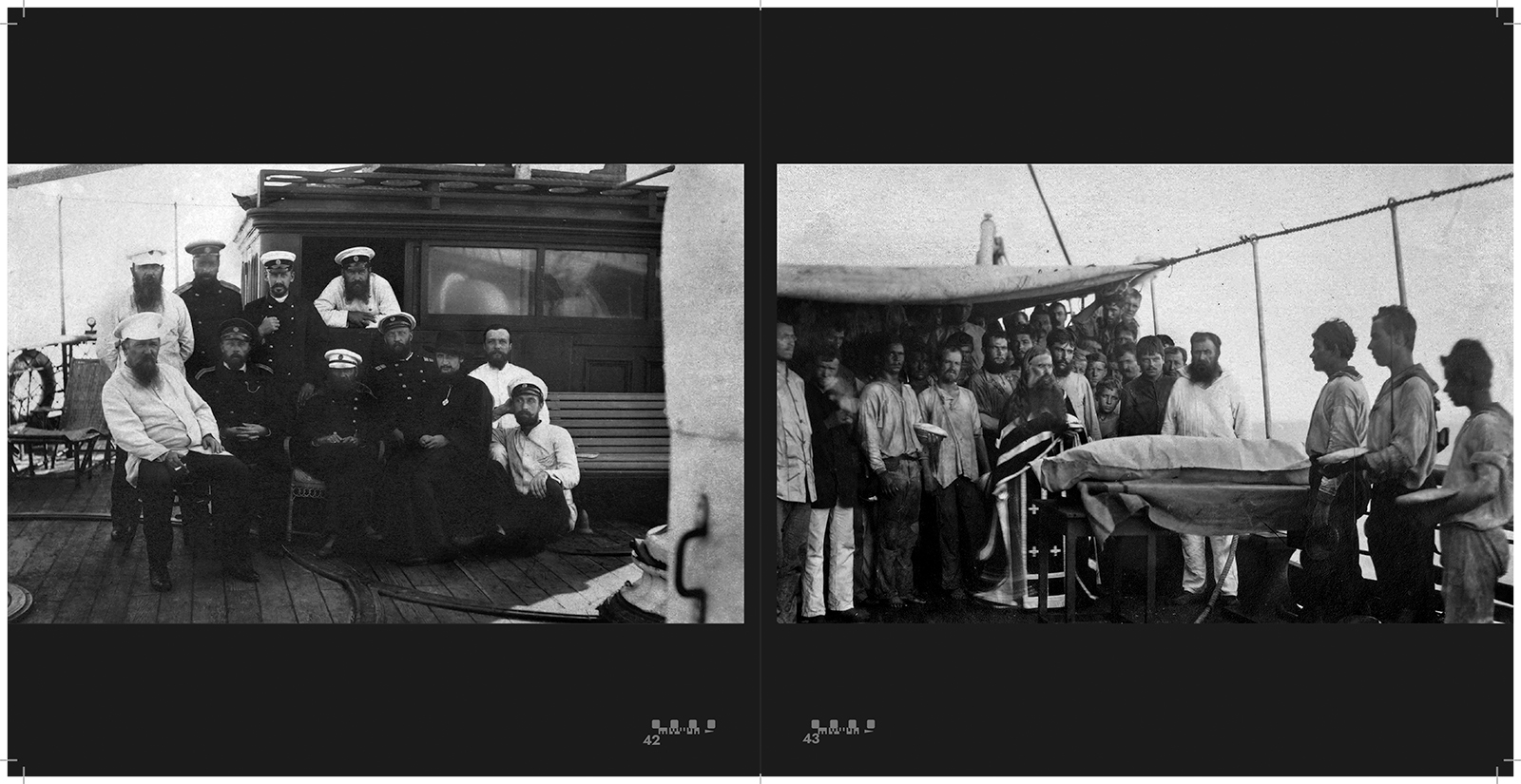
One more photography enthusiast is known, who left documentary evidence of the events that involved Chekhov. Alexander Shcherbak was the doctor a ship, called the Petersburg. The fifty days the two spent together, apparently, became the foundation for friendship. Chekhov’s letters corroborate that Alexander Shcherbak was the author of the photos made on board the Peters- burg that transported forced-labourers from Russia to Sakhalin. Originally, they were planned to be used to illustrate the first edition of the Chekhov’s book.
 
 (On the left) The crew of the ship Petersburg.1890-1891. Photo by Alexander Shcherbak. (On the right) The snapshot shows a sailor being buried in the sea. Photo by Alexander Shcherbak. Pages from the book Calamity Islands by Oleg Klimov
One of the snapshots shows a sailor being buried in the sea. A similar scene is found in the Chekhov’s short story Gusev, where two sailors have a conversation. One says to the other that if you die at sea, your loved ones will never know. The second sailor replies that in case of a death on board, the decedent’s name is written down in the logbook. The story prompted an examination of the logbook at the Petersburg, where in 1890 Alexander Shcherbak made his photo. The deceased was Ivan Chublinsky, a private with the Alexander Naval Company from the Sakhalin Island. He had been travelling home to Russia but on the way felt ill and died. As insignificant a detail as it may seem, one undeniable fact is that 125 years the photograph allows us to reproduce some elements of the story.

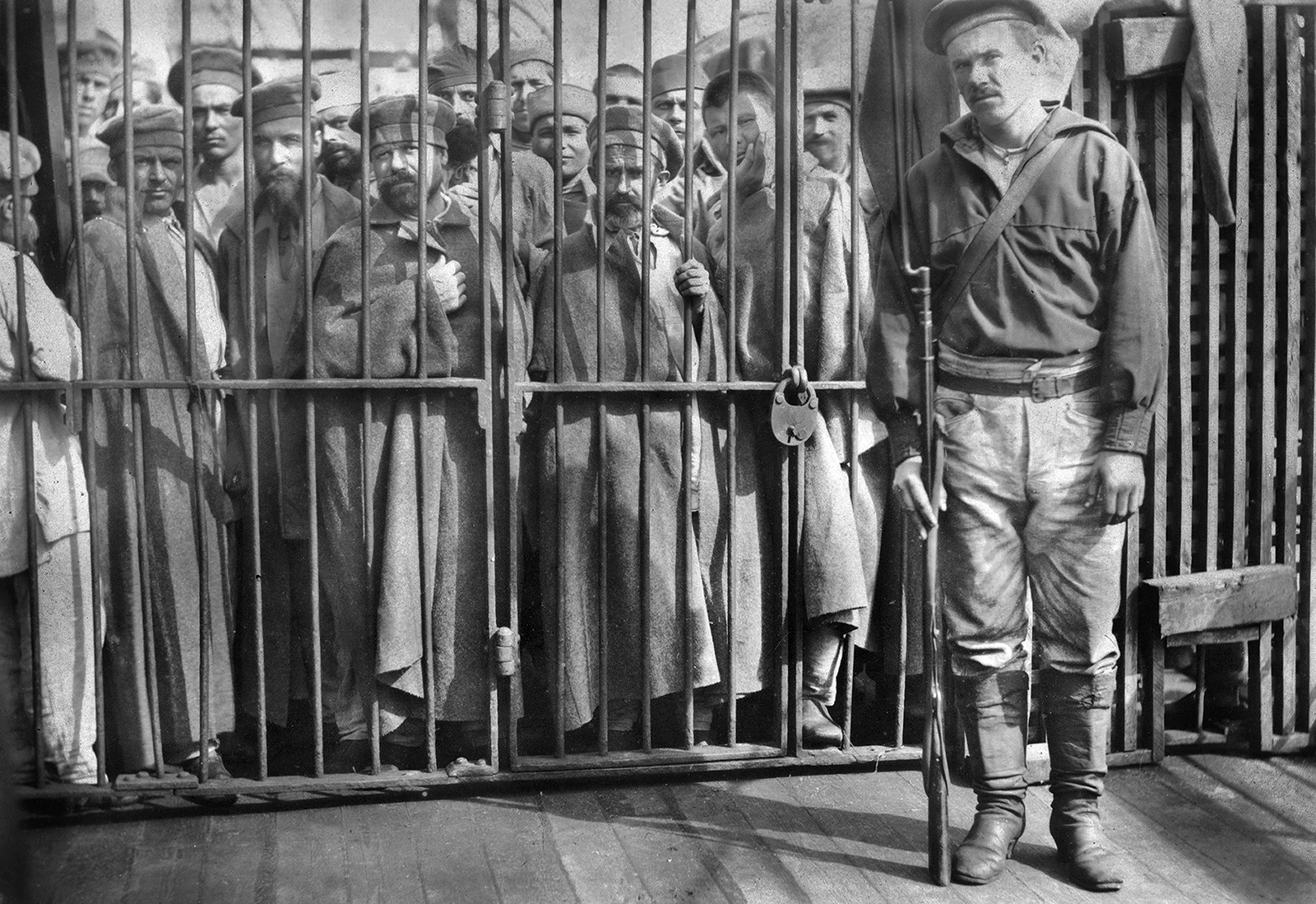
Convicts and a guard soldier on steamship Petersburg, which delivered prisoners from Russia to the Sakhalin penal colony. 1890-1891. Photo by Alexander Shcherbak. From Oleg Klimov's book Calamity Islands


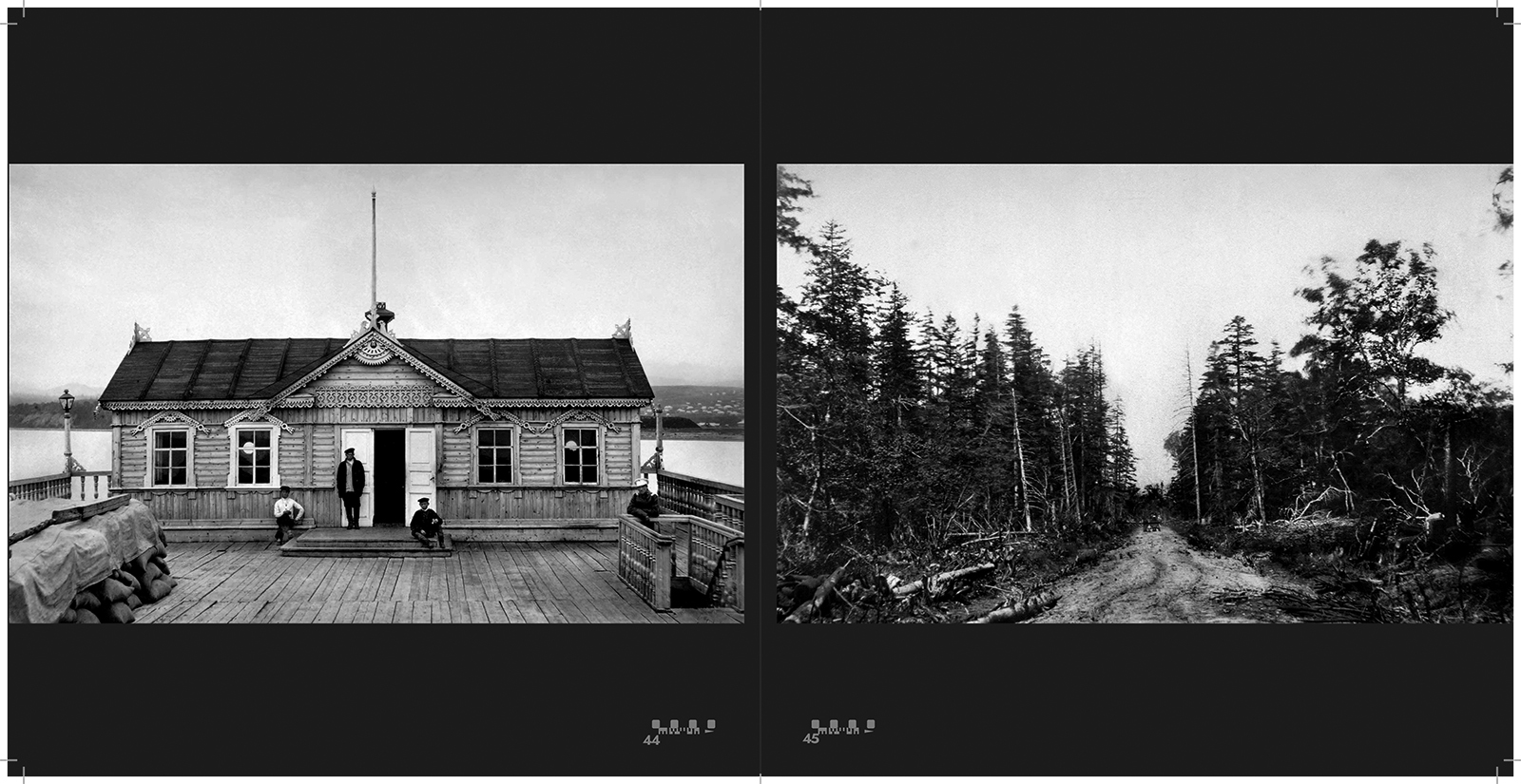
Despite the photographs having been published in none of Anton Chekhov’s Sakhalin Island editions, the writer’s ambition to illustrate his travels has provided us with unique documents of the Sakhalin prison colony’s day-to-day existence.
 

Oleg Klimov‘s Observation Diary, Sakhalin island, autumn 2015