
Every Authority Has Its Own Cemetery
by Oleg Klimov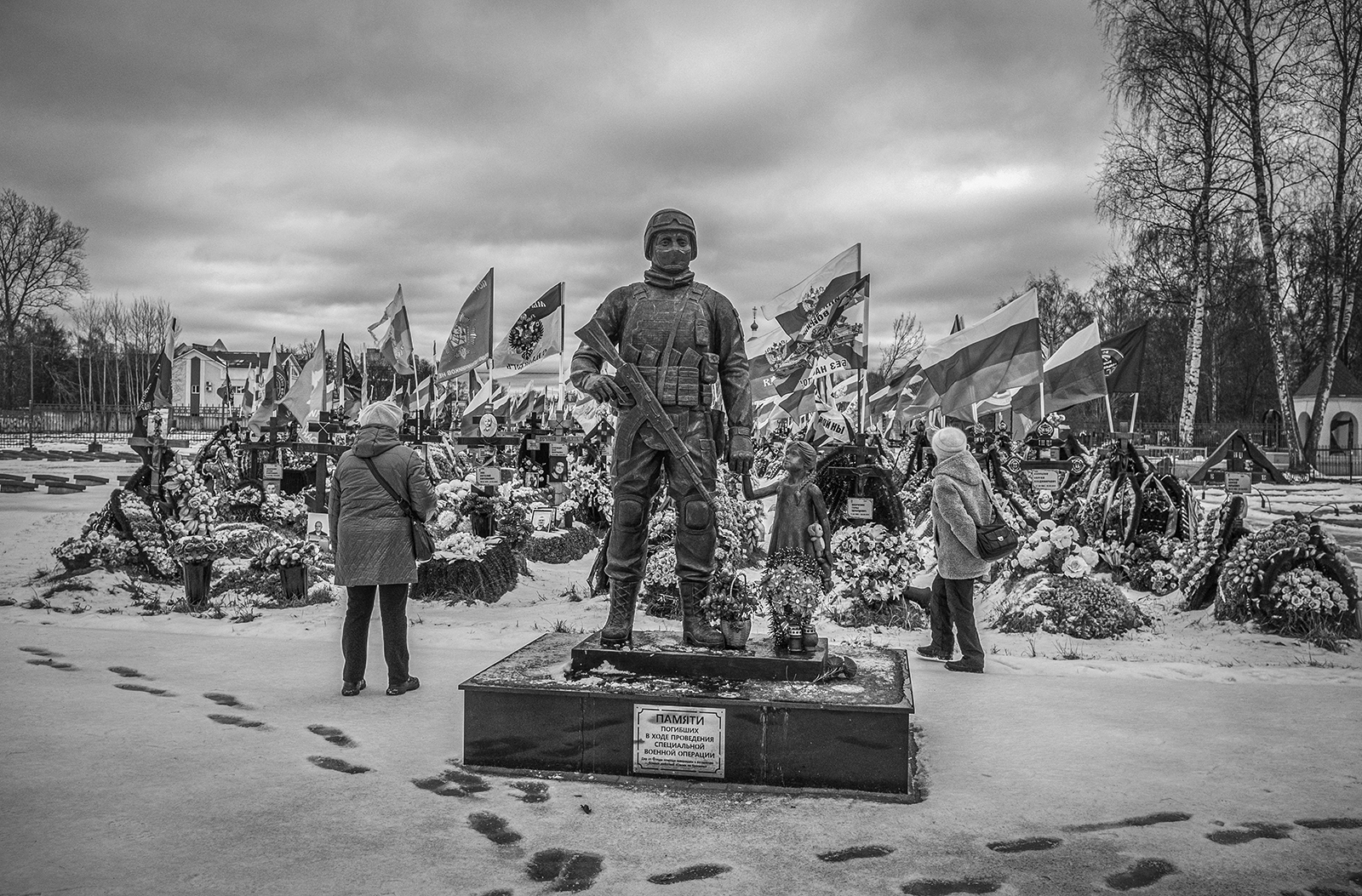
Unlike dramaturgy in the arts, life is shaped not only by form and content, but also by purpose—unless, of course, you are a samurai, for whom there is no purpose, only the path.
Perhaps that is why, when crossing borders, I always answer the standard question of Russian border guards in the same way:
— What is the purpose of your trip?
— I have no purpose, like a samurai. I have a path. Today, that path leads to Russia.
My answer usually causes confusion. Lacking either the time or the inclination to think it through, the officials most often turn to the next passenger:
“And what is the purpose of your trip?”
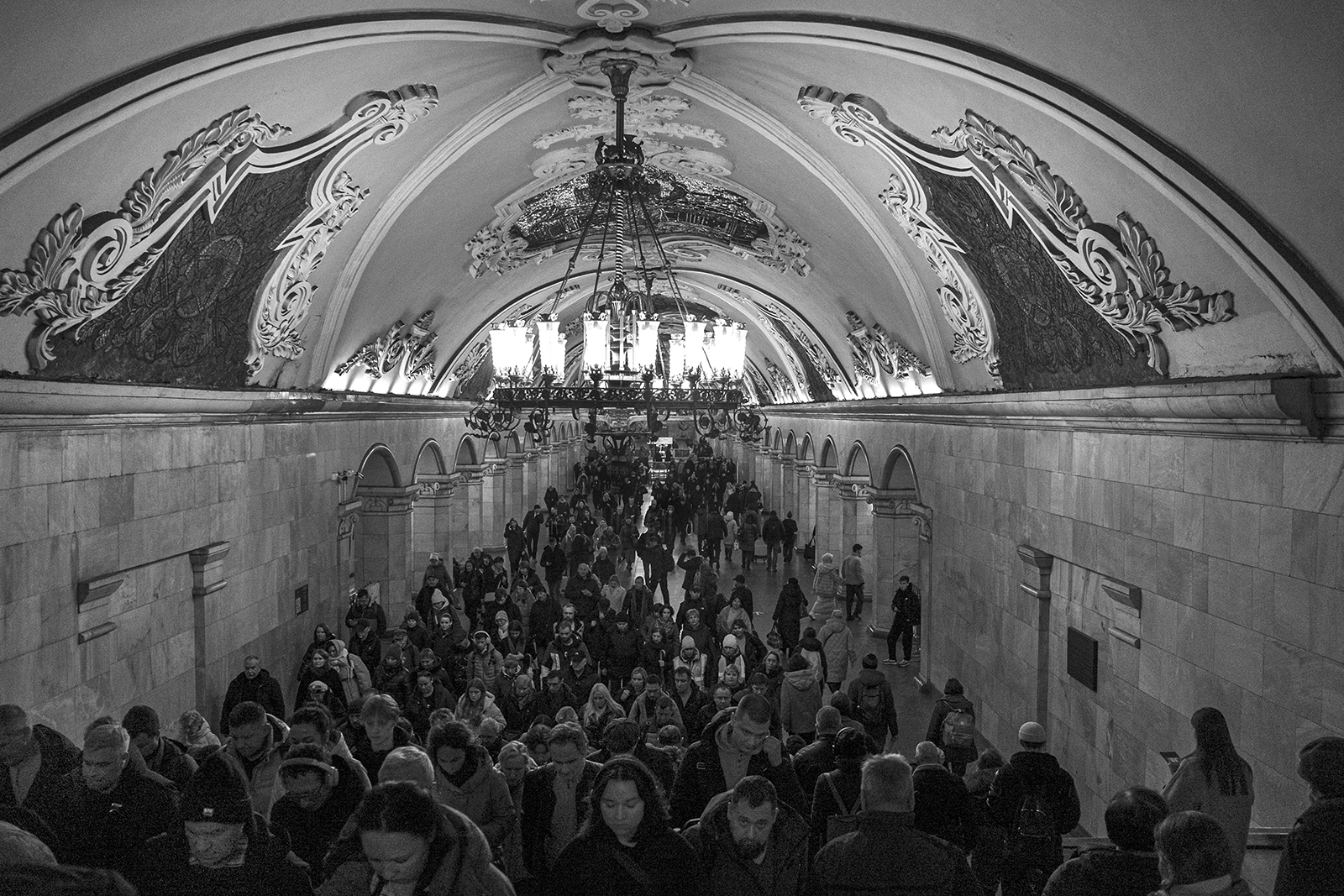
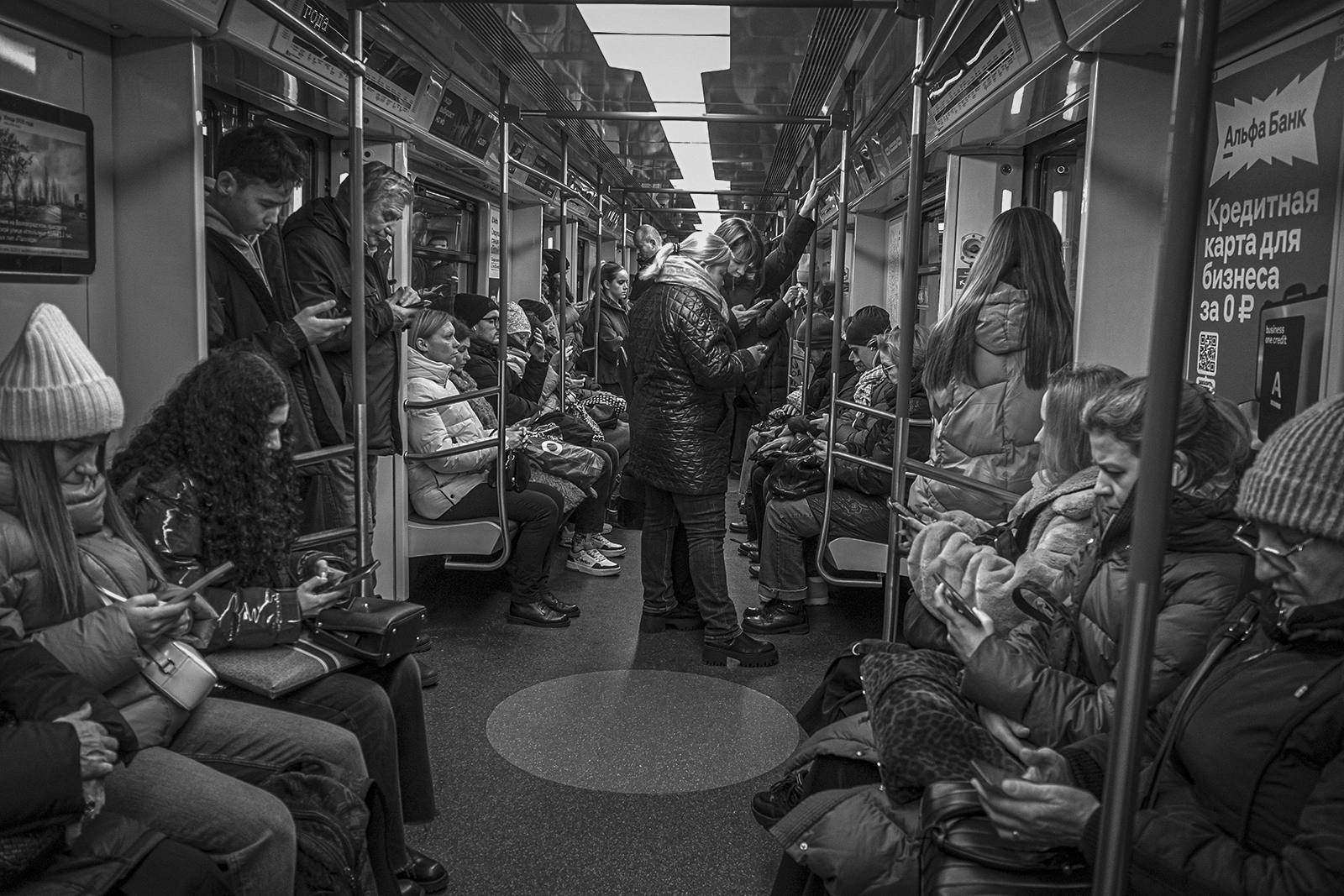
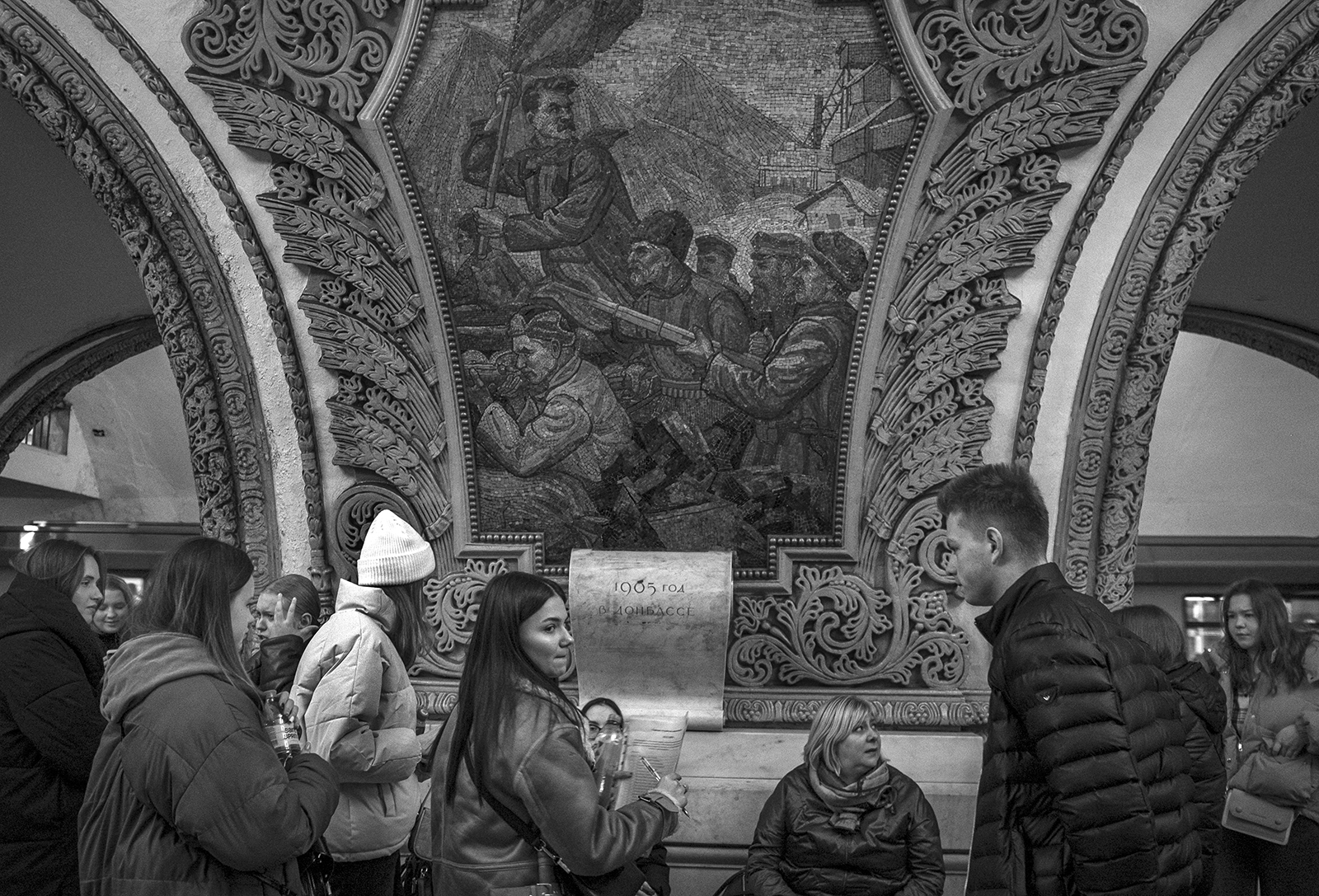
Moscow is neither a city nor a “state within the Russian state,” as many believe. Moscow is a kiot—a large glass display case used to exhibit valuable objects, high-ranking positions, and extraordinary individuals. Naturally, people want to live inside the cabinet. Some even choose a bunker. Some believe it promises opportunity; others are convinced it offers safety.
[Moscow has 470 kilometers of metro lines. The rest of Russia combined has only 200 kilometers. Moscow and its region occupy 0.3% of Russia’s total territory, yet 18% of the country’s population lives there. In 2026, the city budget plans to spend 52,400 rubles per resident in Yaroslavl, and 482,500 rubles per resident in Moscow.]
On the road into Russia, it is impossible to bypass the glass cabinet—and perhaps that is why so many remain inside it for the rest of their lives.
SUBSCRIBE TO RECEIVE NEW TEXTS AND PHOTO STORIES
BY OLEG KLIMOV
In a Moscow metro passageway, a young man was playing the guitar and singing plaintively:
“Beautiful faraway, don’t be cruel to me, don’t be…”
For some reason, passengers avoided him, even though he sat directly in their path. I stopped and began photographing him. When he finished the song, he said to me:
— Are you filming video? Let me sing you my own song!
— No, it’s a photograph, I replied.
— Then I’ll sing my song anyway.
It was a song about war—about a soldier in a muddy trench who dreams of returning home, a dream that will never come true. I don’t remember the words well enough to quote them, but I placed 500 rubles into his guitar case and said, “Thank you.”
From the metro to the train. A third-class sleeper carriage. A side berth. Lower. You can buy bedding—or lie down as you are. But if you stretch out your legs at a height of 183 centimeters, they will protrude into the aisle. People will walk by, and someone will inevitably bump into them. You’ll startle in your sleep, curl up instinctively, and maybe fall asleep again.
In Russia, you need to be short to travel in a third-class carriage—or to go to war. All tank crews are short; only the tanks are large. Tank crews suffer the fewest casualties, unlike motorized infantrymen with long legs.
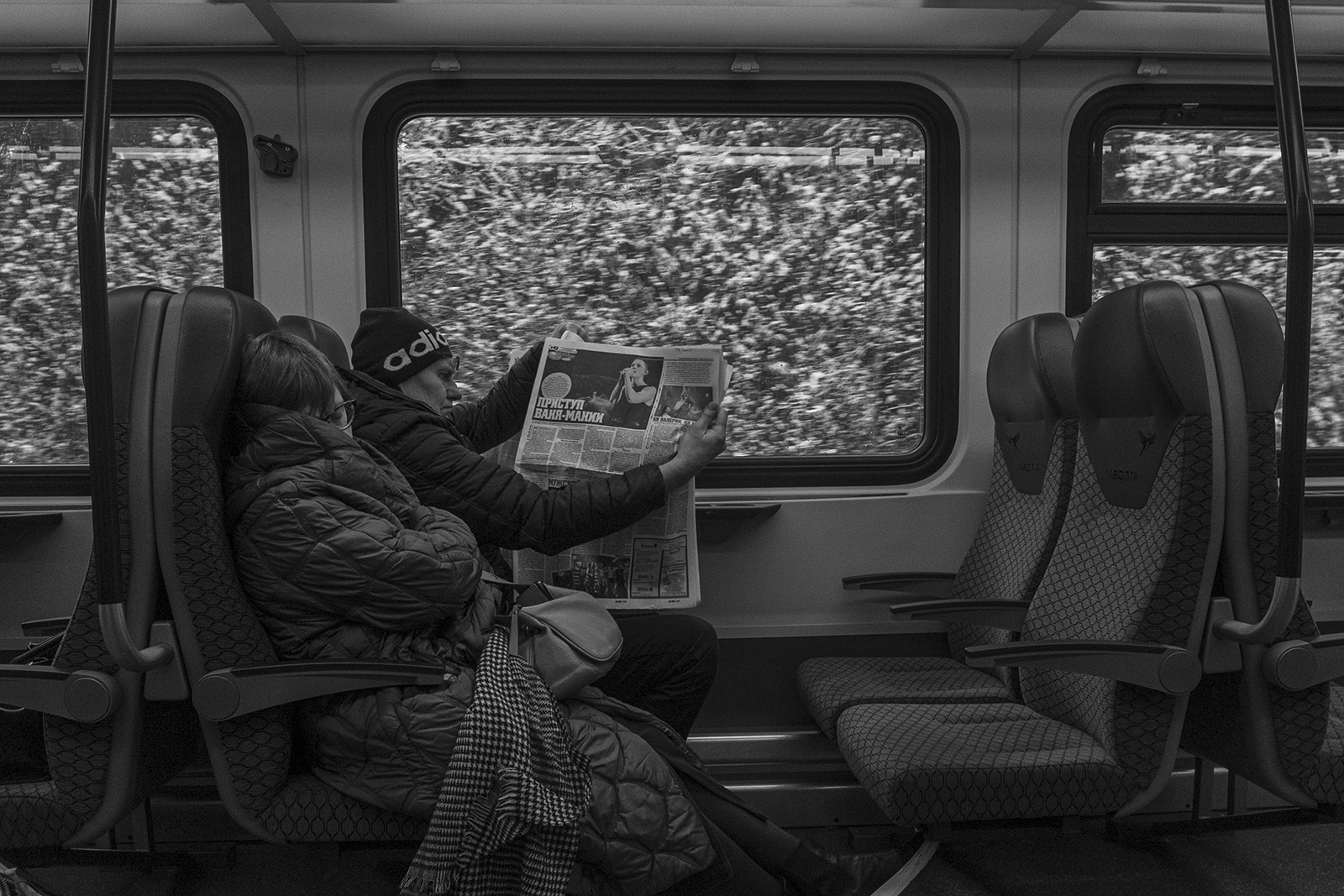
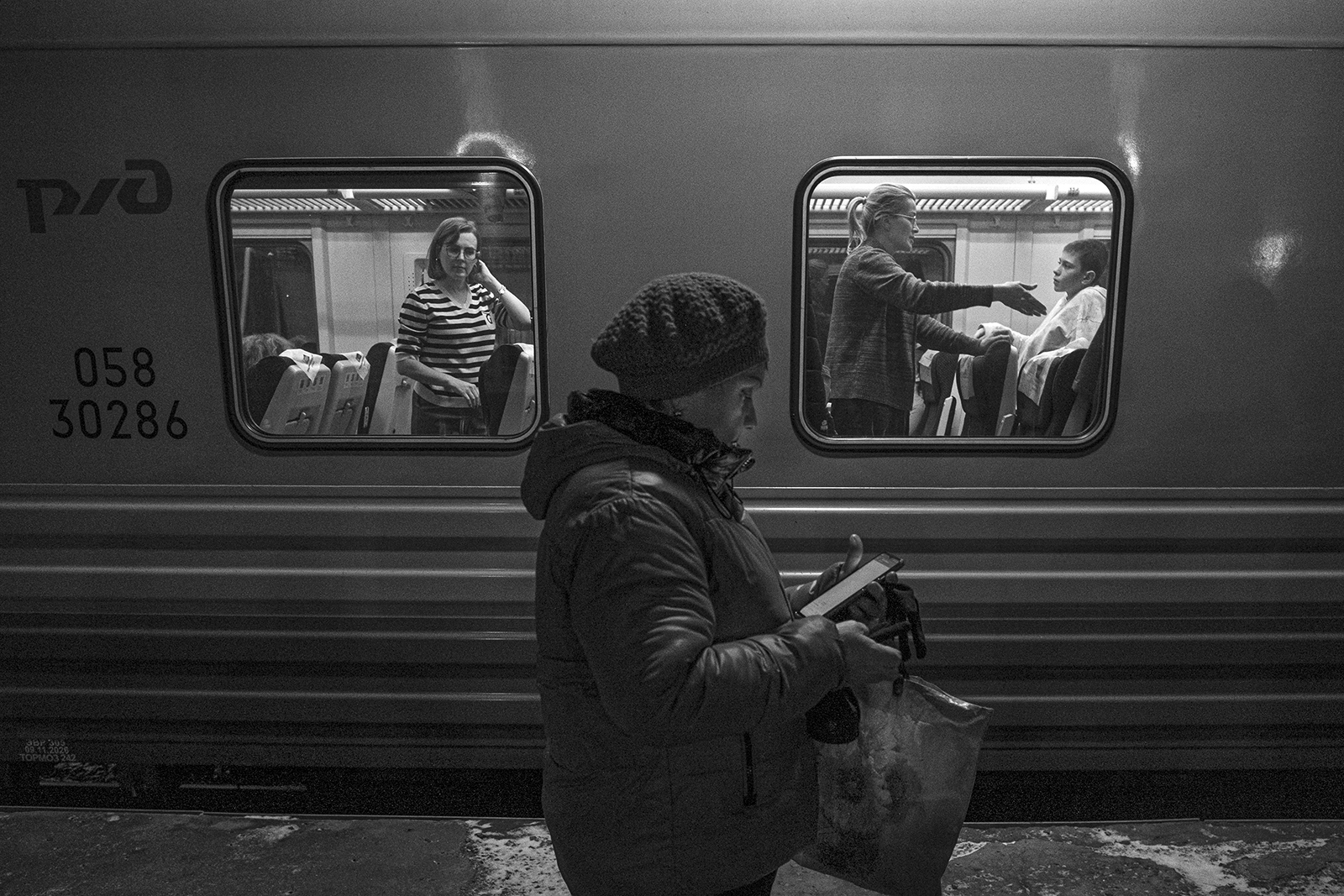
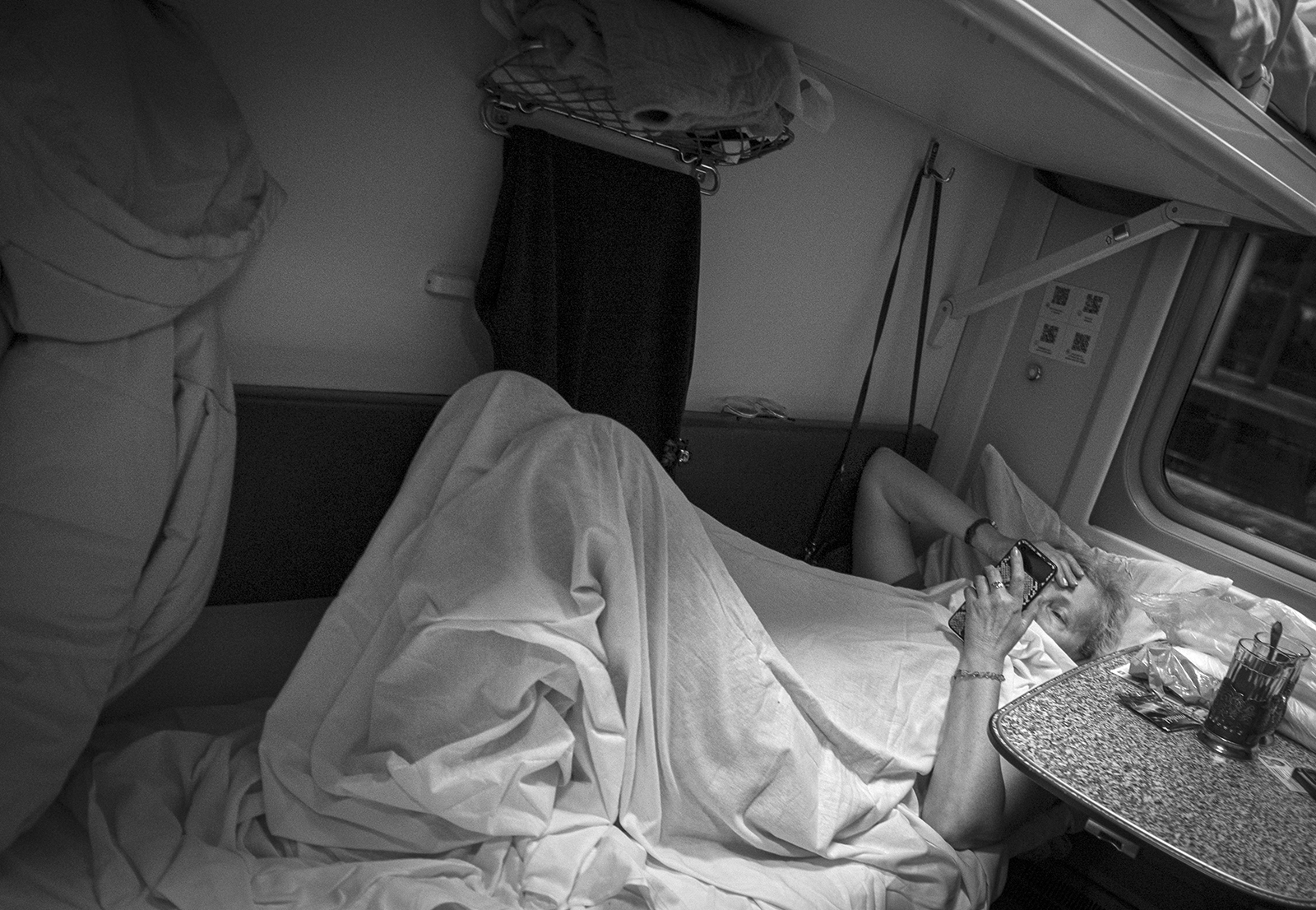
According to BBC investigations, during the so-called “Special Military Operation” in Ukraine, 1,613 tank crew members were killed, compared to 14,549 motorized infantry soldiers. (Source: BBC)
— Do you have internet on your phone? a woman in her seventies asked me in the carriage.
— Sometimes.
— Could you send a message to my daughter in Kyiv? she whispered. My phone doesn’t work—I crossed the border recently and they blocked it. They say a new law came out—something about drones. Phones stopped working.
— What message should I send?
— Tell her I’ve boarded the train and that I’m fine. From Moscow I’ll go straight to Mariupol.
— Where are you coming from? I asked.
— Oh, I’ve been traveling for a month. We’re from Mariupol—Ukrainians. Our children left long ago for Kyiv to study; we stayed behind. I went to see my daughter: first by train to Moscow, then to Minsk, then by bus to Warsaw, then from Warsaw to Kyiv. Now I’m heading back. My husband is home alone. He’s waiting. Complaining. Says no one cooks borscht like I do—though he never used to say that.
— So you have two passports?
— Yes. Ukrainian—and I recently received a Russian one. I went straight to my daughter after that.
— You know that sending messages to Ukraine from Russia is dangerous? You could go to prison, I said, smiling.
— I know. But I asked you because you helped me onto the train and lifted my heavy suitcase. I didn’t ask—you just did it. You didn’t know I was Ukrainian. If you had known, would you still have helped?
— Of course, I laughed.
Russia. Nothing special. Walk and eavesdrop. Observe. This is not journalism. You don’t get labeled a “foreign agent” for it. Anyone can do it.
That’s the kind of country we have—where not only does no one see anything, but no one knows anything either.
Early in the morning, at the entrance to Yaroslavl’s main railway station, a man in his forties, wearing camouflage and visibly drunk, staggered up to passersby. He saluted them in a military manner, right hand to his head, and demanded:
“Give me a good cigarette—I spilled blood for you!”
People avoided him or pretended not to hear or see to whom this strange man was offering his “honor” and what he demanded in return. Some, however, took out a cigarette and handed it to him. The man examined it carefully, turned it over, broke it in half, tossed it into the air, and moved on:
“Give me a good cigarette—I spilled blood for you!”
Eventually, he seemed to tire of it. He stood in front of the bus I was sitting in, raised his arms, and screamed hysterically:
“You fucking bitches, give me a good cigarette! I spilled blood for you at war!”
Then he dropped to his knees, bowed his head to the asphalt, and burst into loud sobbing.
The bus drove on. The passengers sat in grim silence, pretending they saw and heard nothing. I simply thought: like the samurai, he probably had no goal of obtaining a “good cigarette.” This was his path.
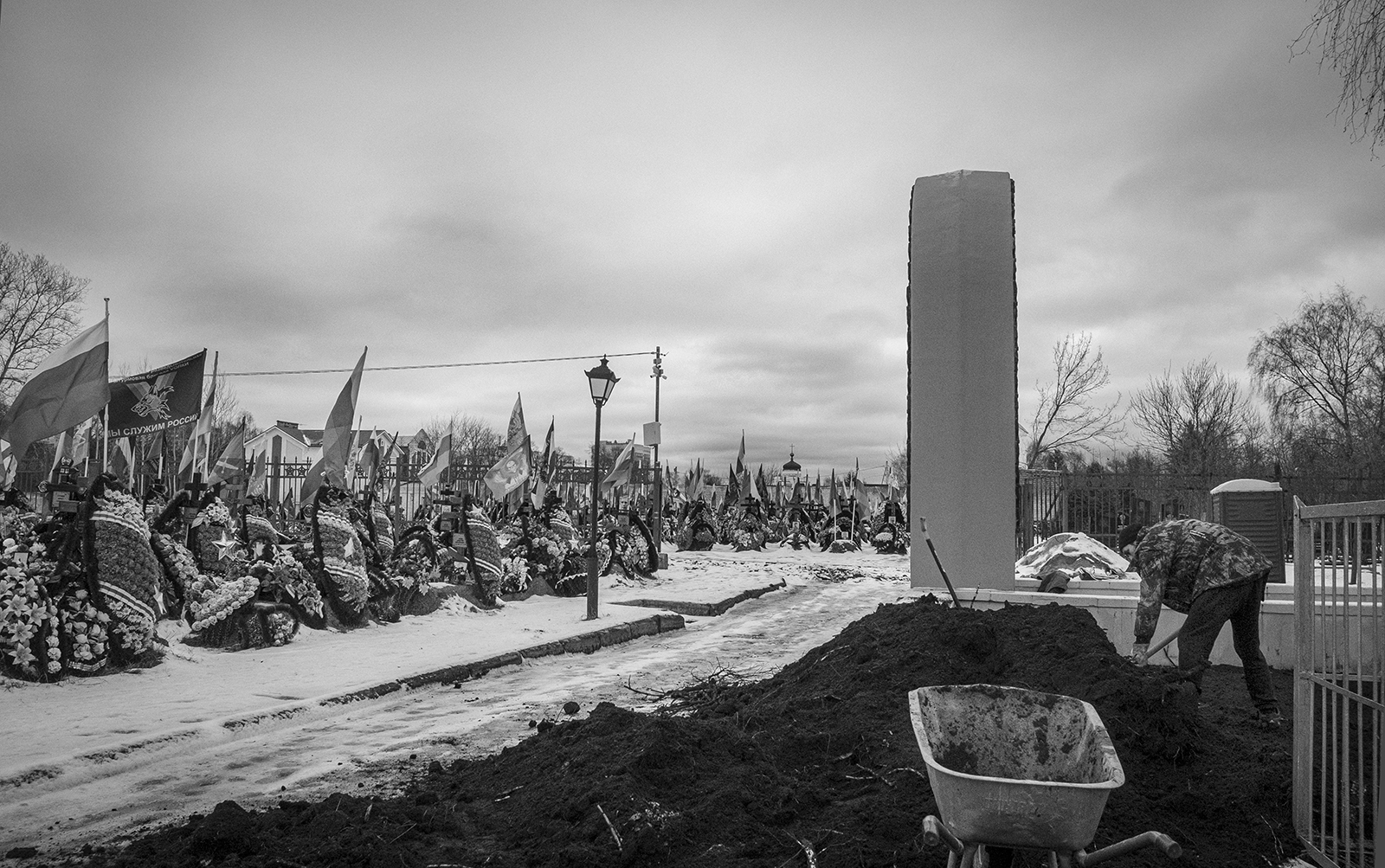
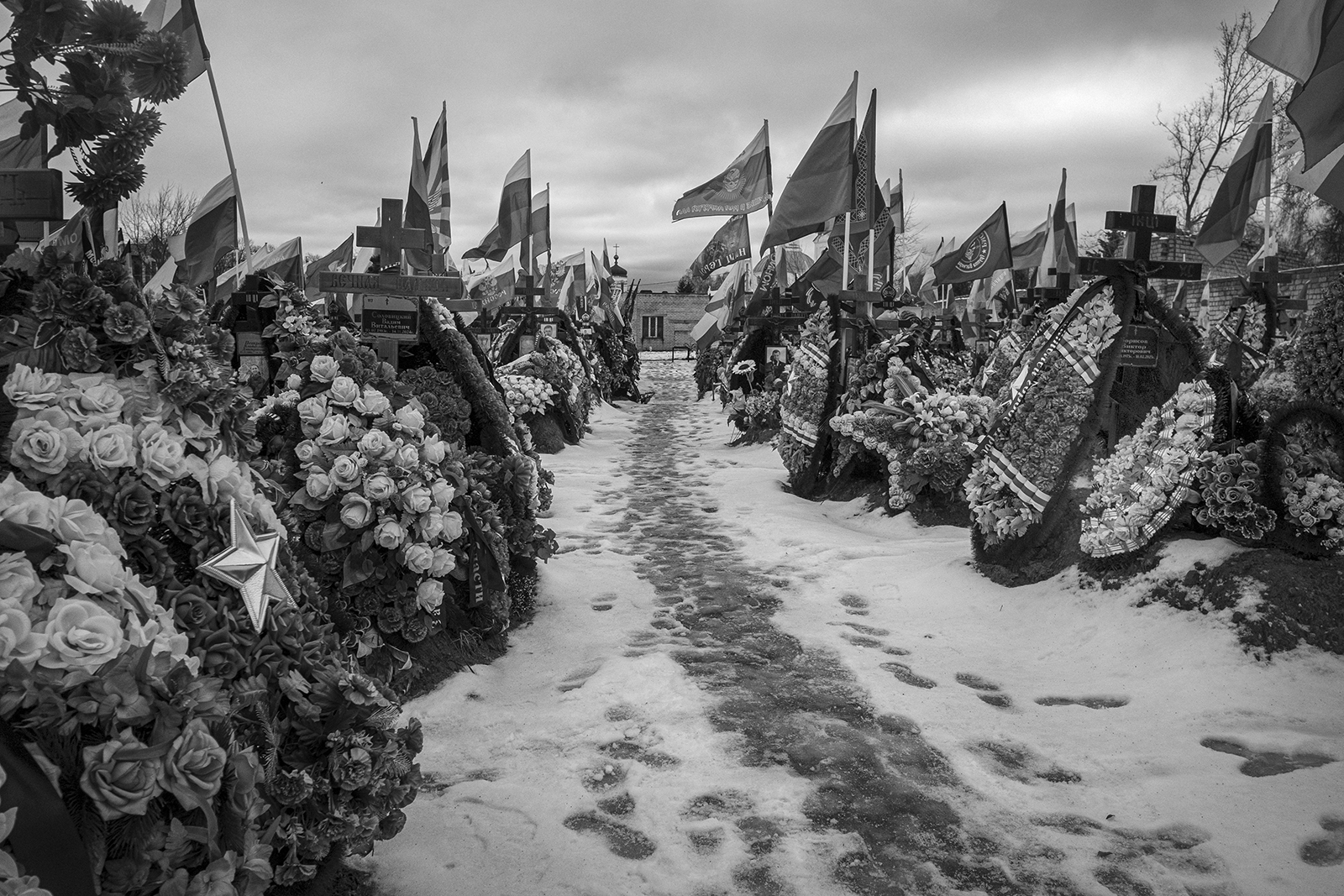
Yaroslavl is an ancient but provincial Russian city. Like many Russian cities, it resembles one large apartment building in which someone has recently died. As is customary in Orthodox tradition, a coffin lid with a cross and wreaths—plastic flowers, black-and-red ribbons with sentimental farewells—stands by the entrance.
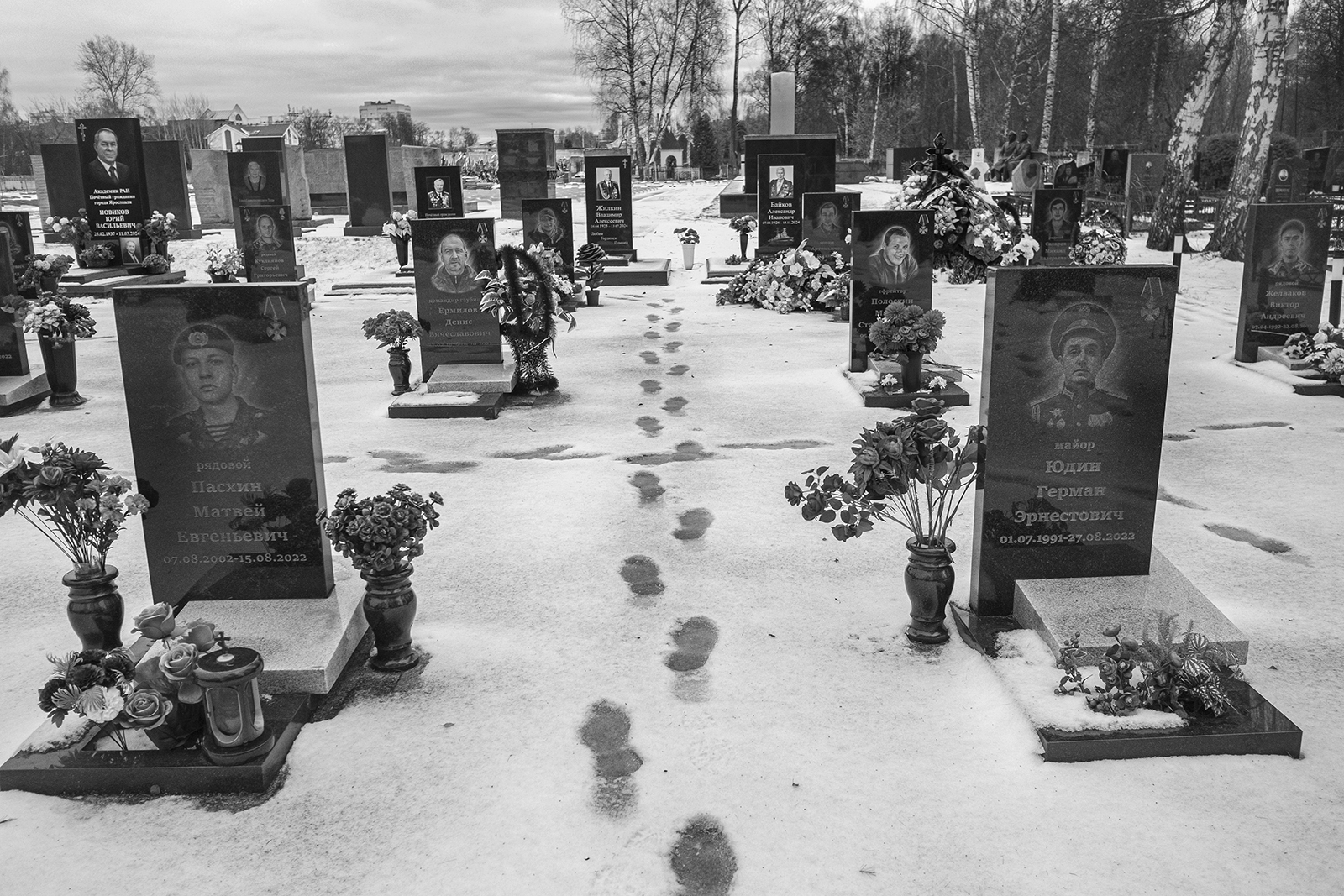
Not far from the station is a cemetery. You read the epitaphs: “beloved,” “dear,” “noble,” “heroic”—all “good.” And you want to ask: where, then, are the “bad” ones buried?
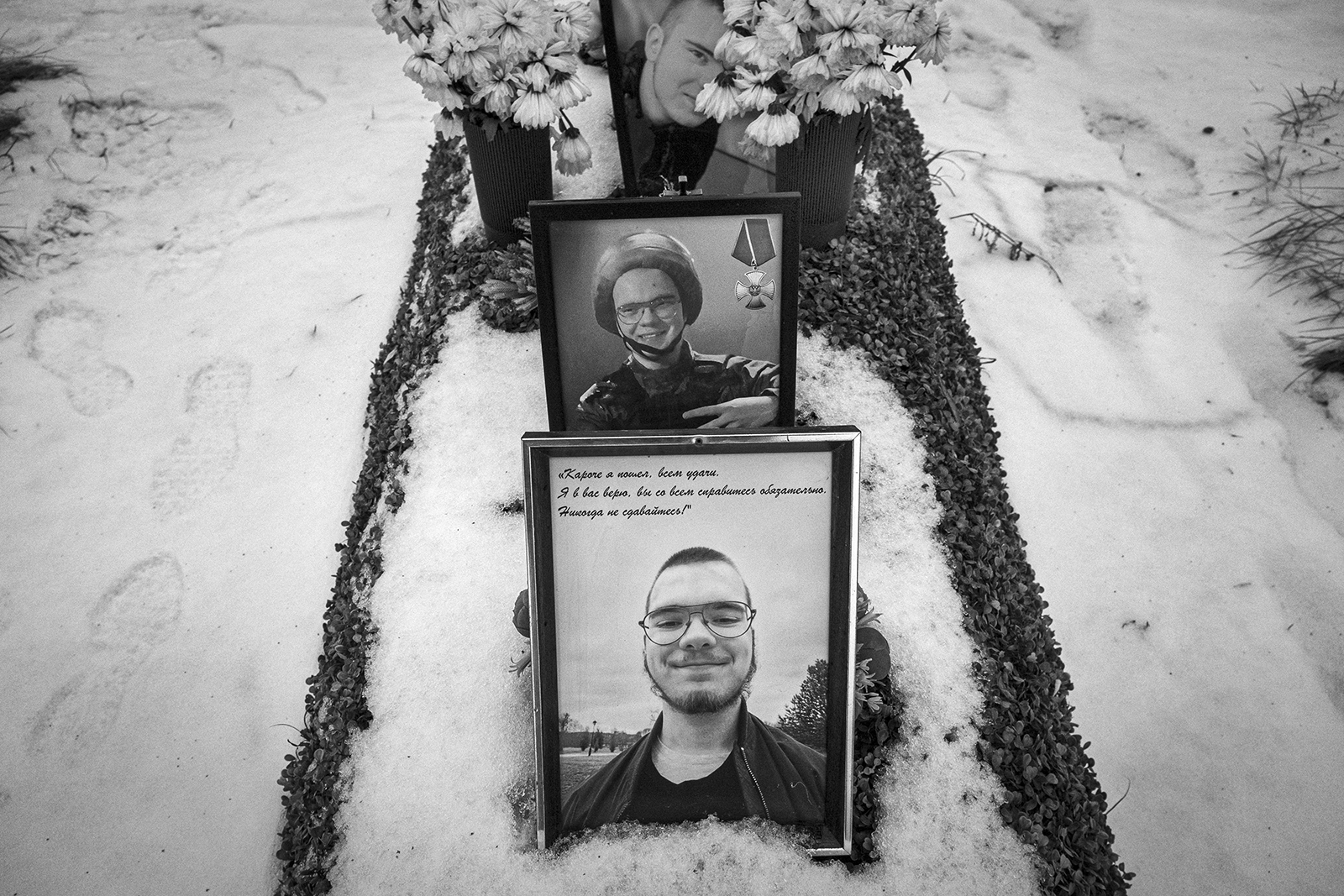
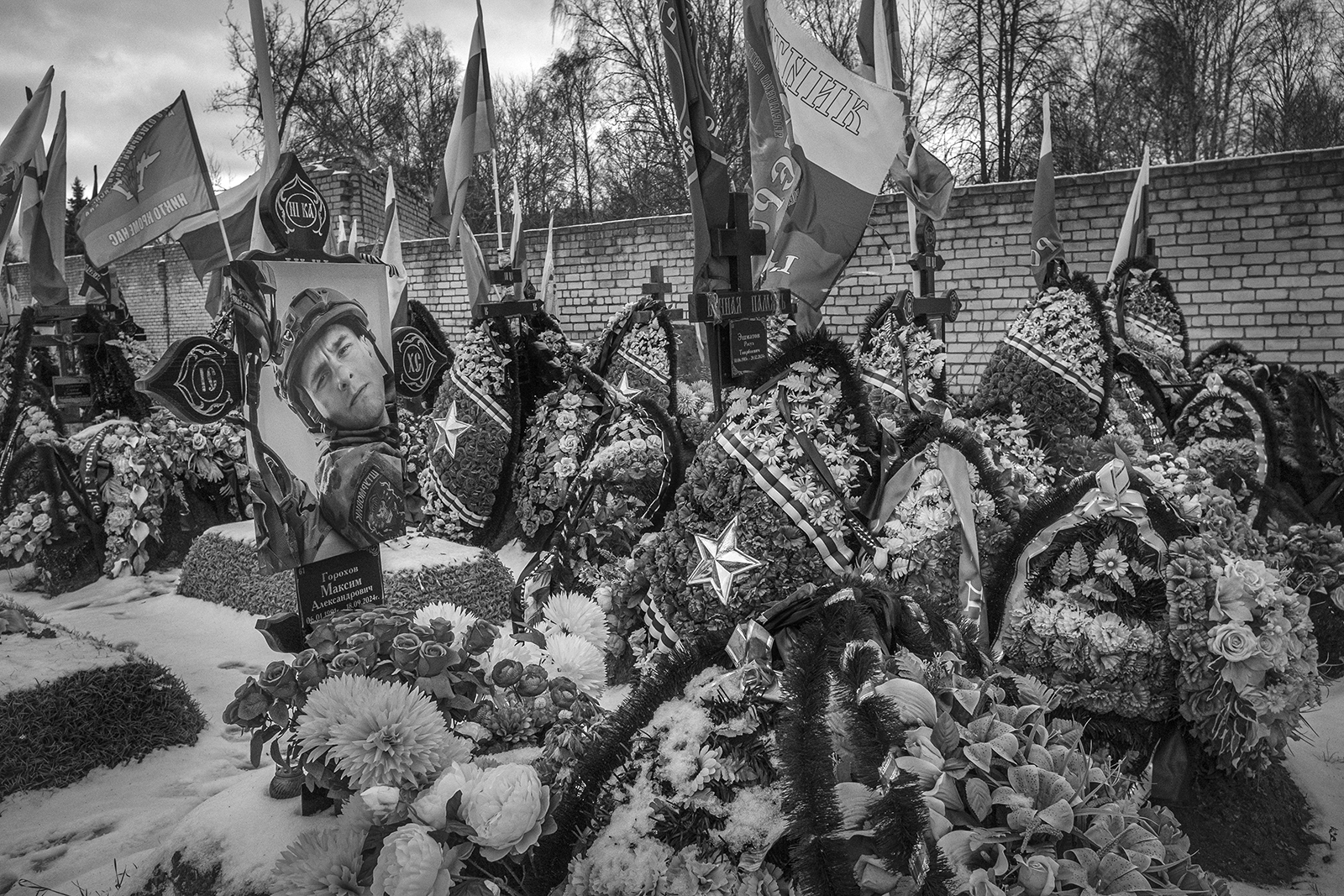
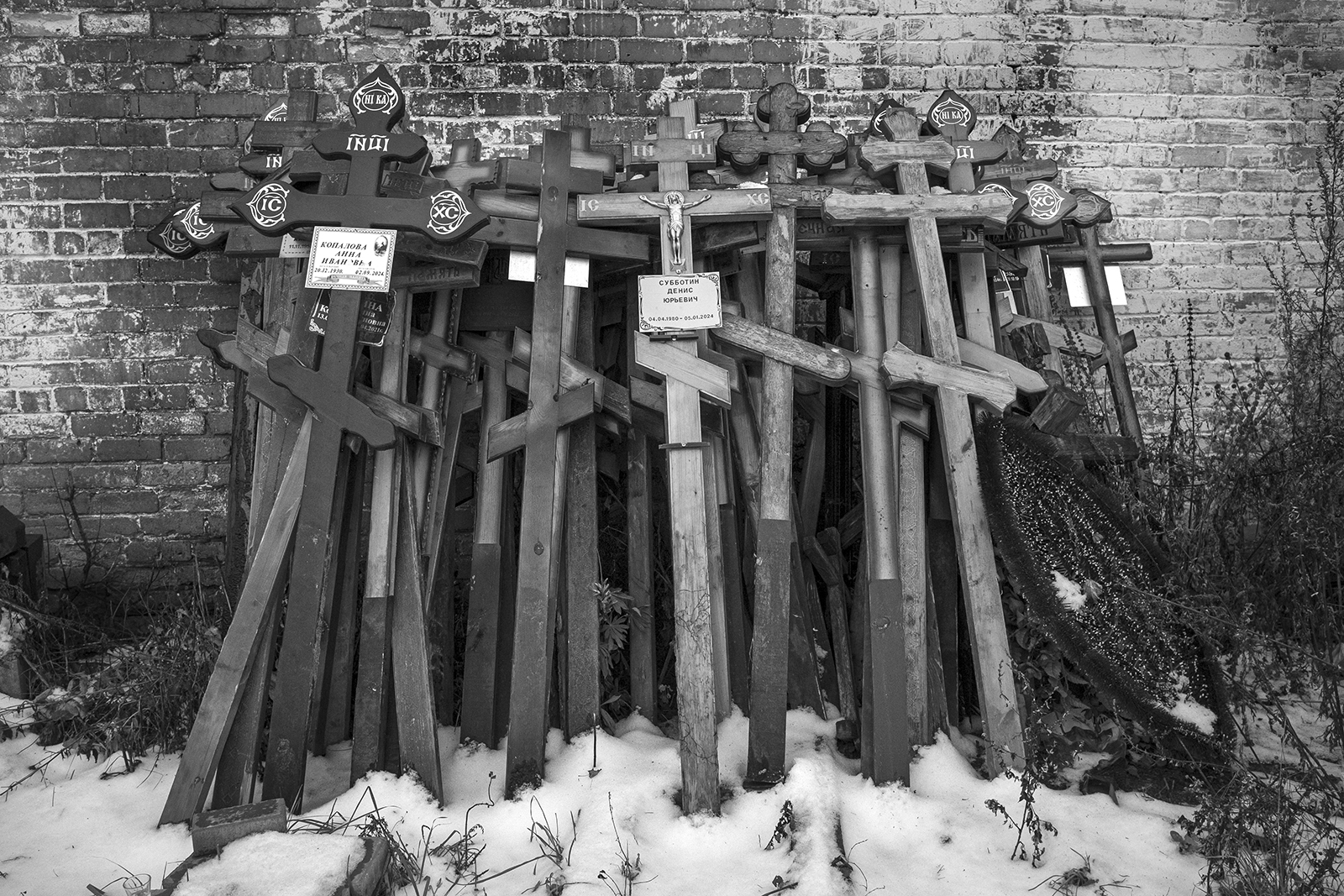
They say that a nation can be judged by its grave crosses, tombstones, and epitaphs—by its nobility or ignorance. I wandered through the cemetery for so long that a guard grew suspicious and began following me. Eventually he approached:
— Are you looking for someone?
— If I am, then for myself, I replied sharply.
— Don’t joke like that—this is a cemetery, he warned.
— It’s irony, not a joke. Forgive me.
— Were you at the Special Military Operation? he asked cautiously.
— No. But I’ve been to other wars. They’re all alike: soldiers, refugees, the dead. Even the smell is similar—not the smell of the dead, but of the killed. Like here.
— There aren’t one but three cemeteries here, he said. SMO No. 1—when it all began, the first year. The crosses have already been removed; tombstones installed. SMO No. 2—crosses gone, wreaths removed, graves leveled; tombstones will come soon. And this one—SMO No. 3—fresh graves from this year.
— How many?
— I didn’t count exactly. Around 420. That’s just city residents. Rural ones are buried back in their villages.
— They’ll merge them all?
— Yes. With the WWII, Afghanistan, and Chechnya cemeteries. A single military cemetery. That’s the plan.
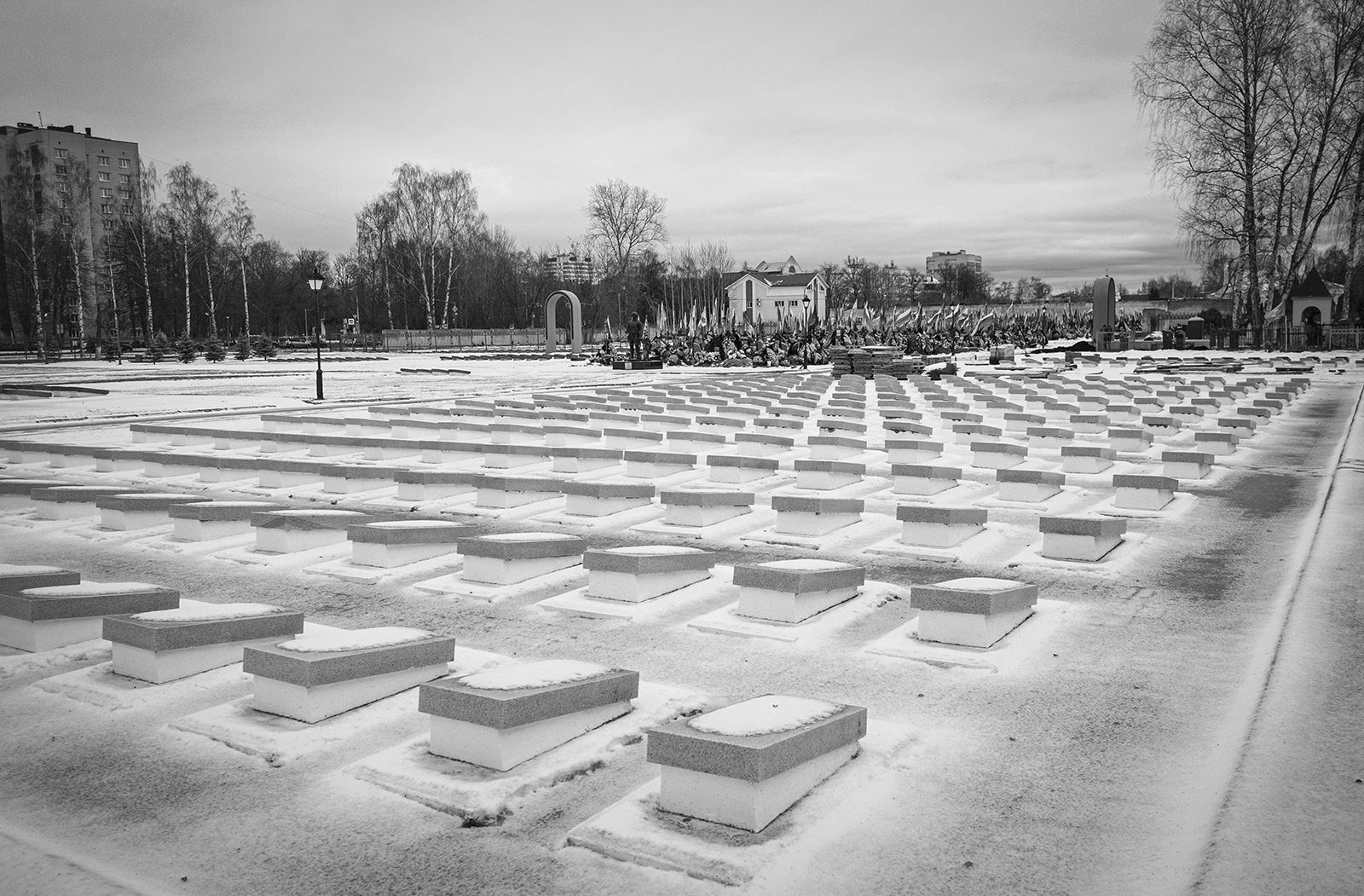
Surprisingly, we ended up walking through the cemetery together—the guard with his mission to protect, me with mine: to observe and listen. And then I understood why there would eventually be only one cemetery for all the dead. By 2027, we are not meant to remember that every authority has its own cemetery: Afghanistan, Chechnya, and now the SMO. We are meant to remember only one—the cemetery of heroes of the great patriotic wars.
A woman around forty stood where migrant workers had leveled the graves. She placed flowers on the bare ground, smoked for a long time, and cried.
— Someone close is buried there? I asked.
— Her son. Eighteen. Killed at the very beginning. She comes almost every day. The grave is gone, but she remembers where it was.
The guard was called away and left without saying goodbye. Perhaps one does not say goodbye in a cemetery.
It grew dark quickly. I left too.
I bought cheese, bread, cigarettes, and a bottle of dry red wine. At the checkout I said, for some reason, “Sorry, this is my dinner.” The cashier smiled:
“That’s an artist’s dinner. So I gave you a discount.”
It seemed to me she liked artists more than soldiers. I went to eat in my hotel room, in a hotel with the alcohol-free name “Limonade.”
A cemetery is not a hotel—it is a house of memory. Every authority seeks to create its own space of death and its own “hero,” erasing the inconvenient traces of previous eras.
The recent history of Russia follows a quiet but precise pattern: each political cycle, each regime, leaves behind a military cemetery.
Afghanistan was the cemetery of the late Soviet Union. Chechnya—the cemetery of the transitional era. Today’s SMO burials are the cemetery of the current power.
These necropolises are not connected by ideology or official explanations. What unites them is simple: the state consistently consumes the lives of those it calls its citizens, then attempts to merge all burials into a single “military space,” erasing distinctions between wars, motives, and generations.
Creating a unified military cemetery is not merely an administrative project—it is a politics of memory. By uniting graves, power seeks to unite meaning, presenting all victims as part of one great heroic tradition. Specific causes disappear, responsibility dissolves, and personal human tragedy vanishes into ritual.
But if you look at these spaces without official inscriptions, one thing becomes clear: every regime has its own cemetery. And it speaks more truthfully about that regime than any monument or slogan.
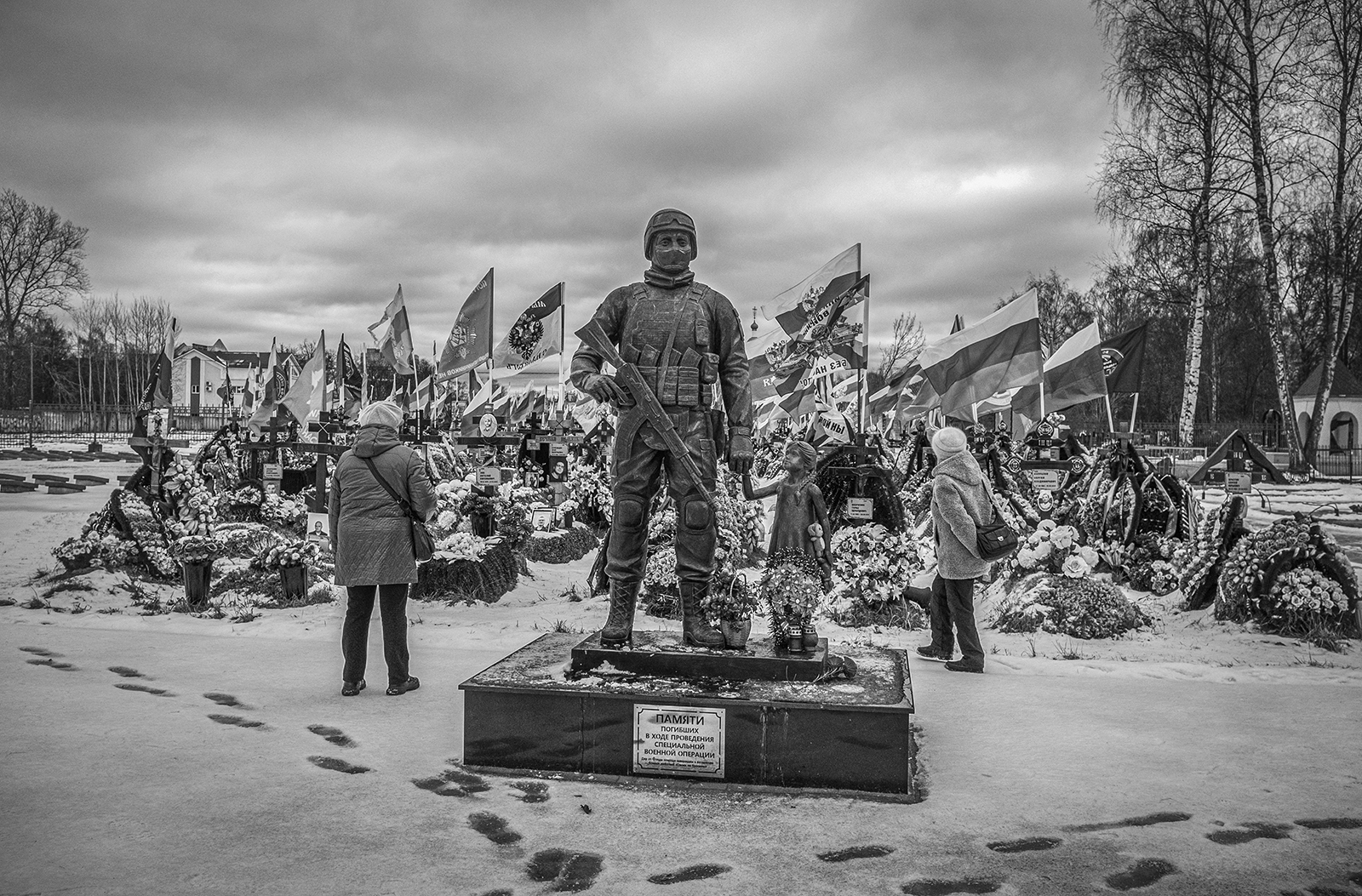
Power can level the ground, remove crosses, install identical stones—but it cannot erase human loss.
Each era has its own logic of death.
Each political regime has its own dead.
And as long as history is built not on reflection, but on absorption of past catastrophes by newer ones, each new cemetery will simply be added to the previous—without lessons learned.
Oleg Klimov
Photographer’s diary, December 2025
Share information — help keep the world free: