
Mr. Soros, Where Are My Crates?
by Oleg Klimov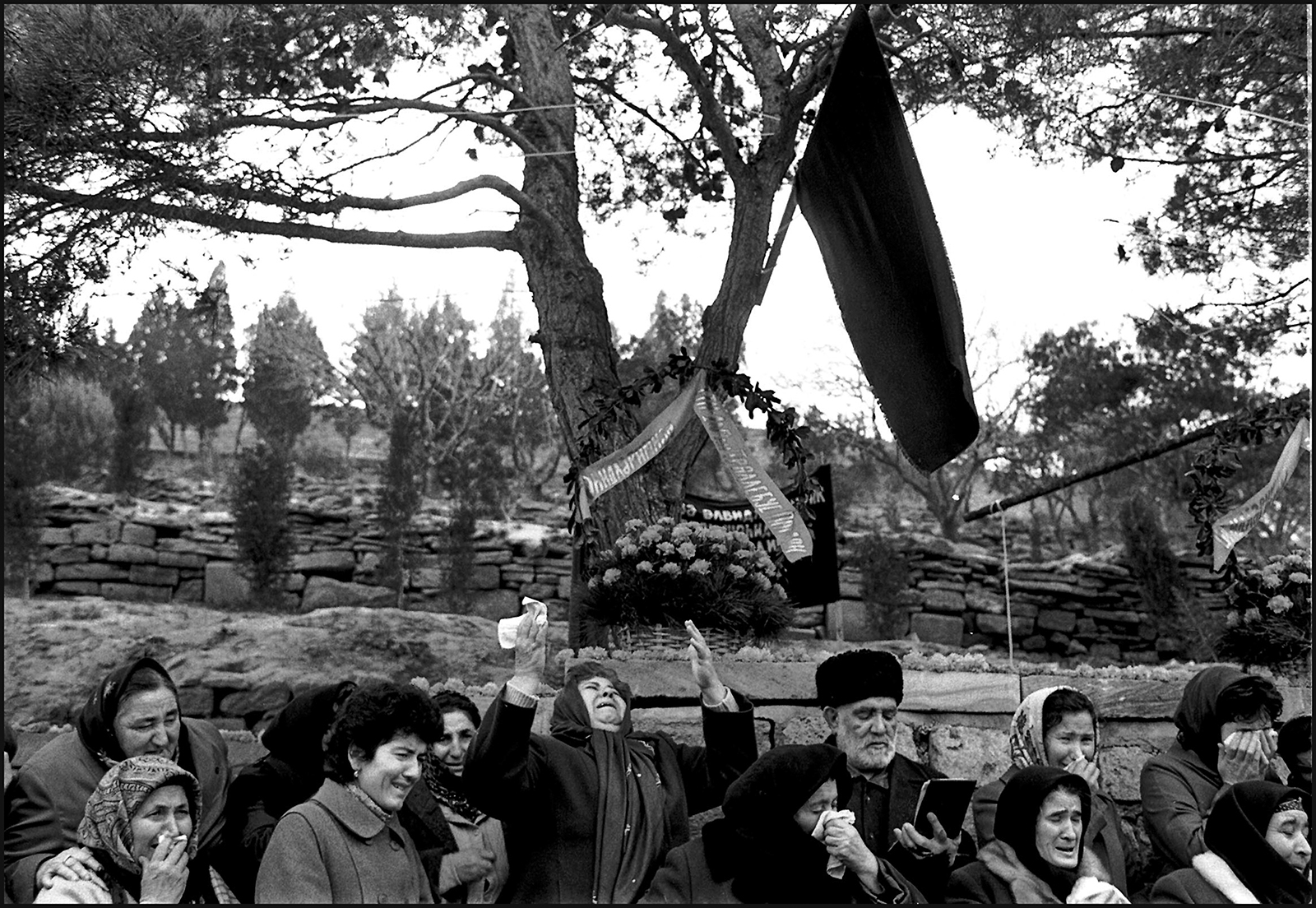
On War, Humanism, and Three Wooden Coffins
Today I dreamt that I had gone mad.
That happens, apparently, not only in sleep but in waking life as well. It is a strange sensation — complete insanity — and yet some fragile awareness still lingers, just enough to grasp one thought: you have gone mad.
Suddenly it feels as if everything you once understood, everything you lived through — your memory, your very essence — is slipping beyond the borders of your skull. And all you feel is a slight dizziness, and an immeasurable emptiness, tinged with regret. Consciousness has not entirely left you; it clings somehow to the edges of your head — to your ears, to your nose — but it is already uncontrolled, ungovernable, free. An astonishing state.
Or perhaps it is not consciousness that is leaving, but your soul, ready to leap out of a body it has grown tired of inhabiting. Who can say?
Before that, I had crossed seven time zones, endured a change of climate, a few stresses and a mild depression, reached the shores of Japan — and returned to Moscow.
It was cold. My car stood parked by the roadside with a shattered window. I was asleep and dreamt that clocks were running backward, that East had become West and North had turned into South, that rivers no longer flowed into seas, but seas were now returning to rivers. That hooligans had smashed my car window and stolen my favorite music discs.
I tried to understand all this as reality, but I could not — my consciousness was slipping away. And just before waking I had time to think: My God, I’ve gone mad.
In Moscow, West was still West. East remained East. Time moved clockwise. Rivers flowed into seas. Only the car — as if from a nightmare — still stood by the roadside with its broken window, and my favorite music discs were gone.
What is reality and what is not? A thin red line — step one way or the other, and on both sides there is an abyss.
At that time, Soros’s staff had purchased a magnificent mansion on the Moscow River embankment for an astonishing sum. Soros himself was reportedly surprised — and concerned — about the extravagant spending of his personal funds on Moscow real estate. In any case, his visit to Moscow was expected for the first internet conference and the opening of my “humanist exhibition” about the wars of the turbulent 1990s across the former Soviet Union.
Partly it coincided with my own desire to stop photographing war and to do something else. I planned to travel along the Volga. To photograph water instead of fire.
In other words, I agreed. It became my first solo exhibition in Moscow.
Before that, however, the Moscow board of the Foundation gathered around a large table in the riverside mansion to decide how to construct the exhibition, how to invent a unified concept… of war.
There were many discussions — mostly about social and political aspects rather than photography itself. I remember feeling somewhat alien at this “war council.” I do not recall who exactly, but one of the chief conceptualists finally said: “Why overthink it? Let’s just call it Just a War.” And everything began to spin.
The exhibition — around 150–160 photographs — was printed by hand on baryta paper at FotoLab. Some of the most expensive frames were ordered, along with special wooden crates to transport the show across Russia. I particularly liked the crates.
There was no fee — this was “free humanism.” But I was promised that after the exhibition’s tour, the entire show would be given to me as a gift. I had nowhere to store the crates, of course. I imagined leaving them at someone’s dacha, or in an attic, perhaps even in a courtyard — moisture would hardly penetrate them. They were good crates.
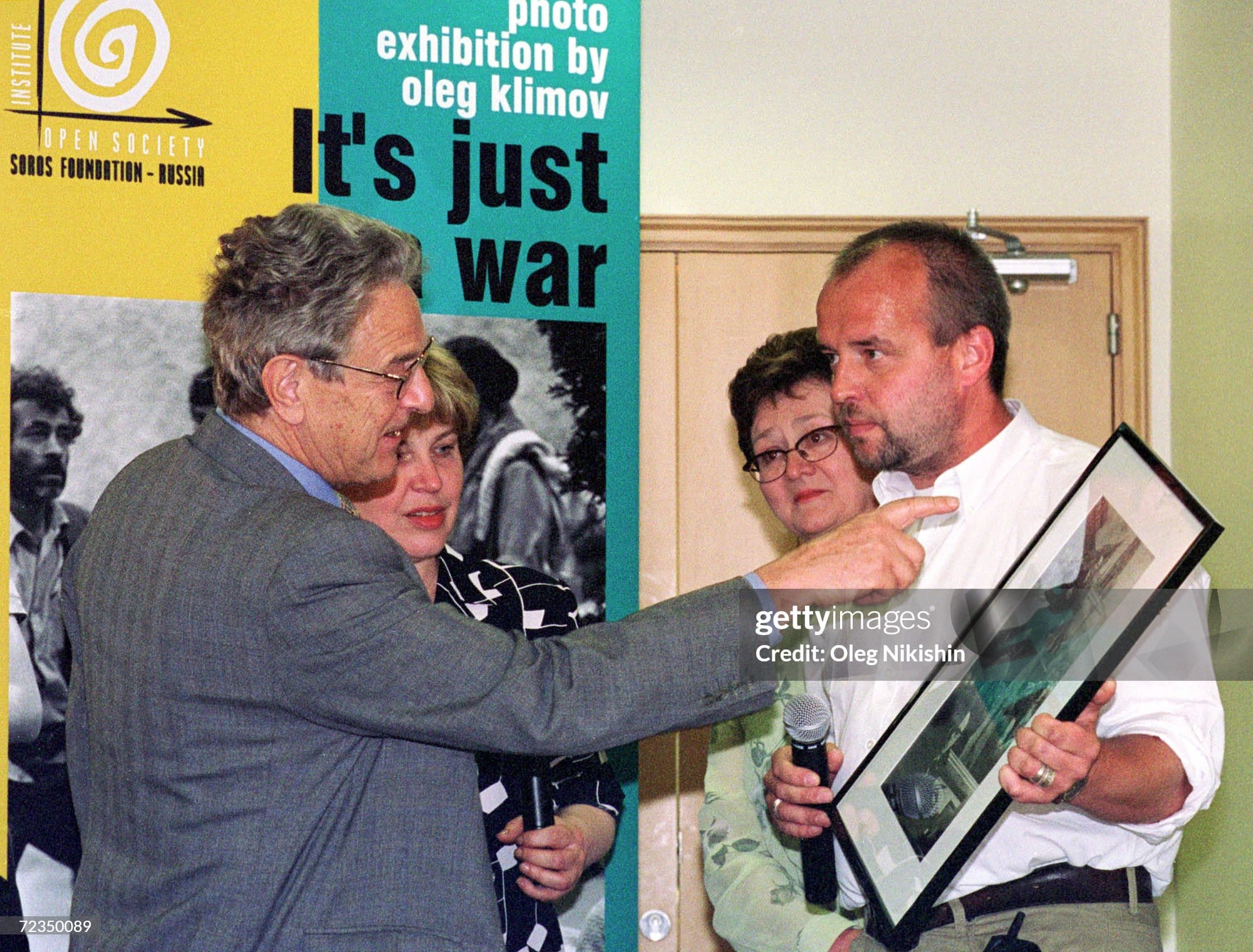
The opening turned out, in a certain sense, scandalous.
Soros refused to read the prepared text. He looked at me and, in a way, seemed to ask: “Where is my money?”
He did not quite understand why this luxurious mansion cost so much, nor why he should speak about war and about the Russian fool standing next to him.
He began without notes: “I don’t know who this photographer is… and I don’t know where my money is…”
It was a very good beginning. A military one.
Although I too had a piece of paper prepared, I had to improvise. In my response I said:
Independent documentary work runs on two fuels: coffee and cigarettes.
If you’d like to contribute to either, you’re very welcome.
“I know who you are, and I can guess where your money is. The only thing I can offer is to give you a photograph of Andrei Sakharov — whom you certainly know, your friend — taken by me just a few hours before his death.”
Soros took the photograph and seemed surprised.
“Strange,” he said. “I know this picture. You made it?”
Only after that did he shake my hand, congratulate me, and go to view the rest of the exhibition.
Then the “humanist viewers” attacked me — many of them from Moscow and the former Soviet republics:
“Why do Ossetian rebels look so aggressive in your photos?”
“Why do you romanticize war despite the hundreds of victims?”
“Aren’t you ashamed to show killers as human beings?”
There were many more questions — and I had no answers.
I never returned to that exhibition in Moscow. I tried to forget it altogether.
The show traveled across Russia through the museum system. From time to time, while I was journeying along the Volga, I would come across announcements of its opening somewhere else.
I returned to Moscow. But Just a War never returned.
Soon the Soros Foundation was closed in Russia. Then I spent more than a year unable to leave my apartment after a car accident in Siberia. For a while I lived in Amsterdam — there one can move along the narrow canals in a wheelchair or on crutches. A correspondent of a Dutch newspaper wrote a literary piece suggesting that I would most likely die. Readers began sending me kind postcards and money to support my survival.
Since then, I have radically changed my attitude toward humanism, toward certain friends and comrades, and toward Russia as a whole.
The exhibition “died” somewhere across the vast Russian landscape — together with the crates I once saw and came to love.
They resembled coffins. Three well-made coffins.
Inside them — more than a hundred photographs I had taken over more than ten years, framed and under glass.
Where are they? I do not know.
I suspect they are in some museum warehouse. I imagine the photographs were long ago discarded, and the frames reused for other exhibitions, to display someone else’s life.
I do not mind that at all.
But where are my crates?
Oleg Klimov
Photographer’s Diary, 2001