
The Art of Trading in Fear
by Oleg Klimov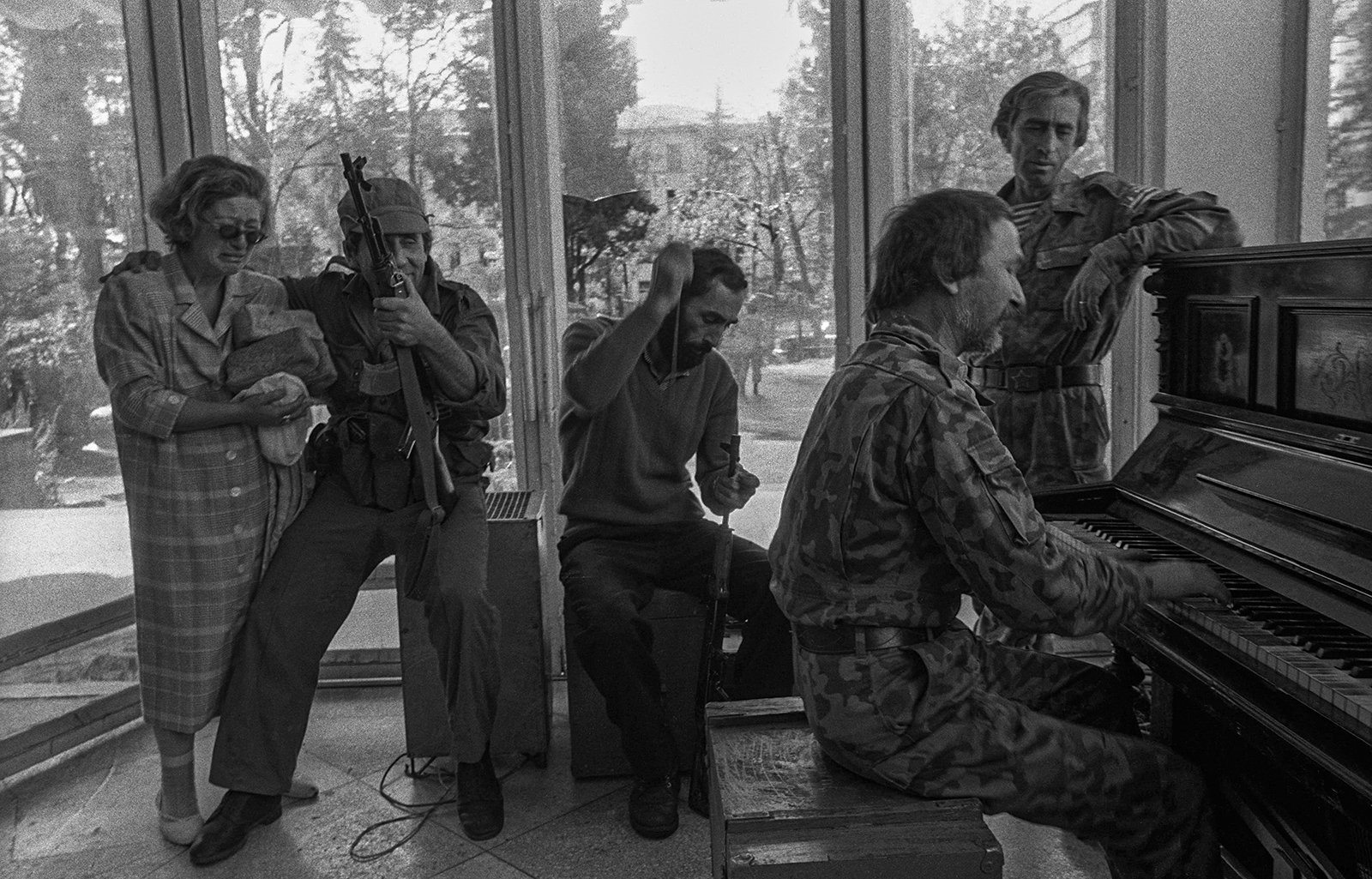
Fear is immense. Only conscience can overcome it. That is why our profession so often produces two kinds of people: the fearless or the shameless.
По-русски
They say that a photographer resembles an unhappy lover, always ready to tell his story. Everyone has heard such stories before. And yet most contemporary photographers are destined for oblivion. They see, and photograph, what the crowd wishes to see—indeed, what the crowd is already photographing for itself. If photography in its current form were ever allowed to supplant the whole tradition of visual art, then art itself might vanish, buried beneath the witlessness of the masses, cameras in hand like Red Army soldiers with rifles.
For some time now, I have thought that the photographer in this country is a kind of Private Chonkin—that comic figure “sitting by the window in a woman’s apron, doing embroidery; absurd, of course, but what is to be done if Chonkin enjoys embroidery?” The same might be said of photographers: what is one to do if one likes taking pictures? It amounts to no more than cross-stitch if photography contains nothing beyond a fondness for the process itself, or a way of idling through time.
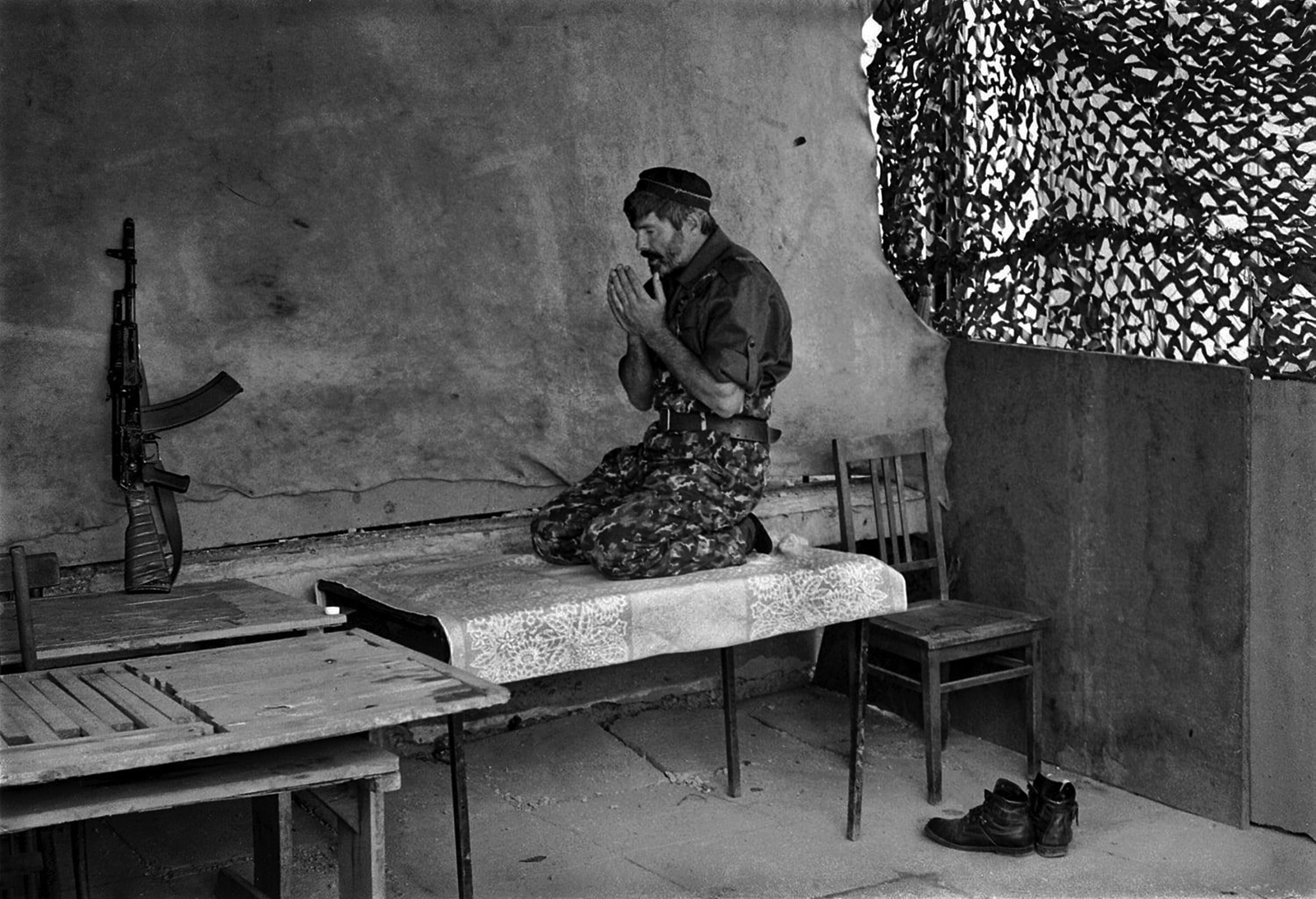
When I photograph, I do not think about the consequences should my pictures suddenly be seen by the world. Believe me, I do nothing against the world. I simply look and pull the trigger. I am a photojournalist. It is not difficult work; all it requires is that one keep one’s eyes open. Only occasionally do I have to compel myself: photograph what you need, what you feel, what you understand—and do not think about what may follow. My photographs are not instructions for action. They are actions already completed. They belong to the past. But when an editor places a photograph on the front page of a newspaper or gives it a spread in a magazine, he thinks—and thinks hard. He is thinking about the future.
There are many professions that become fictitious under authoritarian rule, and photojournalism is one of them. History offers its own taxonomy: Stalin liked to execute, Khrushchev to imprison, Brezhnev to consign people to psychiatric hospitals. The current regime, lacking anything resembling an ideology, has only one truly formidable weapon left: cynicism toward society, and toward us in particular—toward us Chonkins. So if one is forced to choose between the profession and freedom, freedom must come first, because it is the more fundamental thing.
That is true, at least, if one is speaking of civic photojournalism rather than the professional refinement of “embroidering neat little crosses.” I belong to the generation of Chonkin’s soldiers, who went off to war in the wild nineties with roughly the same spirit with which girls now head to clubs to photograph nightlife for glossy magazines. The tasks were different, shaped by time and circumstance, but each of us understood them in our own way, through the peculiar inheritance of that Soviet family of Chonkins. That is how it always is: each person is given his own time, and each decides for himself what to do within the chronotope allotted to him. The difficulty is that one only comes to understand one’s own time retrospectively, in a future that may already belong to another generation.
In the preface, I forgot the main thing: fear. Our profession is woven out of fear—and out of complexes, too. Take Alexander Rodchenko. He also, from time to time, considered himself a photographer, even a photojournalist. One might have called him an artist rather than a photographer, had he not been afraid. Fear drove him from “leftist art” to art of the right. The rest of the world calls that period Stalinism; here, impossibly enough, it is still sometimes spoken of as a naïve and romantic age of photographic art. Why? Because there was no other art. One can hardly call Stalinism itself an art form. It would be indecent.
The romance, if that is the word, lay in the fact that Rodchenko’s heroes were building the White Sea Canal, while the Stalinism of it all consisted in those same heroes being shot, from time to time, like rabid dogs, for proving insufficiently receptive to the making of a “new type of man,” a man of the future. In Rodchenko’s own book, these experiments on human beings and society are called, with chilling directness, Experiments for the Future.
But the problem of artistic authorship in that era is this: there was only one true artist, and his name was Joseph Stalin. Everyone else—photographers and painters alike—were merely his pupils. Most of them worked with paint and brush, with film and camera, constructing forms and compositions. But only one man could manipulate living matter itself and breathe a human spirit into the constructions he made. He alone was the real Constructivist. For reasons that remain obscure, he is now sometimes described as an “effective manager.”
I speak of this with such confidence only because I know a little about fear, and what a formidable creative force it can be. There is external fear, and there is internal fear. External fear is simple enough: someone presses the barrel of a Kalashnikov to your forehead. That still happens, even now. The barrel is against your brow, but you feel it in your groin, in the pit of your stomach. Internal fear is rarer. That is when something inside the soul or heart begins to tremble for no clear reason, and the deeper you dig into memory or conscience, the stronger the unease becomes, until it is no longer unease at all but pure fear.
Take Prishvin, for example, the children’s writer. He, too, visited the White Sea Canal—not on Maxim Gorky’s propaganda ship, but earlier, on his own. He went looking for material for children’s fairy tales and found something else instead, something he never showed to anyone. Until the end of his life he kept his diaries and several rolls of film hidden away in secret places. His relatives kept them hidden for another fifty years. Only recently were they shown in a museum. It turned out that the diaries contained no fairy tales for children, and the photographs of the White Sea Canal were no pastoral Karelian landscapes. So it emerged that Prishvin may have been timid, but he had a conscience.
My own generation of photographers—those who came of age in the late nineteen-eighties and early nineties—would never have photographed the collapse of the country, its calamities, and its endless chain of local wars, any more than the generation between Rodchenko and Gende-Rote photographed the purges, the famine in Ukraine, and other crimes against humanity. We would not have done it if we had been afraid for our lives, or afraid of becoming inconvenient. Nor would we have done it had we not known that another kind of photography existed, one whose function was broader and more honest than the regime’s propaganda, with its montages and constructed forms.
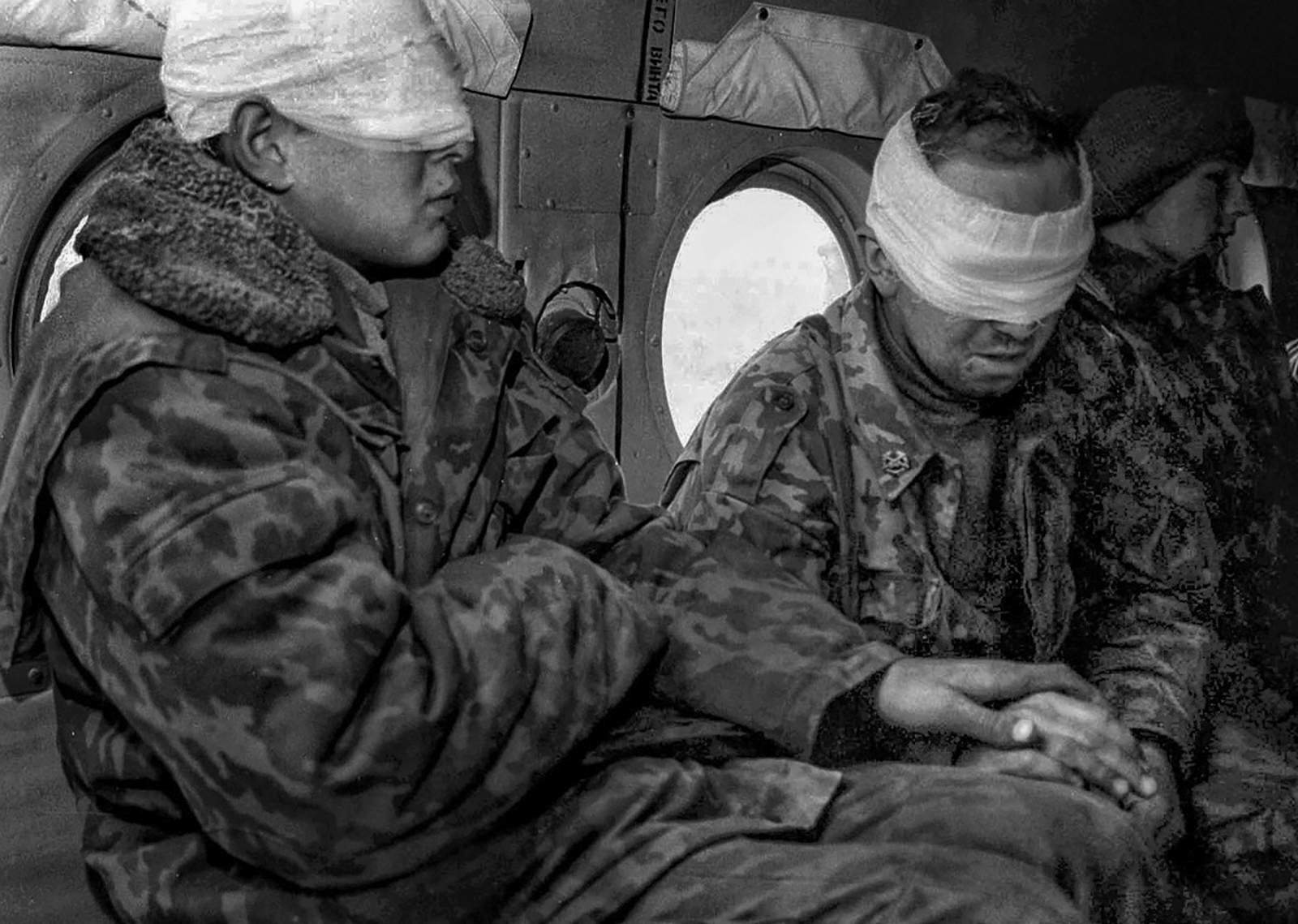
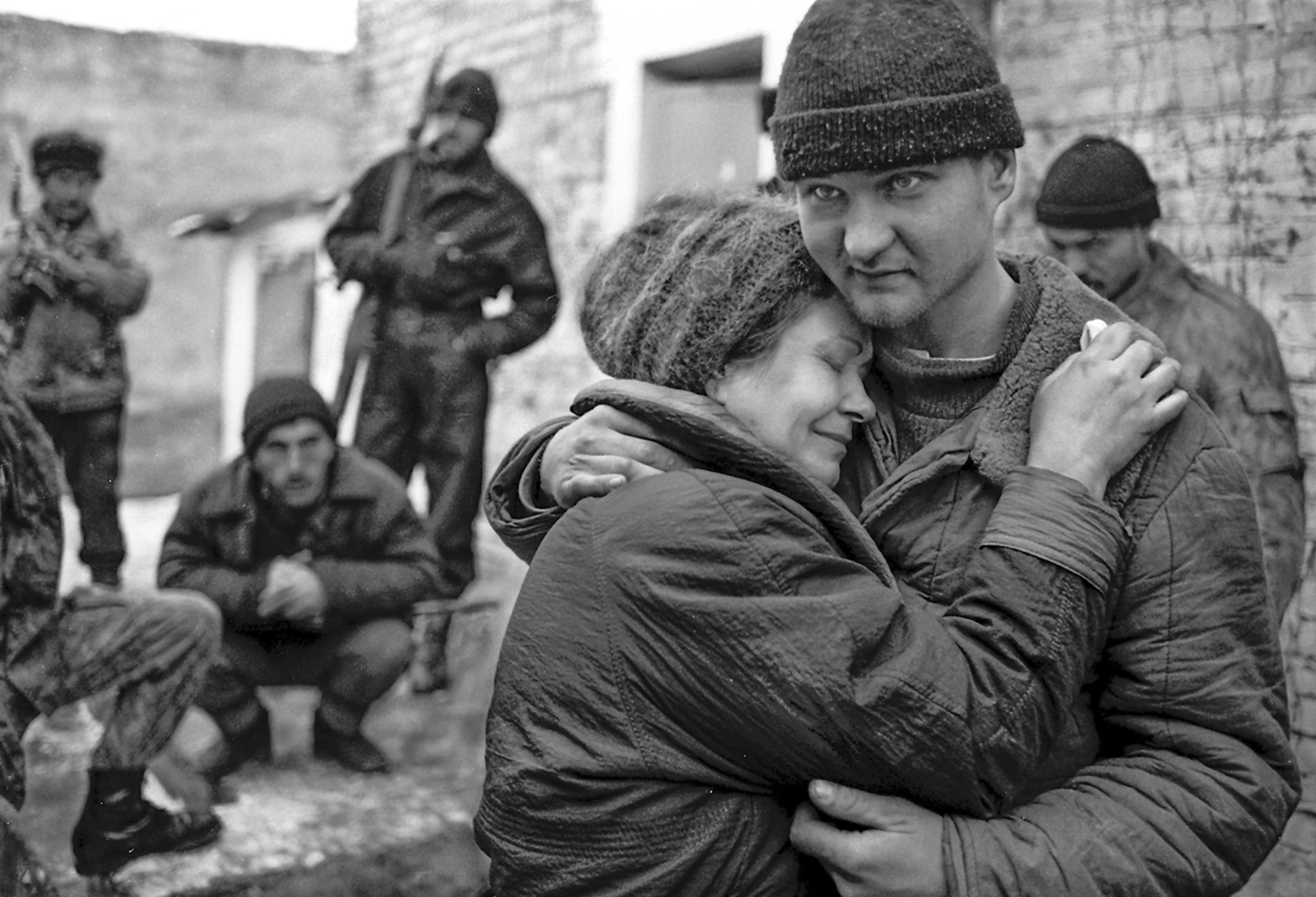
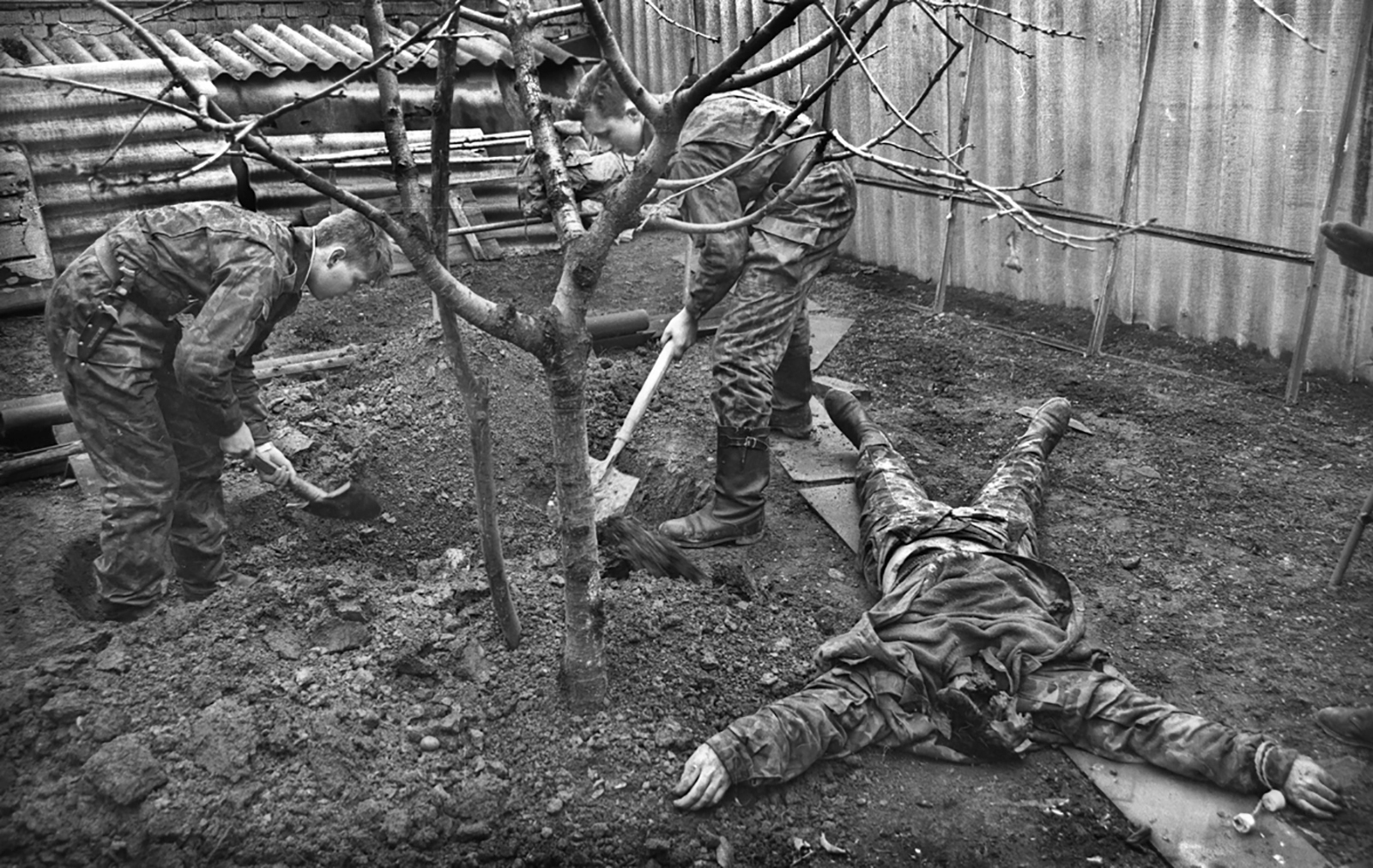
What interested us—perhaps for the first time in such direct fashion—was the truthful substance of what was happening, approached through observation rather than coercive staging and montage in the service of propaganda. We began to show this in the press, and the response was enormous.
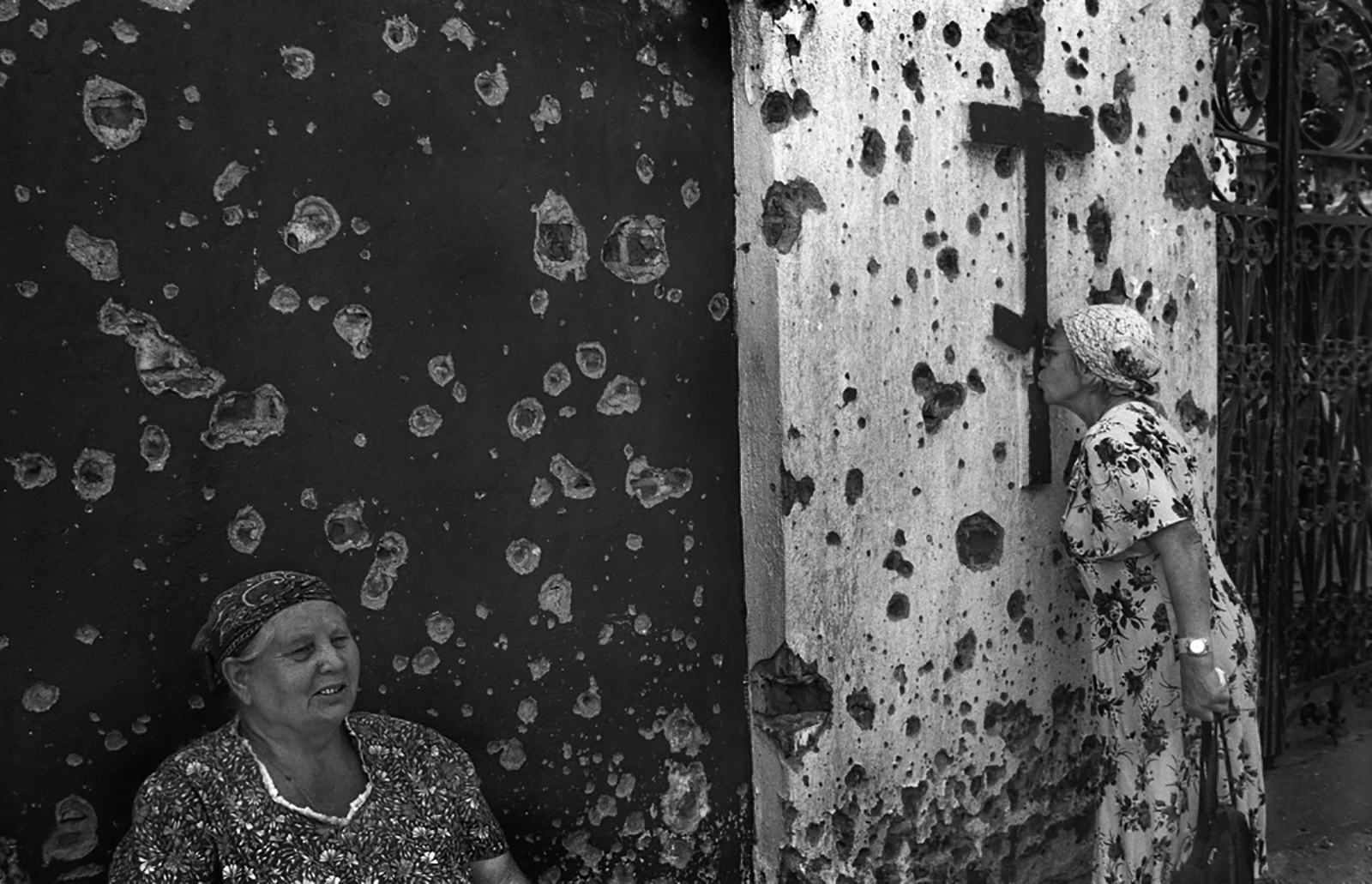
Our generation of photographer-reporters—freelancers and stringers, mostly—was preceded by only a handful of nonconformists, amateur photographers for the most part, who were unlikely ever to interest the mass media and yet left a deep mark on Russian photography as a whole. They were the first to dismantle the fraudulent method and fabricated image created by the so-called constructivist photographers of the Stalinist period.
Fear, too, served as an editor for Soviet photographers of the Second World War. Photographers, like editors, used montage with remarkable ease: one could replace the background behind two cheerful German soldiers, geese tucked under their arms, with the image of a partisan woman hanging from a post and her son weeping at her feet.
Captions were even less of a problem. One simply wrote what was needed. When a “patriotically minded reader” noticed that one of the flag-bearers in Yevgeny Khaldei’s celebrated photograph Raising a Flag over the Reichstag, published on the front page of Pravda, appeared to be wearing several wristwatches, he sent an outraged letter to the newspaper. Khaldei was dismissed.
The photograph, however, remained in use. Only now the flag-bearer had one watch on his wrist, or none at all. What troubled no one was that this was far from the first flag raised over the Reichstag, and that it was not really a flag at all but, as Khaldei himself told me in 1994, “a red tablecloth from my own table. In the last year of the war, I used to wrap that red rag around my waist under my tunic, and whenever a Soviet flag was needed, I would pull it out and hoist it.”
The irony is that reality, however vigorously one tries to distort it, always finds a way back into view. Khaldei did not want to show that the valiant Soviet Army contained looters—as every army does, in every war. He wanted to construct the image of the flag over the Reichstag, and he succeeded. But reality turned out to be stronger than invention.
If one were to jump abruptly from the last century into this one, one would find that, in essence, very little has changed. The technology, of course, has changed. Human beings have not. I still believe that my photographs are not instructions for action; they are actions that have already taken place. But when my editor places a photograph on the front page of a newspaper or across a magazine spread, he thinks. He thinks, among other things, about his own future. Sometimes he is afraid. Sometimes I am, too. That is the thread that binds one century to another, and one profession to the next.
To speak plainly, it is difficult now to insist that the essence of our profession lies in conveying information about the world around us. No: when the work is done “properly,” it unsettles the viewer. It produces unease, anxiety—fear. Which means that by now we are not merely dealers in illusion, as Rodchenko once proposed, nor merely public-relations agents for the regime. We have also become, rather successfully, merchants of fear, transforming it from one form into another, carrying it from place to place, transmitting it from the experience of an individual to the consciousness of society as a whole.
In the age of globalization, we inhabit a single information space. Mass protests and killings in Libya can generate fear in Russia—or perhaps, more likely, in the Russian government itself.
Sometimes a photograph alone is not enough. Then the editor supplies the caption. He may write, for instance, “victims of a bombing in Georgia,” or he may write “in Ossetia.” As my editor likes to say, this is how we shape “public opinion.” In substance, though, I know it is much the same thing Rodchenko once did in USSR in Construction.
As ever, facts alone are not enough for the mass media. Facts must be fitted to an appropriate “moral standard.” Moralization, in practice, comes down to assigning responsibility: who is right, who is guilty. By that logic, the heroes of the mass media ought to be the victims and those who brutalize them. Yet photographers are far more often sent to photograph victims than perpetrators. This is due not only to the inaccessibility of the latter, but also to the fact that, from the point of view of the prevailing moral script, it is often better not to show the perpetrator at all—or else to show him only in the most damaging light.
In other words, the engine of the mass media in general, and of photojournalism in particular, is its orientation toward conflict, whose moral framing is intended to produce social consensus and make society appear more cohesive. Which is why the primary function of the mass media today is no longer simply to transmit information, nor even to articulate an authorial point of view, but to transmit a moral standard—one that instructs society how to absorb conflict, endure it, and bring it to a close.
And yet the same moral standard can, under different circumstances, be used to reignite the conflict all over again, once one side or the other no longer conforms to it. That is how the modern media system lives and works. Photojournalism, and photography with it, remain part of that machinery.
So yes, it is true when people say that a photographer, like an unhappy lover, is always ready to tell his story. My own story is that, at a certain point, I stopped photographing conflict and war. Not only because it led toward self-destruction and the degradation of the self, but above all because my photographs are not a call to action. They are actions that have already taken place. I will never find a justification for my presence in one conflict or another, even if I were to claim that my photographs might stop a war or make people more humane. I know they will do neither.
At the same time, unlike many photographers with histories like mine, I am not going to retreat into photographing landscapes or flowers in a garden, if only because I have no interest in photographing what God created—I have never met Him. What still matters to me is photographing people, because I meet them every day, and they are always different.
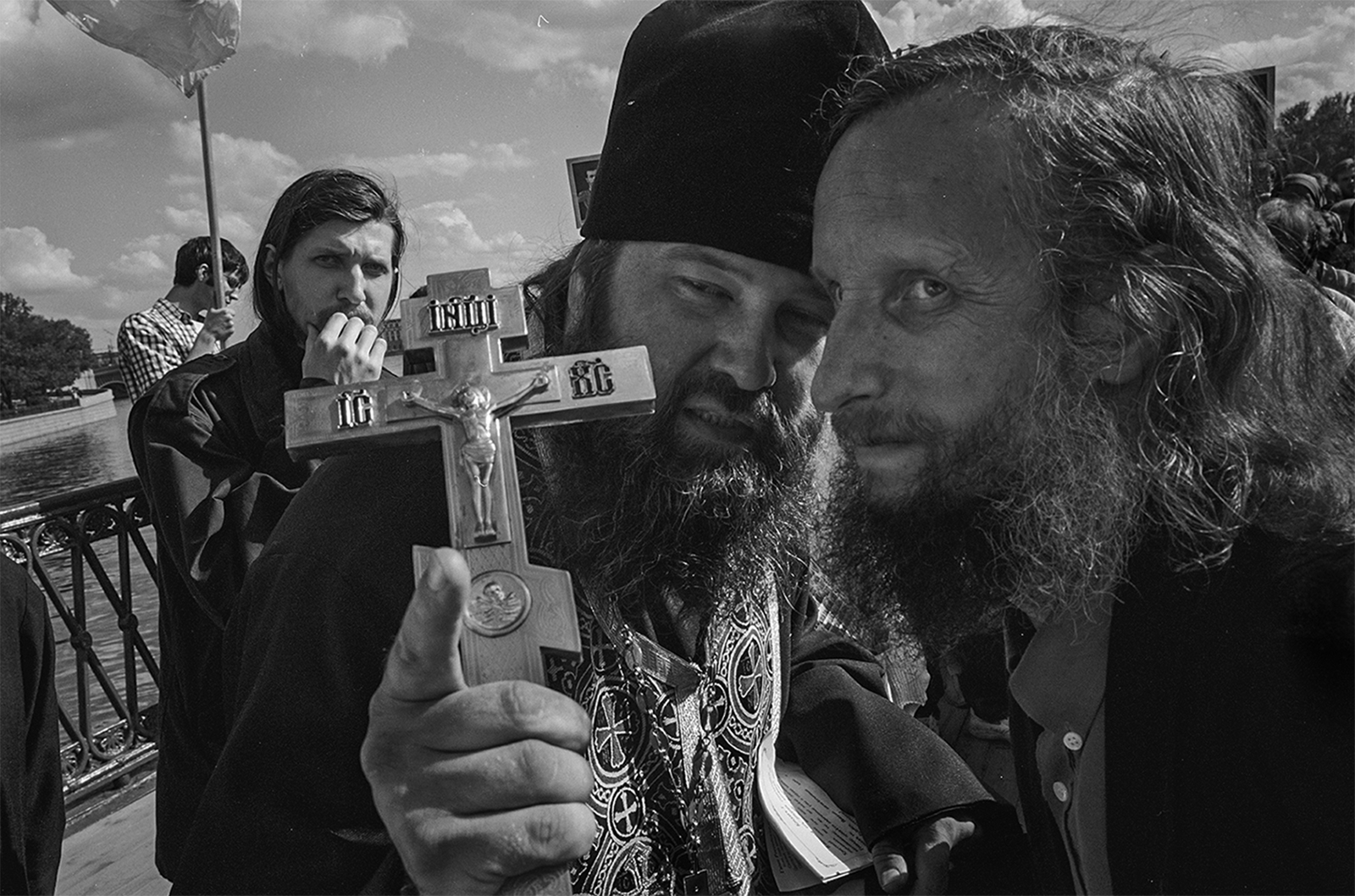
Let me end by saying something about my future, and about the old Chonkins. In today’s newsrooms, photographer-Chonkins have been demoted to the rank of a coffee machine. I happen to think this is fair, because the transformations taking place in the profession are entirely natural. In the end, photographers have begun to understand that photography is capable only of recording the past. And who is interested in the past? The future is another matter altogether: one can say anything one likes about it, but one cannot photograph it.
Most likely, the status of our profession in editorial offices will be lowered yet again and will eventually be reduced to that of surveillance cameras—because surveillance cameras feel no fear and possess no conscience.
Oleg Klimov, Photographer’s Diary. Moscow, 2011.