
The Country of Red Shamans
by Oleg KlimovPhotographer's Diary. Tuva, Russia. September 2001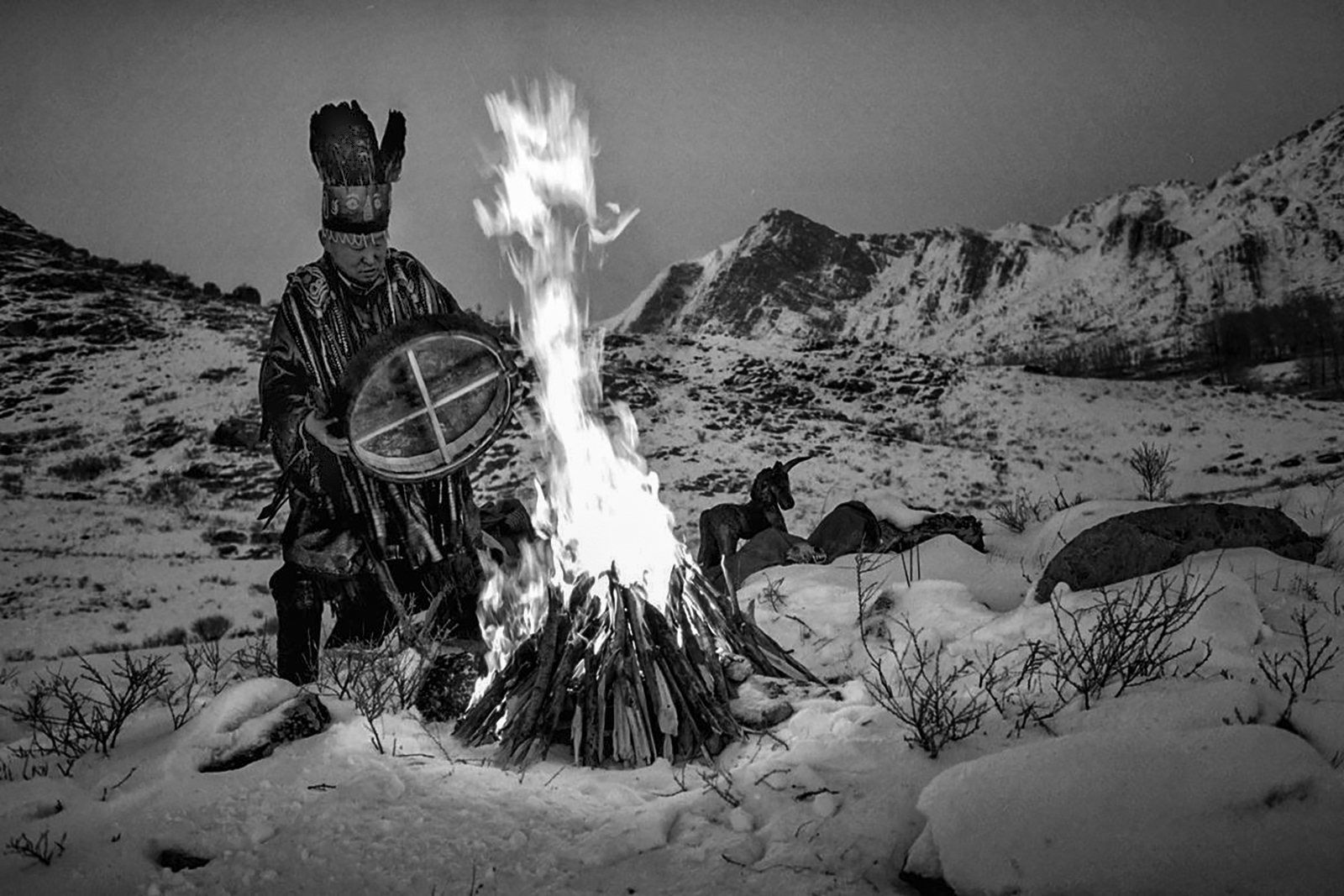
Tuva, a republic in Siberia, is a land without railways and, until recently, without mobile phones. A place that seems almost mythical, it came into existence due to a geographical error.
This error occurred in 1727 during the signing of the Treaty of Bura (Burinsky Border Treaty). Russia marked its boundary along the Sayan Mountains, while China claimed territory up to the Tannu-Ola range. As a result, a neutral zone spanning several hundred square kilometers was unintentionally created.
It was only in 1921, under Soviet auspices, that Red Army troops entered Tuva—then known as a “no man’s land.” This led to the proclamation of a people’s republic in the heart of Asia, marking the birth of the first independent Tuvan state — the Land of the Red Shamans.
Today, this enigmatic republic is often mentioned in connection with Russia’s Minister of Emergency Situations — a distinguished native of Tuva — whose appointment is sometimes seen as a way to tame the destructive forces of nature and spirits alike. After all, who could be better suited for such a role than someone from a land where shamanism still holds official recognition?
Shaman Saylyk-ool, religious adviser to the president of Tuva, mutters cryptic phrases as he waves burning juniper branches around my head. The pungent smell of smoldering grass mixes with the sour scent of fermented dairy — the base for Arak, the local alcoholic drink used both for pleasure and ritual. The combination produces a mild dizziness, making conversation feel strangely revelatory.
The shaman’s home — his “reception room” — is an experience in itself. A massive painting by a local artist, The Shaman’s Ritual, or the Rite of Fire, dominates one wall. Nearby hangs a portrait of the Dalai Lama, seemingly torn from a Chinese calendar. Along the walls, mounted on wooden brackets, is an “exhibit” of animal skulls — familiar and unfamiliar — their jaws open, their teeth unnervingly intact.
At the center of the room stands a grand wooden chair covered in deerskin, its armrests carved into snarling wolf heads. From this throne-like seat, the shaman receives visitors. He speaks in Russian.
Now it is my turn.
“The absence of faith is your faith,” Saylyk-ool begins, feeding incense into the burner. “That is not atheism. Atheism is also faith — faith in godlessness, faith against God. I speak of something else. There was a time when God was present in your churches and the spirit lived in every person. Now you believe in nothing.
You don’t believe the plane you fly will land safely, that the train won’t derail, that the car won’t fall into the abyss. You don’t believe in the spirits of things. And because you don’t believe, you are afraid. Fear is the absence of faith. Disaster will come when the last of you stops believing that the Moon and the Sun will rise.”
He rolls his eyes upward, waving the incense as if addressing not me but some lost soul.
“The plane I flew in and the car I drove hardly inspire confidence — let alone faith,” I reply. “The mountains Roerich admired are beautiful, yes — but not divine. The forces of nature are more often destructive than sacred. Your words may hold truth, but only within this room, surrounded by skulls and smoke. Isn’t there something else people believe in — something more tangible?”
“Human principles are always the same: soul, birth, and death,” he answers.
“A person can lose his shadow — the ‘gray soul’ that connects him to other spirits. When that happens, the spirits take away the ‘main soul’ — the essence. A man who has lost his essence may continue living, but not for long.
A person must live where he was born. That is where he must die. This cycle is determined by Nature. Homeland gives strength. Every two years I return to the Mountain of the Yellow Lion — the place of my birth. It is sacred. There I speak with the spirits and ask for strength. Then I pass that strength on to others.”
Saylyk-ool was born in 1947 into the family of the hereditary shaman Sadu Pasha. Not every descendant becomes a shaman. One may be chosen by the community, or recognized by an elder through signs.
Saylyk-ool bore such a sign: as a child, his skull was covered with strange lumps and sores, which remain to this day. They were said to have appeared after his grandfather — also a shaman — touched his head and declared:
“At forty-five you will summon the spirits. Until then — darkness.”
Soon after, the grandfather was arrested for religious beliefs and died in a Krasnoyarsk prison.
“A true shaman is chosen. Signs appear in childhood,” Saylyk-ool continues. “When I was three, I could barely speak or walk, yet I took a copper washbasin and a stick, beat it like a drum, rolled my eyes, and screamed. The village recognized me immediately. But they had to hide my gift — even from me.
I drank my mother’s milk until six. At seven I began to walk properly. At nine I went to school — and began seeing spirits… or devils, as they called them then. I thought everyone saw them. When I realized they didn’t, I fell silent. Only sometimes I warned people: ‘Don’t go there. Don’t do that.’”
We traveled together to the Yellow Lion Mountain so that I might “receive strength.” Again I witnessed the ritual of sacrifice.
This time the offering consisted of Russian banknotes. I handed them over through an intermediary, in the shaman’s absence. This, I was told, preserved the “spiritual connection” between giver and receiver.
Coming from another world, I understood payment for work. But I struggled to grasp this ritual logic. To me it resembled religious extortion.
Our driver — a young Tuvan whose dream was to visit Moscow simply to watch The Lord of the Rings — was forbidden to attend the ceremony.
In −30°C (−22°F), he stood obediently by the riverbank, far from the fire.
“You may walk only where I show you,” the shaman instructed. “Do not cross the line. If you do, the spirits will take hold of you. If you don’t understand now, you will later. Do not speak — just do as I say.”
These were the final instructions of the presidential shaman.
The RitualAt sunset, preparations began. He lit the incense burner, arranged juniper branches, and built the fire. Fragrance spread quickly through the frozen air.
He produced a wooden horse with a horn on its forehead, showing it to the Yellow Lion while making guttural sounds. Then came a wolf skull — its jaws clapped together approvingly. Food followed: sausage, sweets, and finally a bottle of Arak.
All in silence. Nature itself seemed muted — no wind, no birds. Only crackling wood and the shaman’s strange vocalizations: somewhere between “woo-woo-woo” and “ho-ho-ho.” He unwrapped his costume, then his tambourine, warming its frozen skin by the fire. Then he began to speak with the flames.
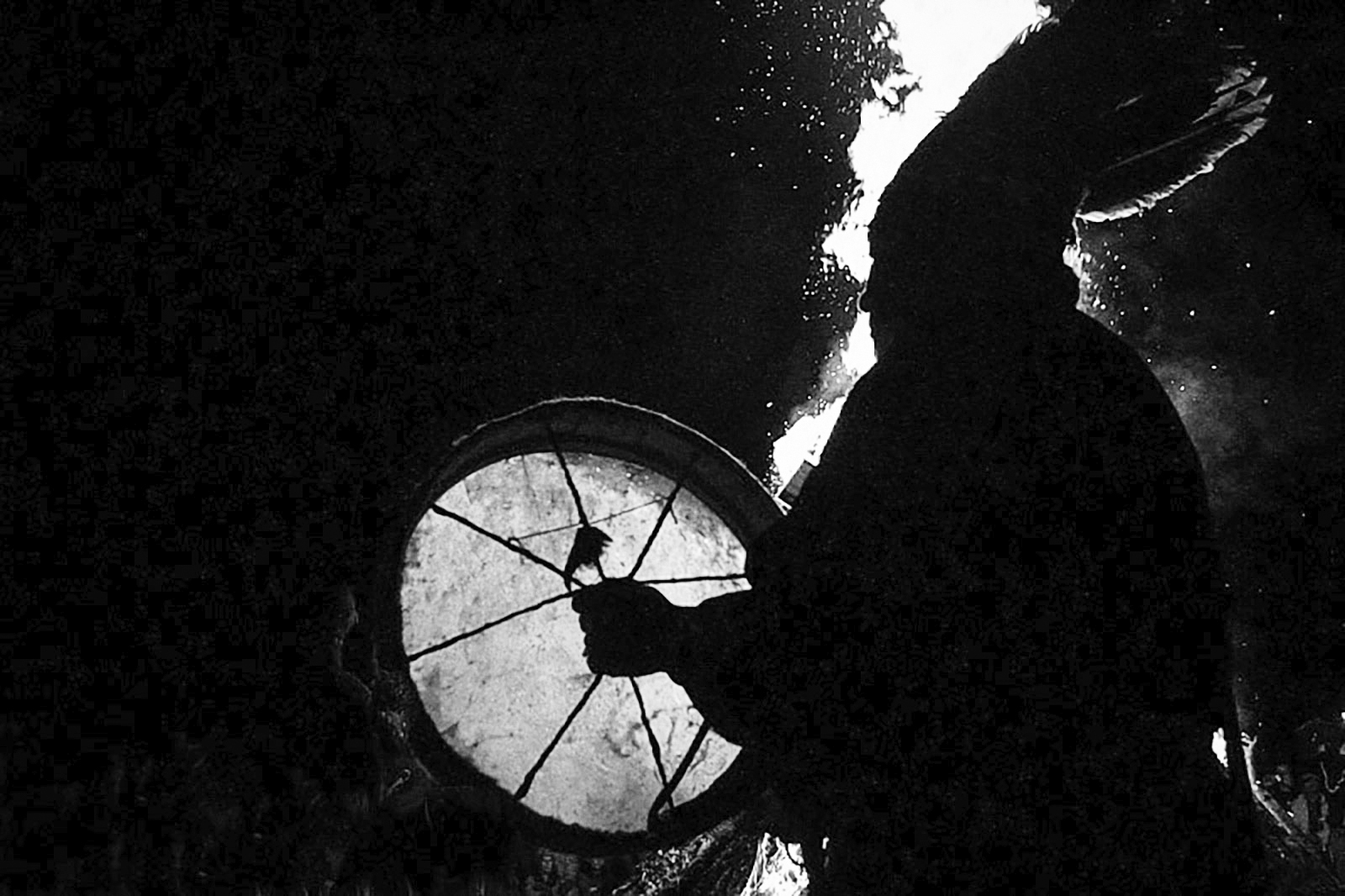
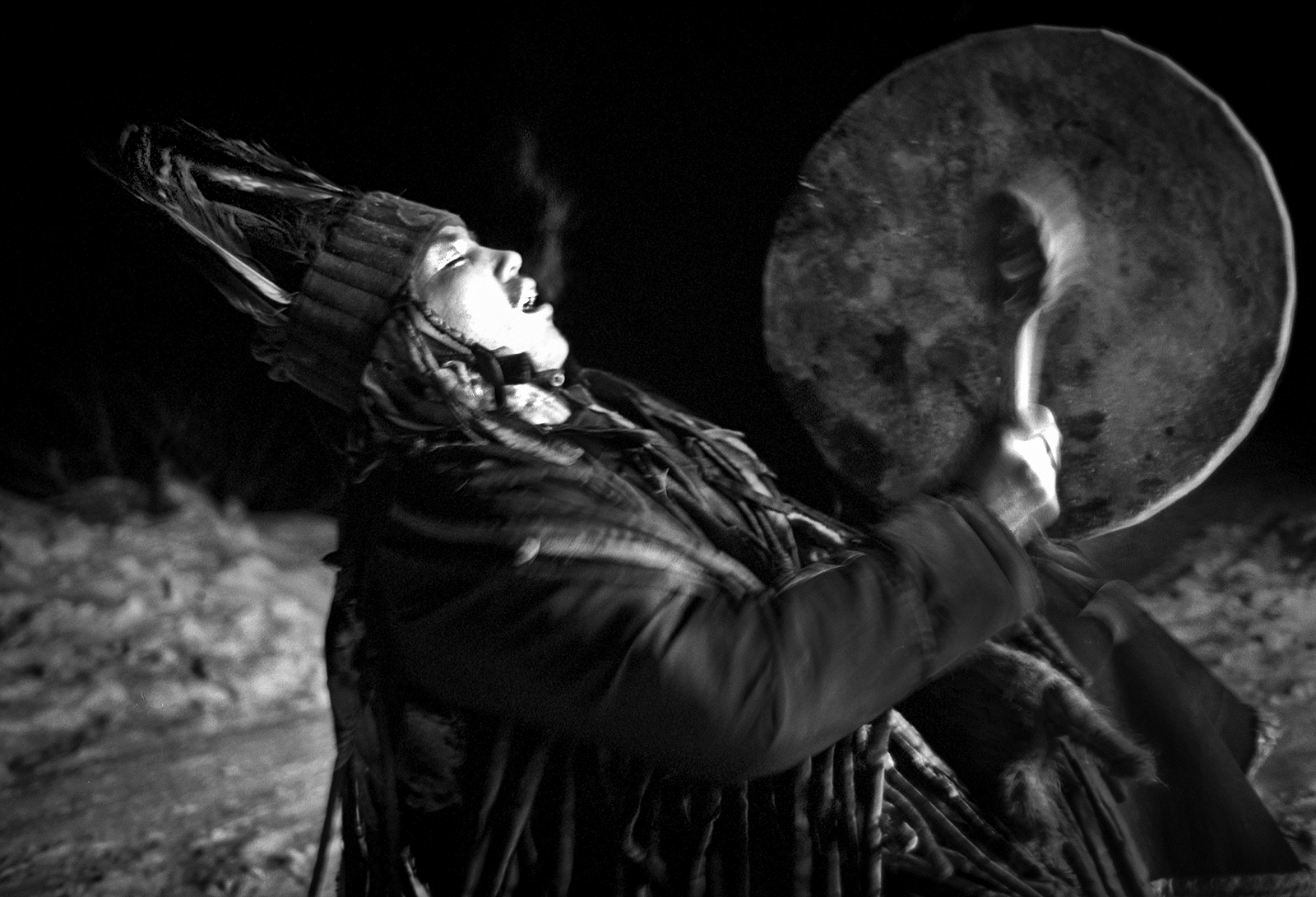
What they discussed was impossible to know, but his tone suggested anger — perhaps even swearing. As the sun slipped below the horizon, he leapt up, seized the tambourine, and began the shaman’s dance.
Suddenly, a massive flock of black birds burst from Yellow Lion Mountain. With harsh cries they circled above him and vanished into the dark sky.
He howled louder, beat the drum faster, rolled his eyes, collapsed to his knees — his voice turning into the howl of a wolf.
To an outsider, the scene was profoundly unsettling.
When it ended, he approached me, poured Arak into his palm, and splashed it across my face.This did little to strengthen me, so he poured half a glass, handed it over, and said: “Your medicine.”
I drank it instantly. The taste defied description — sour milk, herbs, and the sharp scent of homemade moonshine. Only respect for the ritual prevented a more… physical reaction.
“Now go,” he said. “I must be alone.”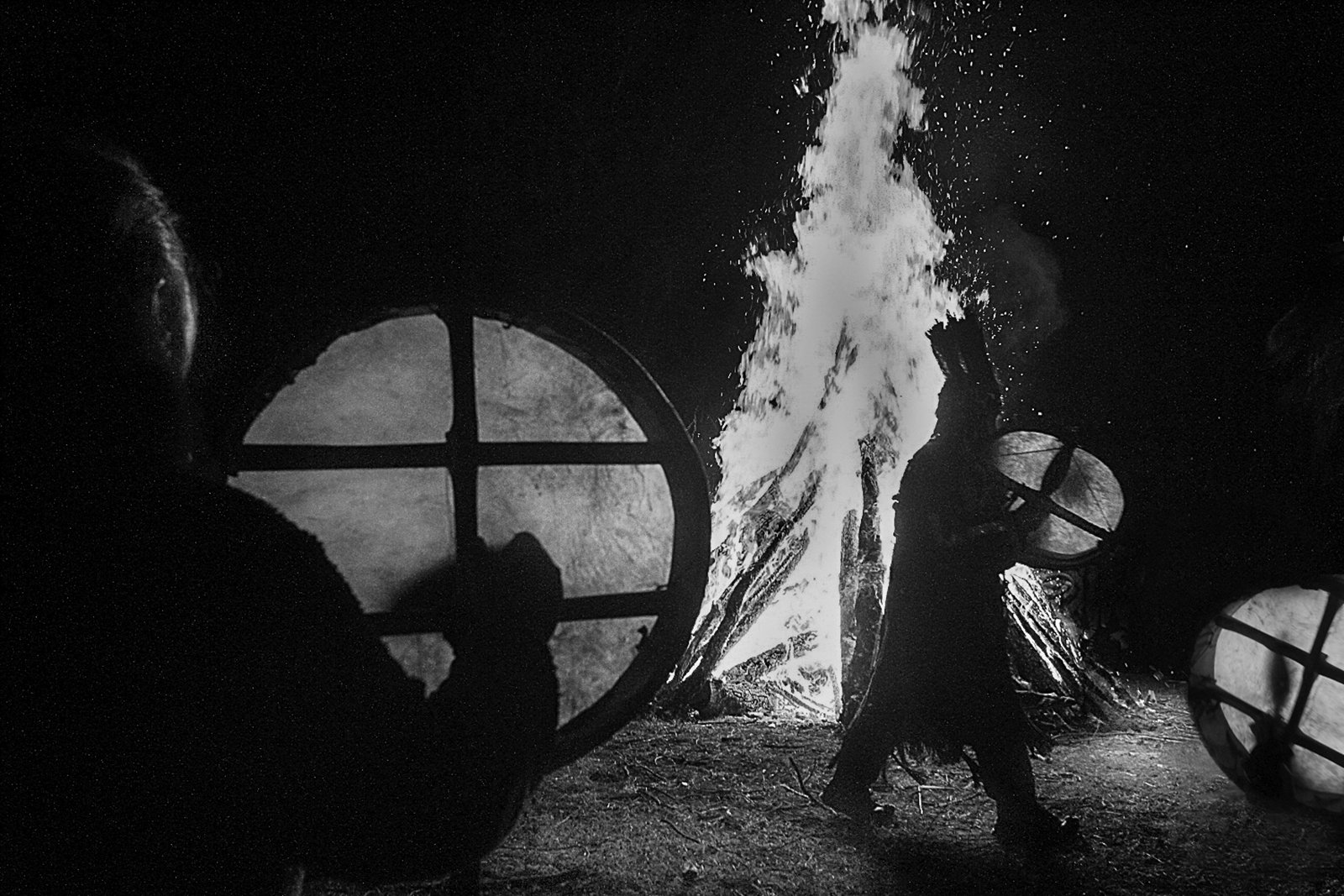
I joined our driver, still standing by the river in silence, staring into the black mist.
Later Saylyk-ool returned, smiling for the first time: “The spirits say you are a good man,” he told me. “You have not lost your main soul. Only your shadow — your gray soul — is lost in the Kingdom of the Dead. I asked the spirits — they will find it and return it to you.
Now look at the Moon — our father, father of all shamans. Bow three times.
Look at the Pleiades — our judge. He may pardon or punish. Bow.
The Great Bear protects the human spirit like a guardian. Bow.
There is Orion — king of animals, plants, and of us. Bow.”
“Who is the mother?” I asked.
“The Sun,” he replied. “But she is not visible now.”
Oleg Klimov
Photographer’s Diary, 2001
Written for Medved Journal, Issue #59, Moscow
P.S. Before Russia’s full-scale invasion of Ukraine in February 2022, Vladimir Putin often spent time in the forests and mountains of Tuva together with his close associate and then–Minister of Defense, Sergei Shoiga, a native of the region. These visits led certain tabloids to speculate about the Russian president’s alleged interest in shamanic rituals or occult practices. However, no credible evidence has ever substantiated such claims.