
Watching the Sea and Waiting for Spring
by Oleg Klimov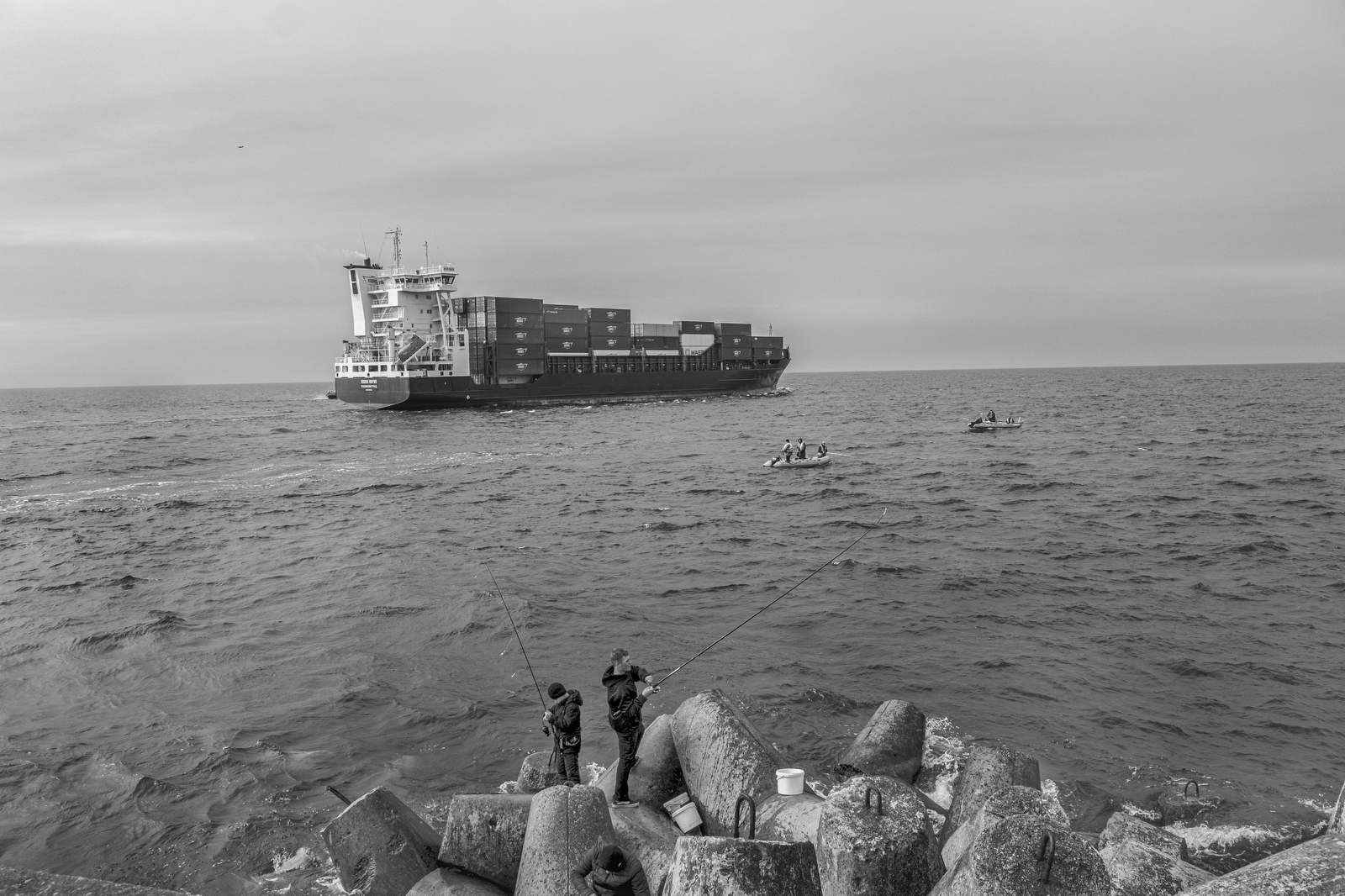
По-русски
Baltiysk is Russia’s westernmost town, at the very edge of the Kaliningrad region, between the Baltic Sea and the lagoon. Once it was the German town of Pillau; after the war it became a closed Soviet city, and today it is the main naval base of the Baltic Fleet. A place of wind, sand, fortifications, warships, and the lingering memory of vanished empires. But every territory has not only its state history; it also has its everyday life, with its seasonal habits, instincts, and small rituals.
One of those rituals is the spring herring run.
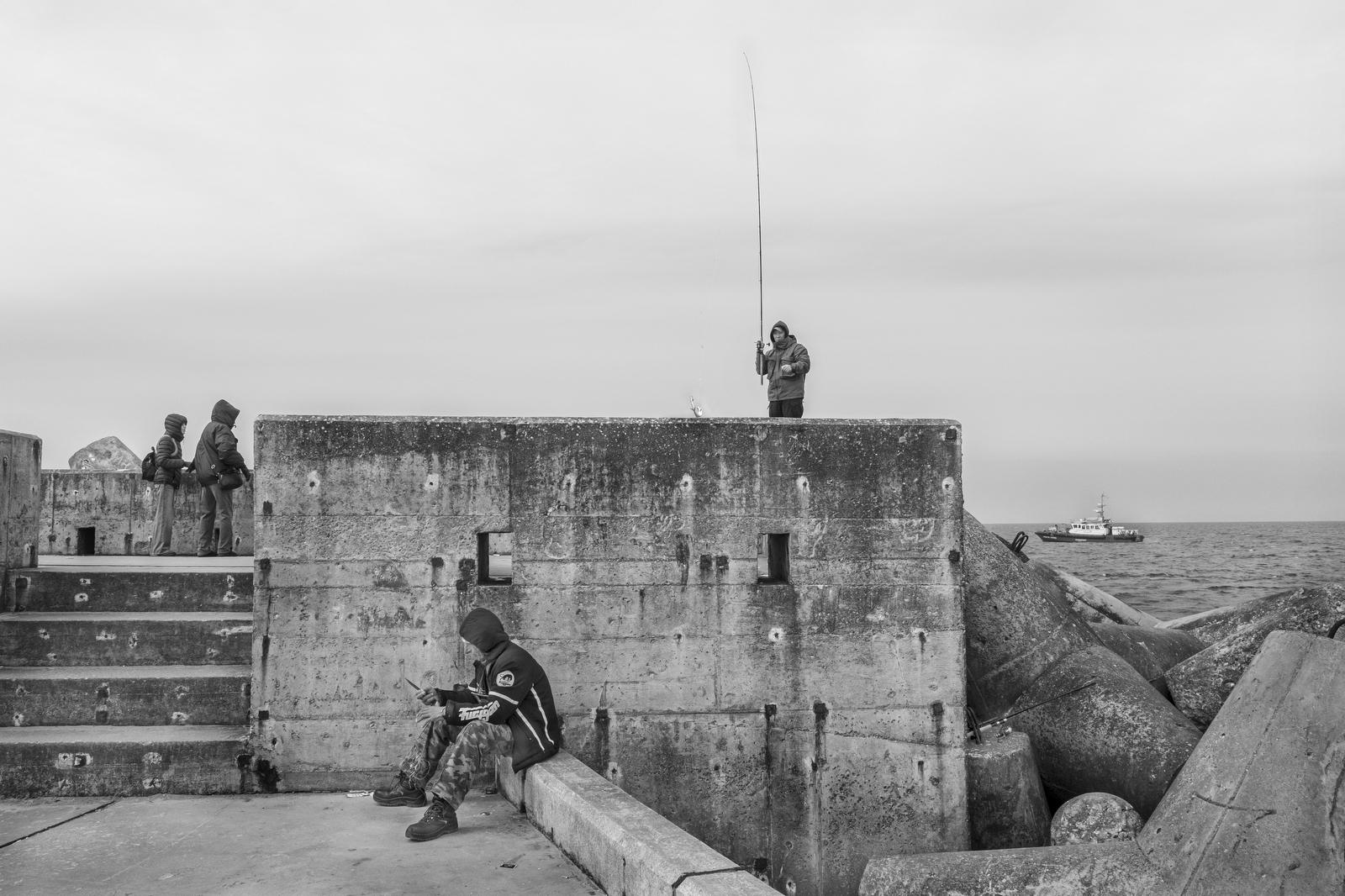
Every spring, fishermen from across the Kaliningrad region make their way to Baltiysk. They head for the Northern Mole, where hundreds gather with buckets, tackle, and the kind of patience that, in truth, is not required for very long. The fish is sprat-like Baltic herring — Clupea harengus membras — and when it comes in thick, a bucket can be filled in a matter of hours with silver fish still carrying the smell of cold seawater. Most people fish with a samodur, a simple rig of bare hooks, almost archaic in its method — part craft, part gamble, part instinct passed down without much explanation.
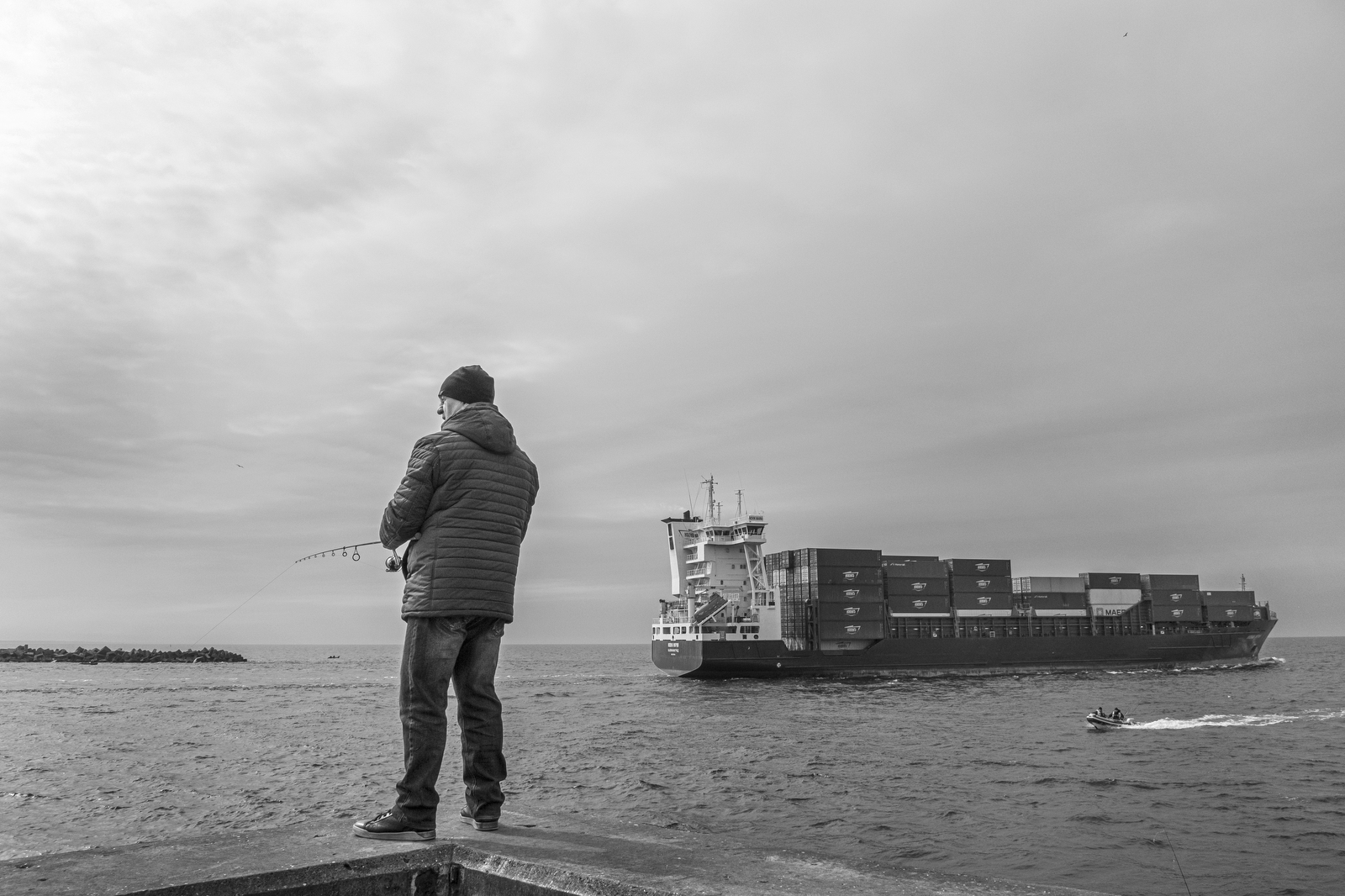
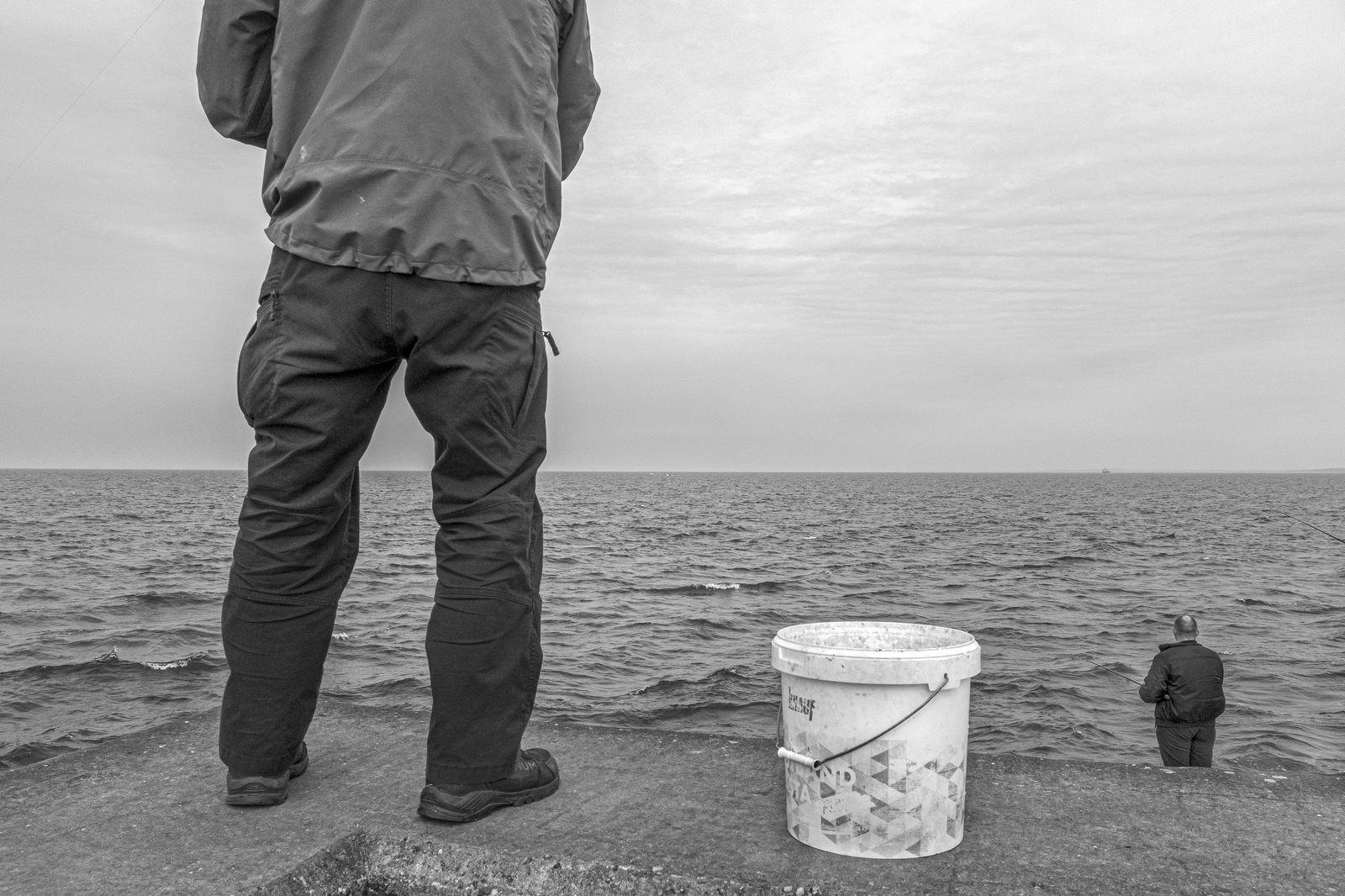
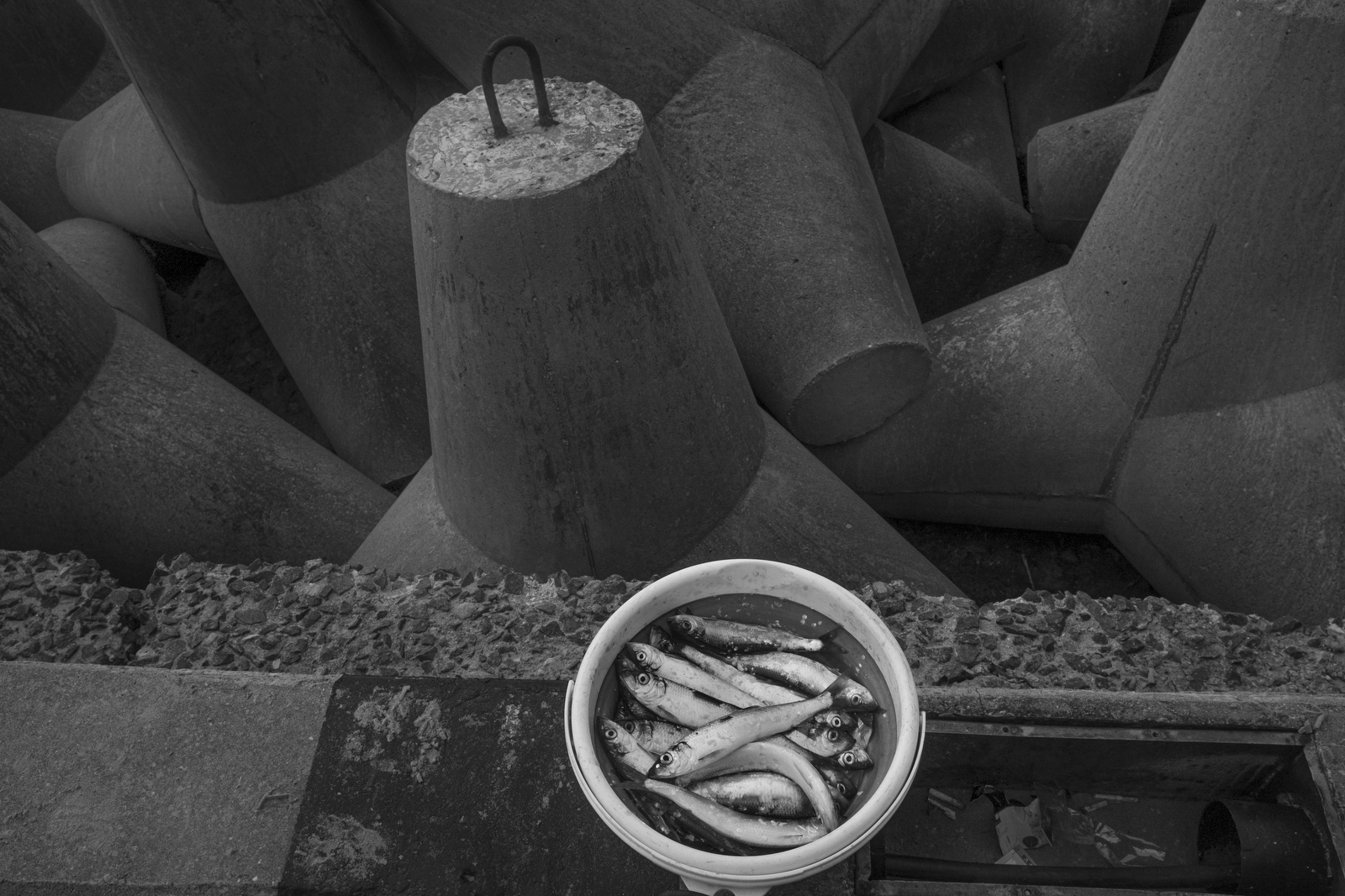
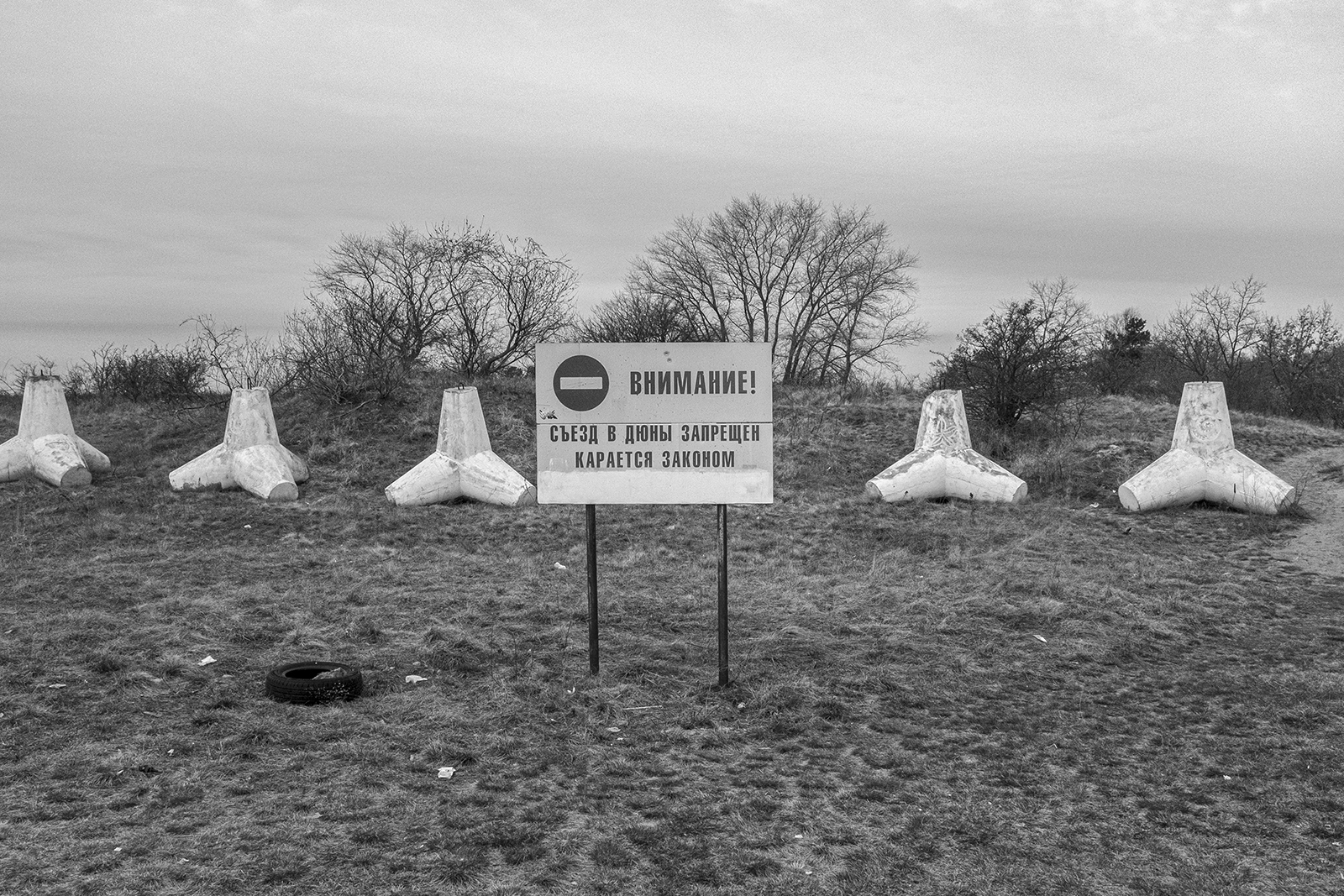
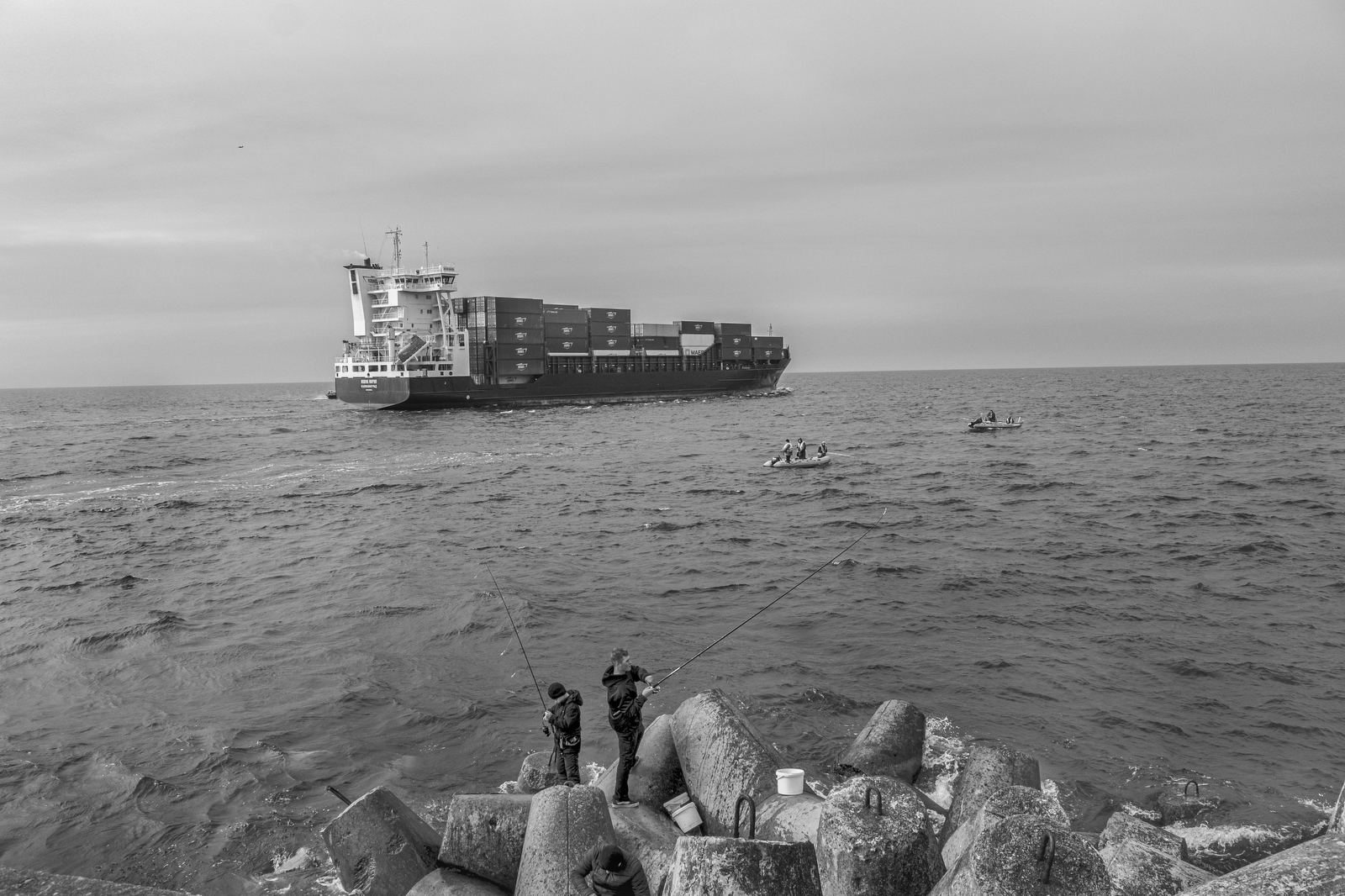
On such days Baltiysk changes. Parking lots are full, including those near the monument to Empress Elizabeth. People walk out to the mole, stand shoulder to shoulder, watch their lines, smoke, talk, fall silent, wait, and pull again. There is no heroism in it, and no romance in the usual sense. But there is something more enduring: a simple, repeated bond between people and place, between the sea and the season, between labor and luck, between what can still be taken from the world by one’s own hands.
Fresh fish is sold on the spot, straight from the bucket. A kilo of herring goes for 250 rubles. But the point, of course, is not only the price. The spring herring catch in Baltiysk is not just about fish, and not only about livelihood. It is a small annual migration to the sea, almost a folk ritual, in which life beside a naval base at the edge of the country briefly takes on another meaning — not a state meaning, but a human one.
Against the backdrop of grey water, stone, wind, and military silhouettes, the scene feels especially precise. As if life itself, despite everything, goes on with its old work: catching fish, filling buckets, talking about nothing, watching the sea, and waiting for spring.
Oleg Klimov, freelance photographer. 2026.03.29. Baltysk, Russia
P.S. I share photographs as part of a commitment to documentary storytelling — focusing on themes that the mass media tend to ignore for lack of a news hook, and that gain little attention on social networks. These are images from the everyday lives of ordinary people — lives that seldom reach the front pages, yet contain their own quiet drama. If you’d like to contribute to either, you’re very welcome.