
Reverse Perspective | Soviet Union
by Valery Shchekoldin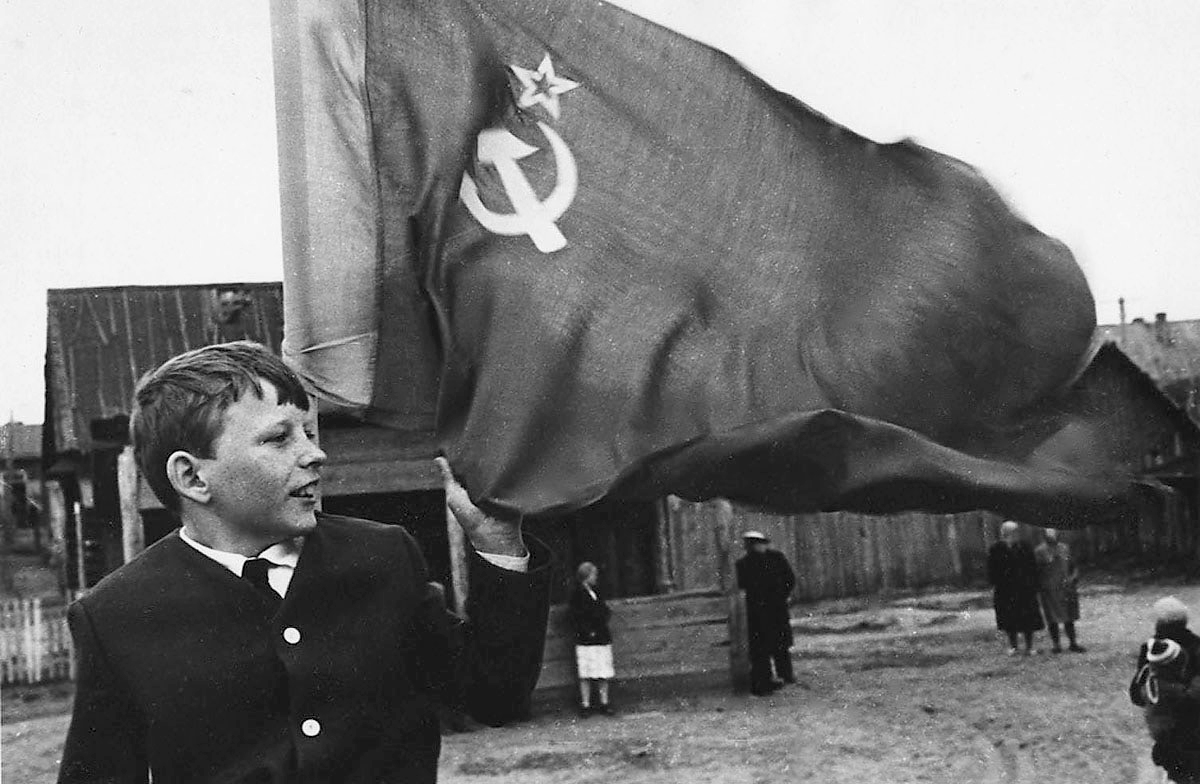
From the present, the past appears in reverse perspective. Looking back, everything seems clearer — easier to measure and to judge. What once felt solid and essential may turn to dust, while what seemed trivial can, over time, reveal itself as decisive.
Photography is not about freezing time, but about listening to it — and sometimes, hearing what it was trying to say long before we understood.
Like every photographer, I owe a debt to the time that has passed — to the years I witnessed, half consciously, half by accident. In 1987, in Ulyanovsk, where I had lived for thirty years, I tried in my own way to repay that debt. I held my first and very late (and therefore enormous) exhibition — “The Moment of Truth” — showing 437 photographs.
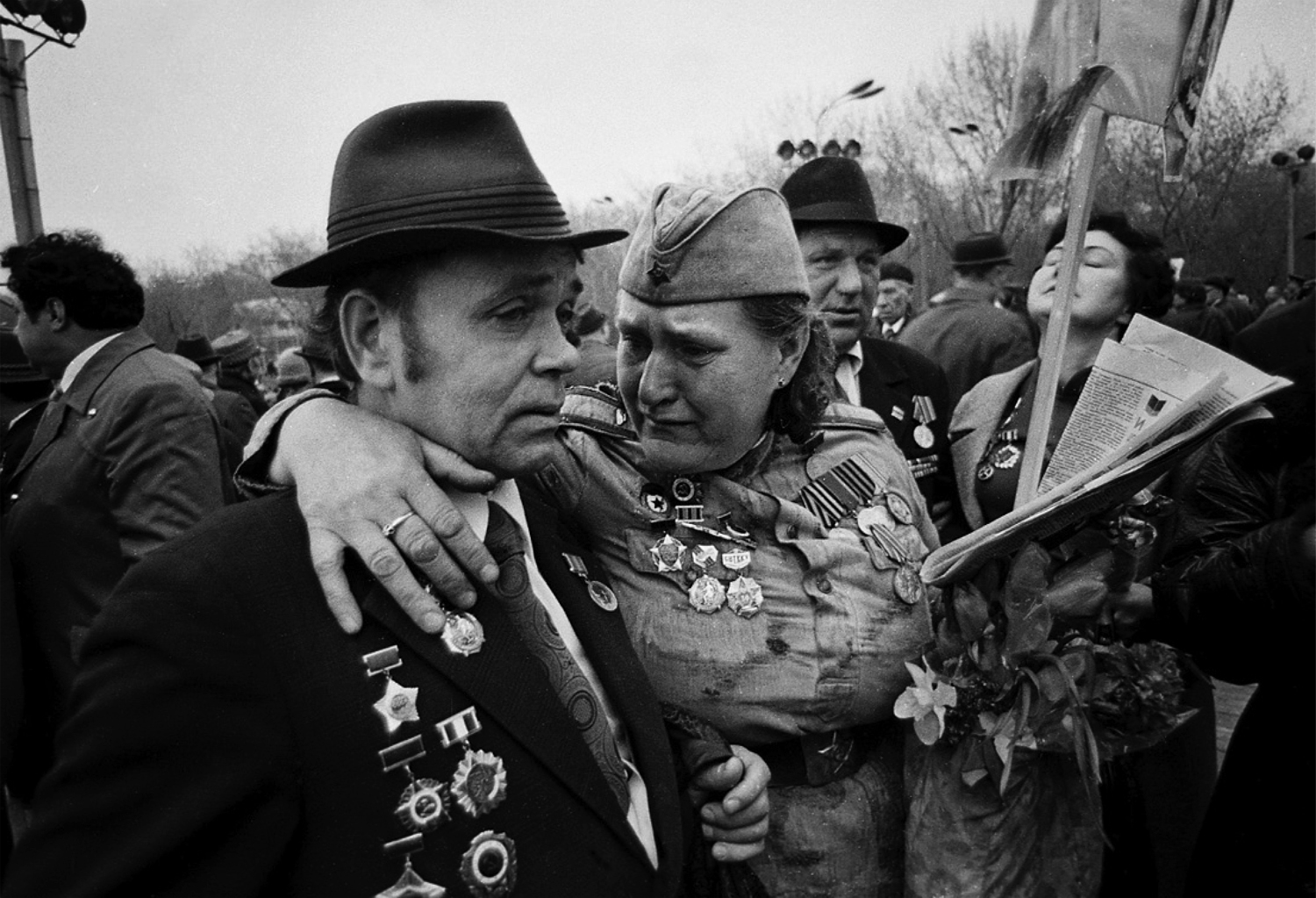
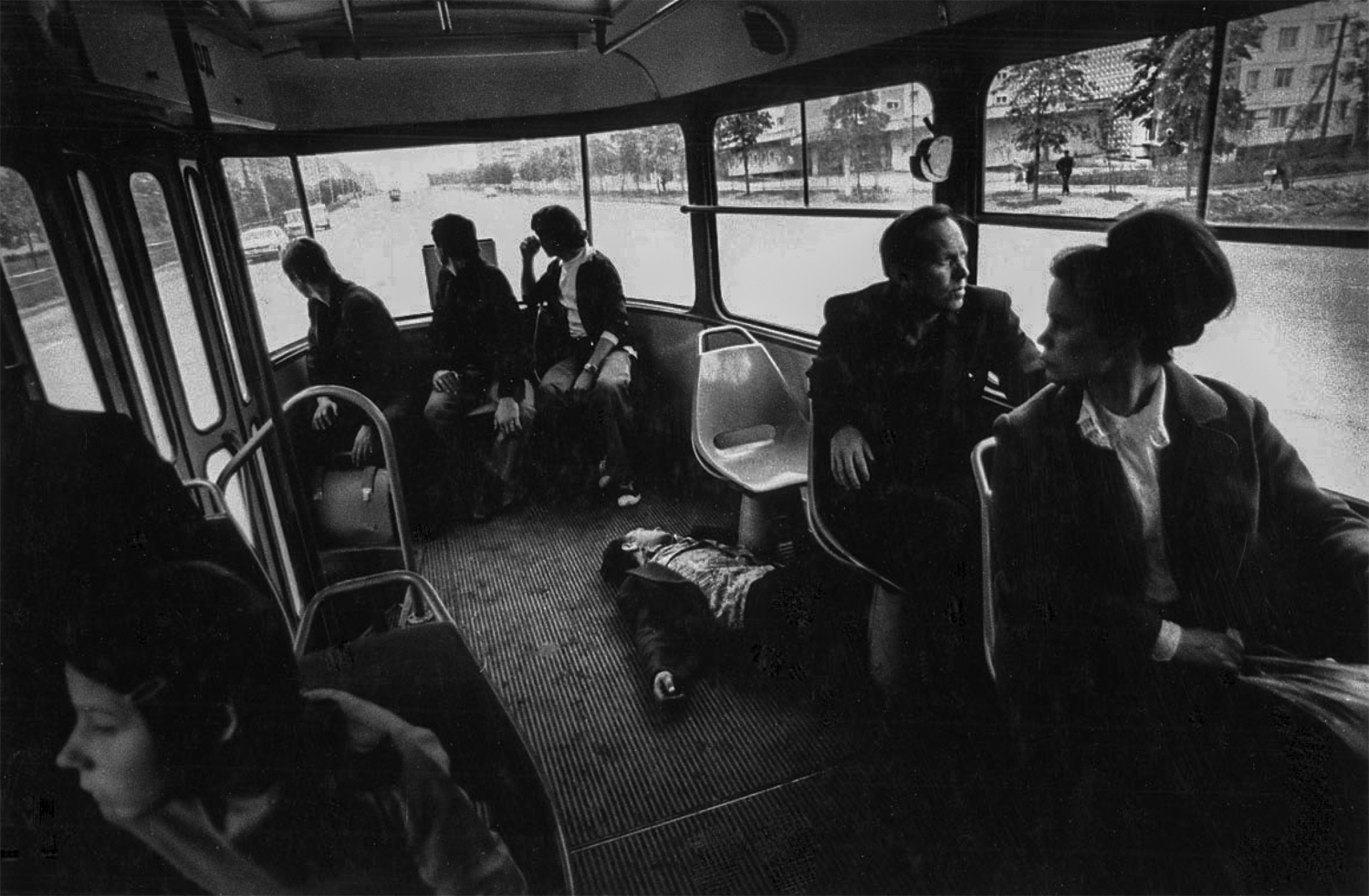
By all logic, such an exhibition should not have taken place then, nor there. Yet it did — perhaps because no one bothered to check it beforehand, assuming it harmless. In those years, both journalistic and amateur photography were considered innocent, almost frivolous pursuits. My pictures were not anti-Soviet. It was the system itself that had become anti-Soviet, even though it continued to speak in Soviet language.
I was born within that system and knew no other. But I sensed — as we were all taught — that every system has its flaws, and that one must resist them. Unlike the professional flatterers, I considered myself a genuine socialist realist — meaning, one who included critique as part of realism. After all, how could anyone truly believe in that propaganda? No one did. But no one argued with it either — arguing with a bulldozer is both dangerous and absurd. Instead, people told jokes in the smoking rooms, proving their humor and their real political consciousness.
In one of my job references, written when I applied to an evening institute, someone dared to write: “Understands the policy of the Party and the Government correctly.” I thought that with such a reference, the only place I might be accepted was prison.
Why did I photograph? First, for myself — it was an instinctive act of resistance against the state’s machinery of delusion. And second, as a man who understood the value of a document, I wanted to preserve the memory of a time.
I tried to capture the chasm between the people’s impoverished existence and the rigid ideology of power. I never thought about whether these photographs would ever be published. I acted like a collector — perhaps a mad one — seeking out faces, gestures, and moments where life revealed its endless variety. I even cherished, like a connoisseur, examples of well-meaning foolishness — less varied, but often hilariously absurd.
Viewers often expect documentary photography to show life as it truly is — balanced, objective, complete. I never aimed for such a monumental task. I sought to show, above all, what stood in the way of life. That is not just my selective view — it is also my misfortune. Or rather, it is the misfortune of a country that seemed to possess everything needed for prosperity.
More than that, our state still relied on an enormous, undeserved reserve of Christian humility from its people — in a land officially atheist.
In the late Soviet years, the propaganda machine produced lies and absurdities in industrial quantities — poison that slowly corroded society and the state itself. People no longer believed the slogans, yet endured them. The Party leadership had sunk into senility; the people into drink; the economy into collapse. Communist ideals evaporated most quickly from the minds of the bureaucrats, who without a twinge of conscience transformed themselves into Soviet nobles.
The people, meanwhile, kept building communism — habitually, hopelessly — not for themselves, but for the Party and its families. We were not even deceived; we lived with our eyes half-shut, weary or swollen from drink.
The Soviet Union did not die by the hand of its enemies. It died of cynicism, incompetence, and betrayal; of the disbelief and apathy it had itself created; of the fact that, unlike wild capitalism, it was an artificial organism — one that demanded a special kind of human being: honest, conscious, selfless.
Forgive the long-windedness — but photography itself is an even longer form of speech, one whose meaning is often misunderstood. Not because we, as viewers, are blind, but because when we look at images, we don’t perceive them with the mind — we fill them with ourselves, with our own experience and sense of life.
This book is not meant to make us “remember and shudder,” nor to remember with nostalgic tears. It is meant to help us think soberly about the recent past — not to reject it, but to reconcile with it, to live it through once more with empathy.