
When Photographs Testify
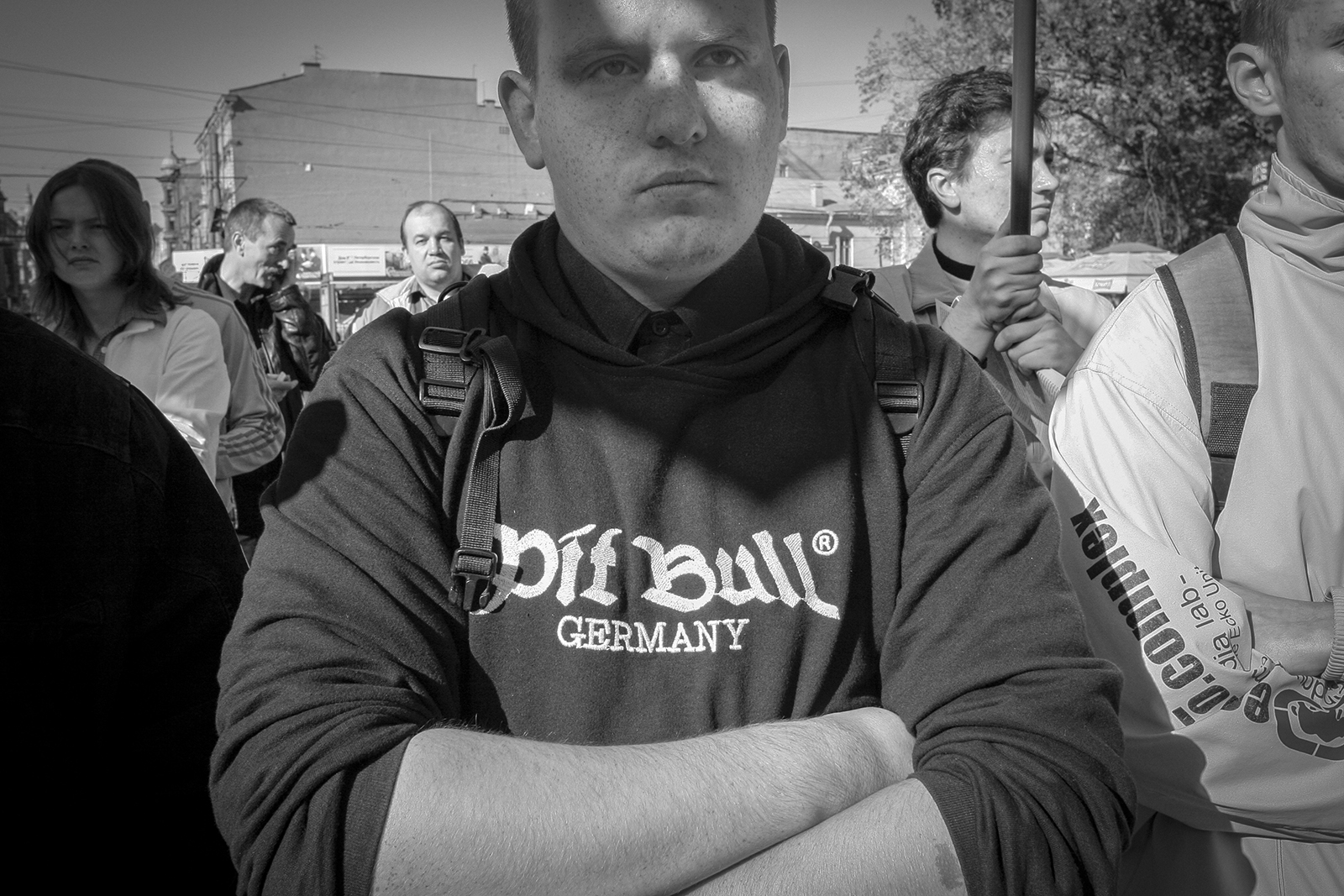
As someone with a good deal of worldly wisdom, I will tell you a story that happened to me about ten years ago — back in the days when our state was still warmly pressing all sorts of Nazis to its broad chest.
I was travelling from Moscow to St. Petersburg by riverboat and stepped down the gangway in our so-called “cultural capital” for one reason only: to make a photo report about fascists who had once again gathered for one of their stinking rallies.
In the square near the House of Pioneers, I was peacefully talking to one of the “Führers.” I asked questions and listened to his answers. The rally was guarded by the police; others were shouting slogans and waving flags with swastikas. Then suddenly, out of nowhere, another group of young men appeared — with baseball bats, burning flares, and masks over their faces.
The young man of Aryan appearance I had been speaking with was almost immediately hit in the face with a bat. The cops ran back to their cars, losing their peaked caps with cockades along the way, while I simply began, instinctively, to photograph everything, without understanding what was happening.
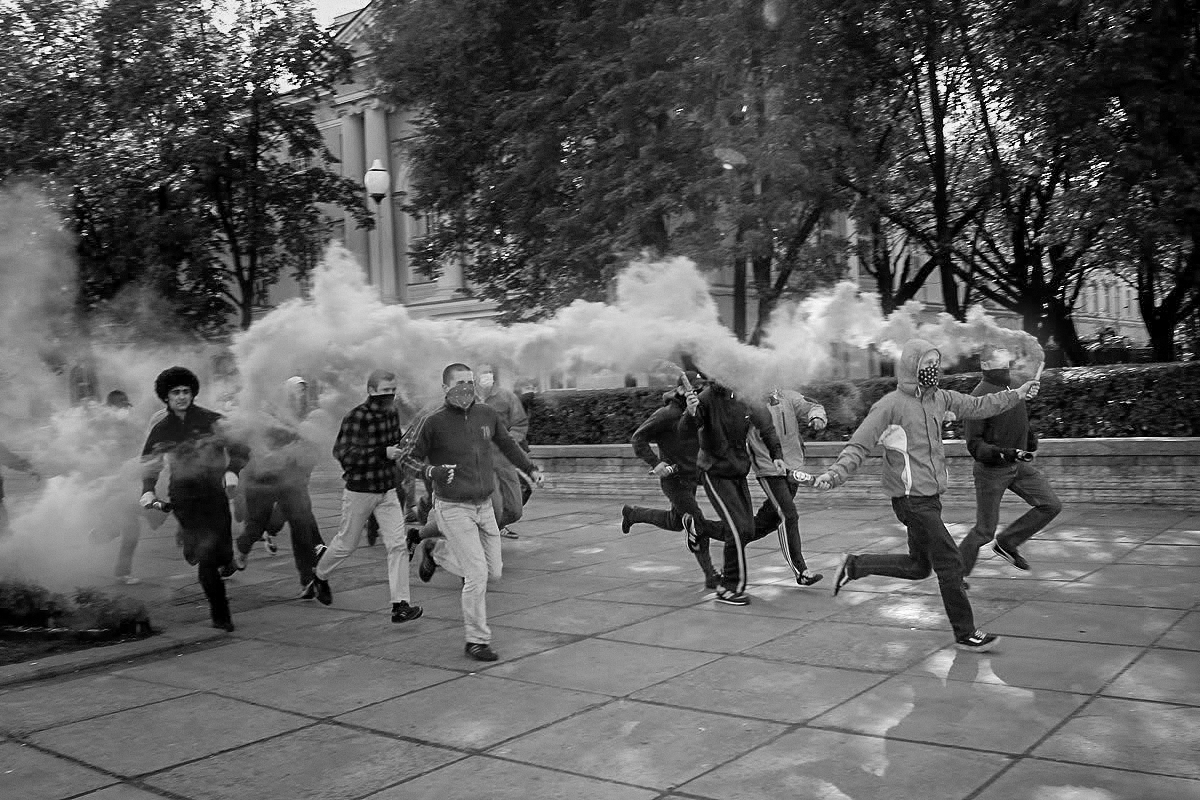
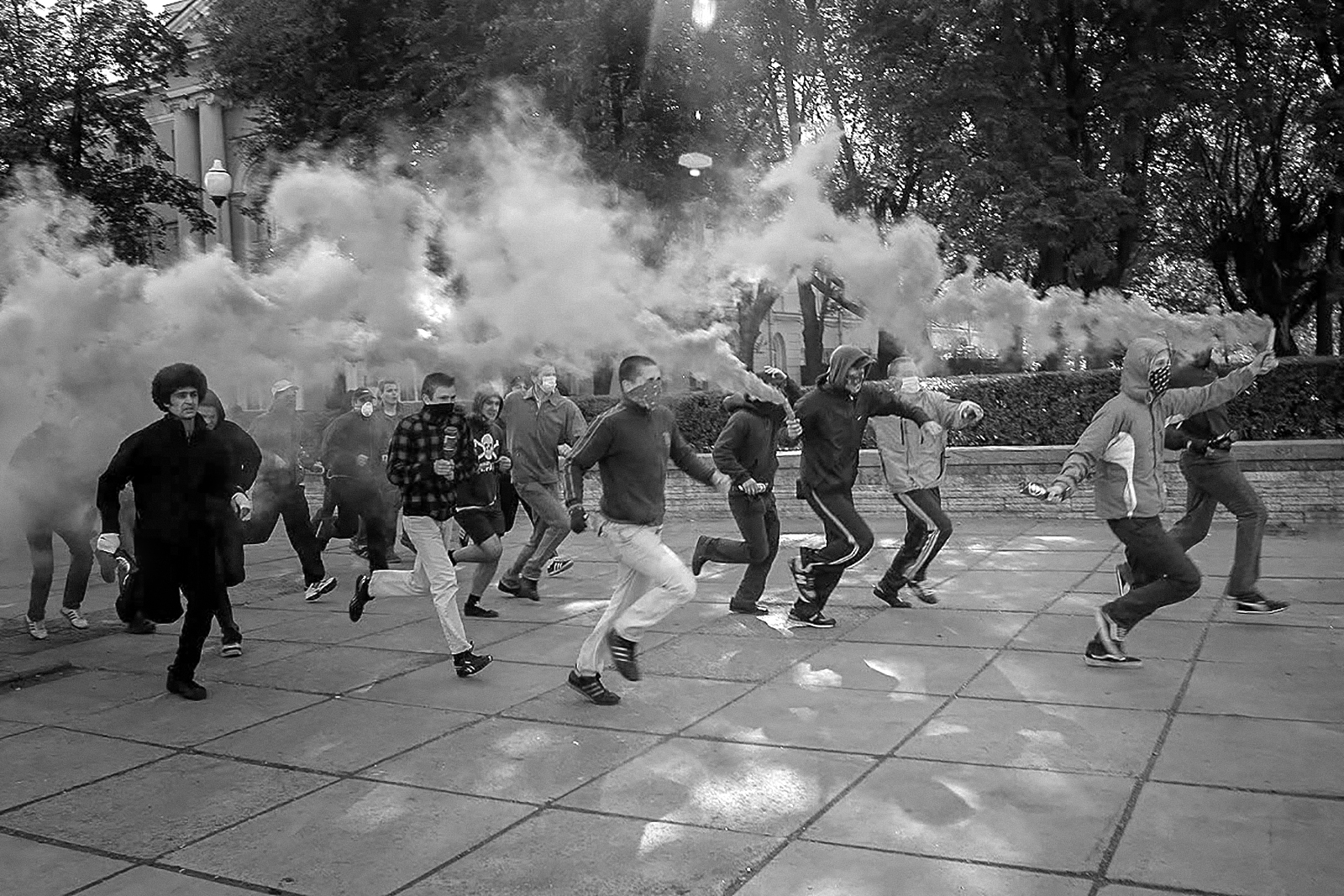
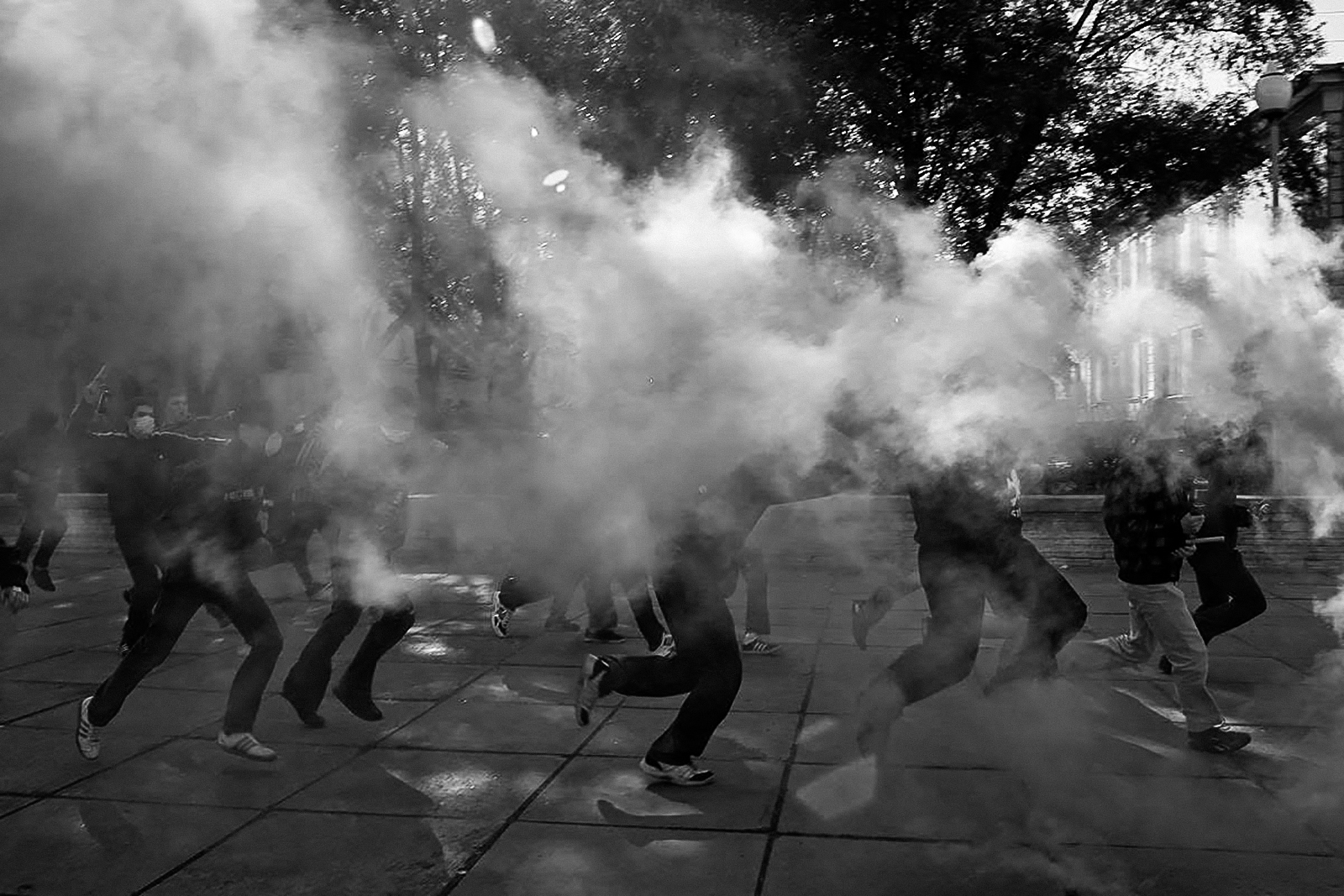
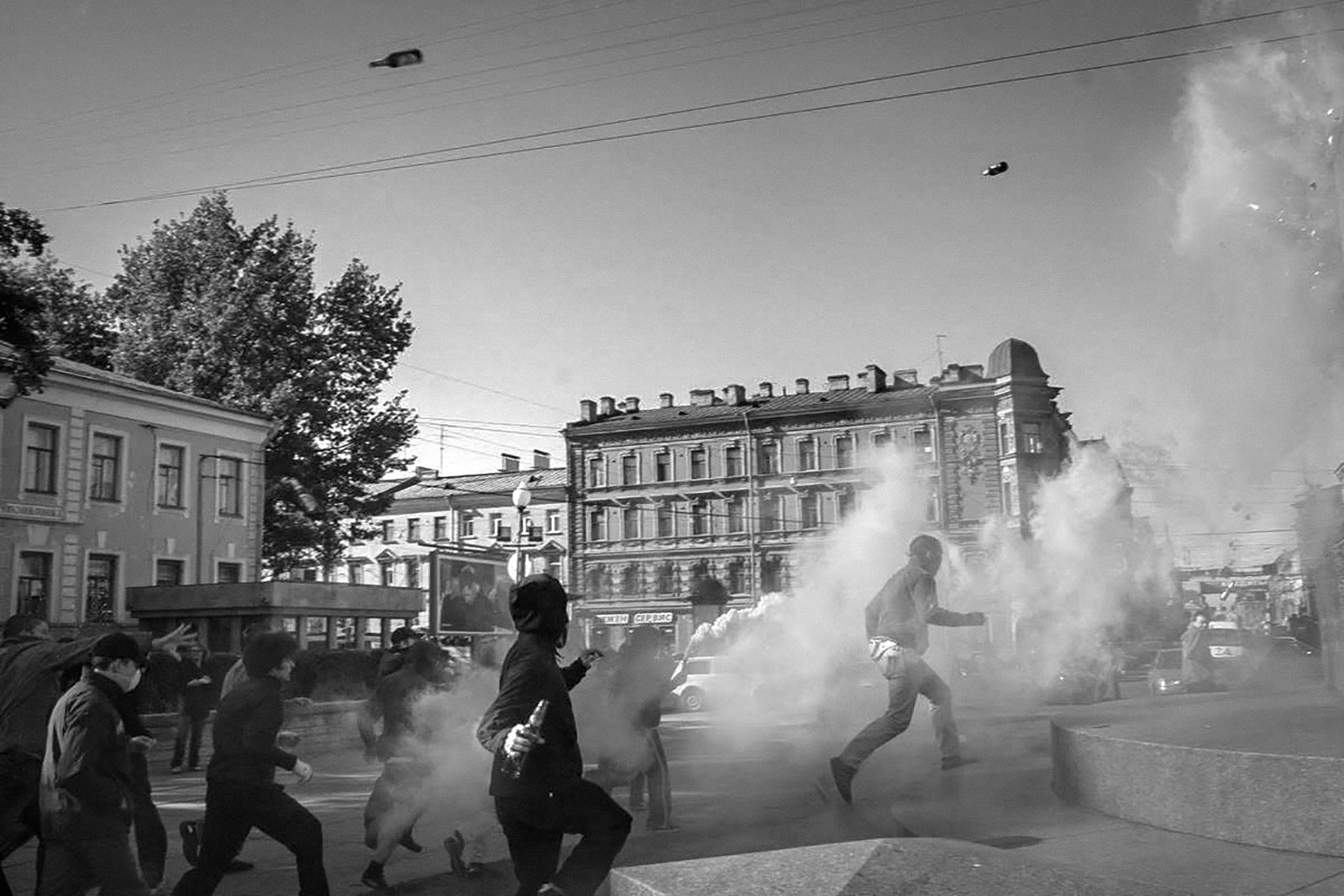
They were anti-fascists — “Antifa.” I do not know why, but they did not beat me. It seemed to me that they simply did not notice the photojournalist with three cameras, which in itself was surprising.
I published the photo report, although I knew perfectly well that some young people could easily move from the anti-fascist camp to the fascist camp, or the other way around. For them it was a kind of “cool game,” a game they had been taught to play by adults. By us.
Some time later, a prosecutor called me with a “request”: I “had to appear in court.” I refused and told her — it was a woman — that under no circumstances would I testify in favor of fascists.
She tried to convince me that I did not have to testify in anyone’s favor; I simply had to tell the truth and confirm that the photographs included in the criminal case, following my publication, had been taken by me, and that I, as their author, was a witness.
She simply did not understand that if I told “the truth,” I would in fact be testifying in favor of the fascists and against my own conscience. To give false testimony in court was, of course, also impossible for me.
But for the prosecutor this problem did not exist — this thin red line. She offered to pay for my tickets to St. Petersburg, my hotel during the court hearings, and so on. I tried to explain it to her again, but then, with the usual aggressive manner of people serving the state, she began threatening me with a summons, with my civic duty, and with prosecution for refusing to testify.
So I simply switched off my mobile phone. No one could send me a summons, let alone hand it to me personally, because at that time I was always travelling and living in different hotels in different cities.
Still, I continued to follow the St. Petersburg criminal case. It was public and demonstrative. My photographs were shown in court as well. They were also published on fascist websites as evidence and accusation. Supporters of Antifa deeply regretted that they had not beaten me with bats too, and promised that next time they certainly would.
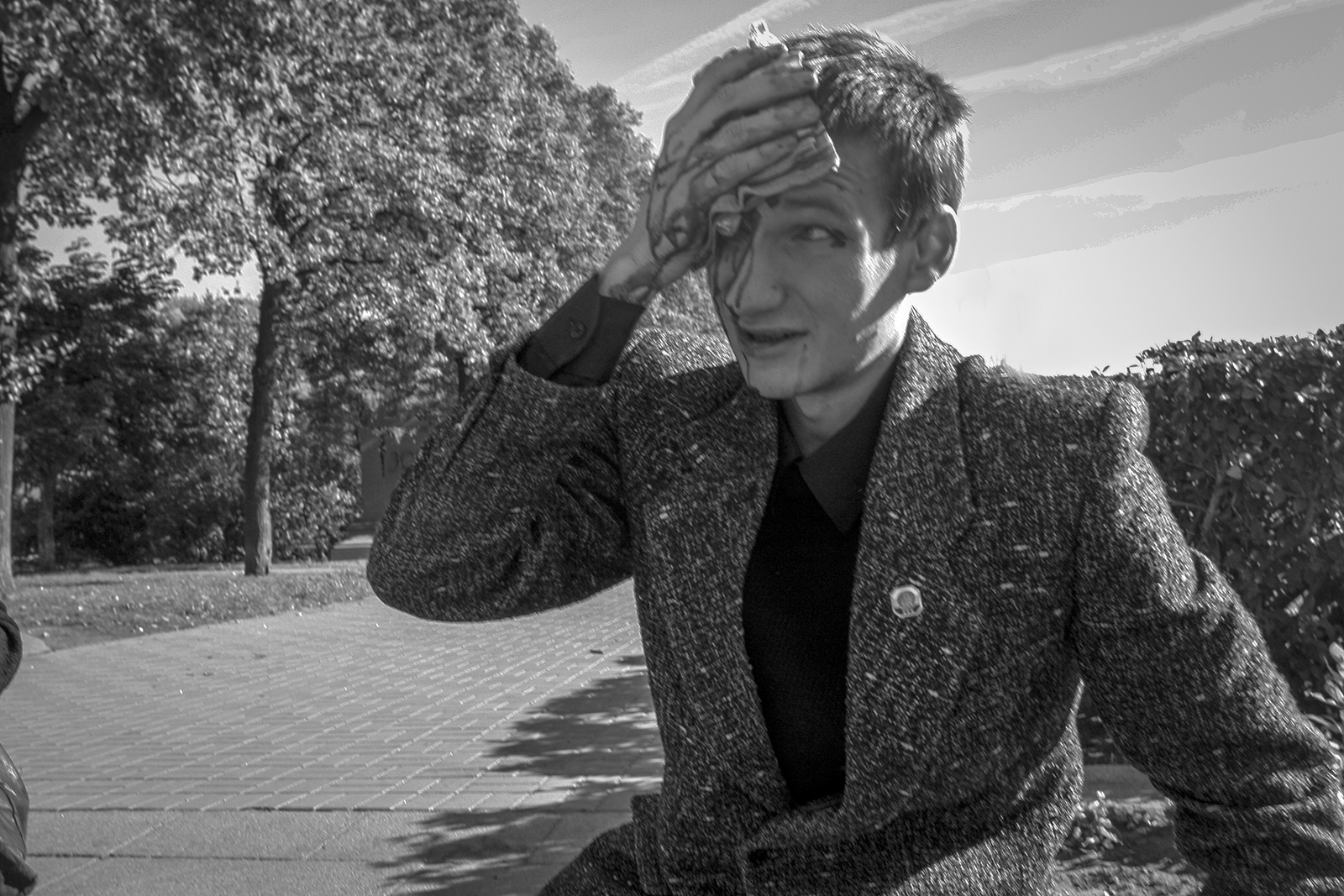
Some of them were imprisoned. Some remained free. Partly they were saved by the fact that they had been wearing masks, and partly by the fact that I refused to appear in court. But my photographs testified in court.
Photographs in our time generally have a tendency to testify independently of copyright, and independently of the conscience of their author. Such is “objective reality.”
So please do not judge me too harshly, but there are things I will never comment on or testify to in anyone’s favor if doing so contradicts my personal principles.
Oleg Klimov, Photographer’s Diary
Available for Editorial Assignments
Photographer's Diary
Subscribe