
Documentary Photography Network
What the Contact Sheets Couldn’t Tell
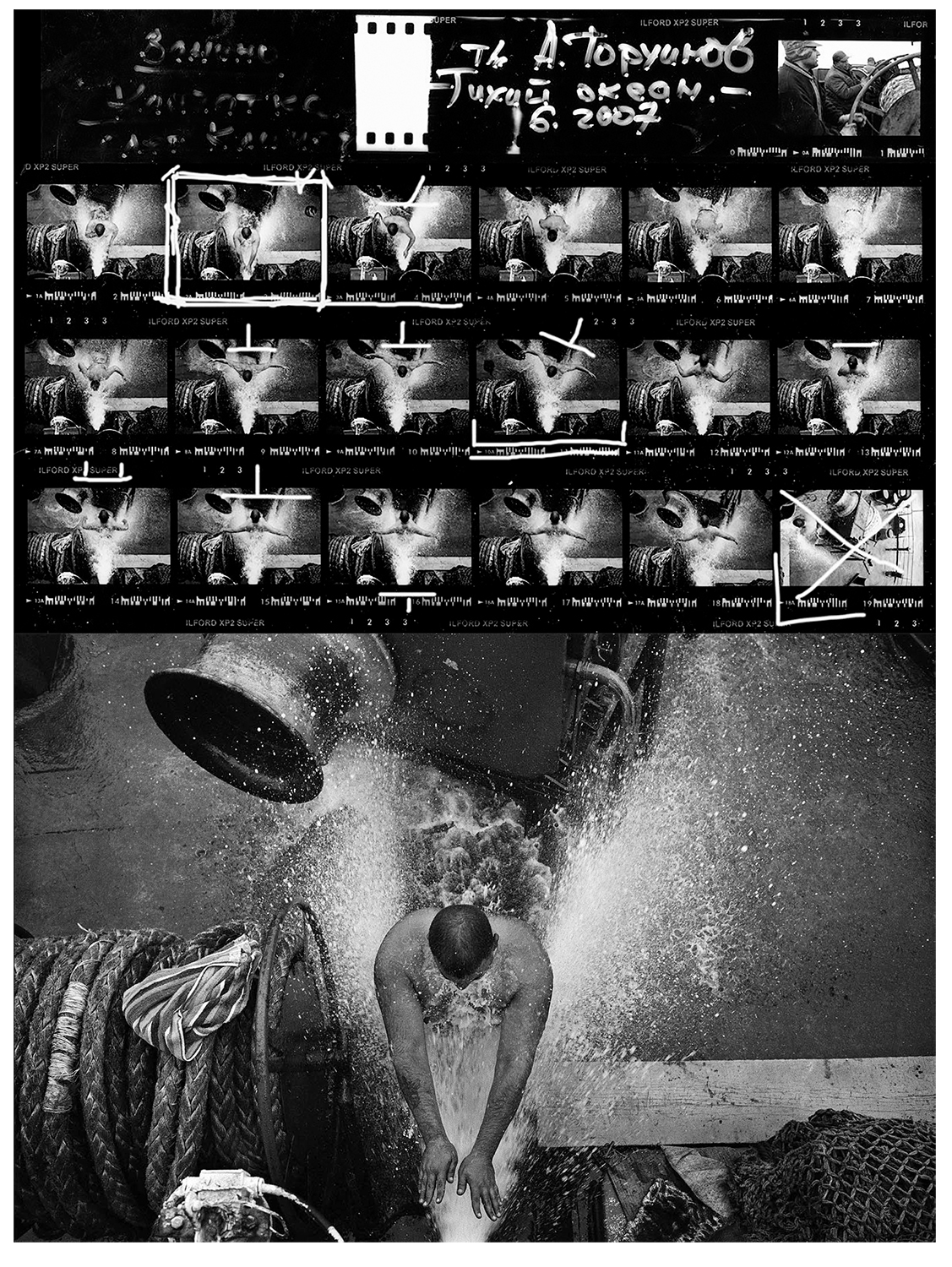
In 1993, Arjen Ribbens—then a picture editor at NRC, who later went on to write about art for the paper—taught me how to select photographs. I still follow the principles he taught me, whether I’m working with film or digital images.
Arjen would spread an entire shoot across the enormous light table in the picture department and examine every frame through a loupe: first on the contact sheets, then on the negatives he had marked, sometimes returning to the contacts for another look.
You had to be quick. Deadlines waited for no one. I often watched, but I wasn’t yet allowed to take part. My job was to develop other photographers’ films in the darkroom, make contact sheets and deliver them to the picture editor along with the negatives in their plastic sleeves.
But the selection process fascinated me. I watched from the sidelines, pretending I was simply waiting for his decision: once he had chosen the negatives, I had to rush off to make the prints, dry them and bring them back.
Usually, the paper needed just one to three photographs. We would make an initial selection of about nine and print them. Arjen would then lay the actual prints out on a table and make his final decision: which photographs to use, and how.
This happened every day, often several times a day. When my photographic education moved to a more “advanced level,” I was allowed to take part in the selection itself.
The first thing Arjen told me was:
“First: never judge a photographer’s ability by a few individual pictures. Second: never show all the contact sheets from a shoot to anyone except an editor you trust. A good editor can read your thought process in those sheets—and assess your abilities as a photographer. Not everyone needs to know all that. So you’ll bring me your selection, and I’ll critique it.”
That was a good lesson.
The second lesson I remember concerned the actual work of a city news photographer. Some rough punk gathering was about to take place in Amsterdam. Having grown up in the Soviet Union, I asked my picture editor:
“What am I supposed to photograph?”
He looked slightly surprised.
“Photograph whatever you want. Then we’ll see what you think about it all. If we see things the same way, we’ll run a story. If not, you’ll be photographing old locomotives in Zwolle.”
I photographed a fight among the punks, and the story ran in the paper. But they sent me to Zwolle anyway.
For those unfamiliar with the place, Zwolle is the arse-end of the Netherlands.
I made friends with a local policeman there. He called out to me as I was climbing over a high fence to photograph old locomotives in the pouring rain. In the Netherlands, incidentally, it always rains in the morning, and the good burghers hurry off to work.
What puzzled him was that I was climbing the fence instead of going through the gate. I told him I had no idea where the gate was. Presumably, a very long way away.
So he offered me a lift on his bicycle.
In Russia, two grown men—a policeman and a photographer—riding the same bicycle might have looked a little odd. But in Zwolle, as you can imagine, this is perfectly normal.
When we arrived, it turned out there was nothing worth photographing from the gate side either, and nobody around except a goat grazing nearby. So I resorted to a familiar little trick: I asked the policeman to hold the goat because it was getting in the way of my picture. Suspecting nothing, he put down his bicycle and took hold of the goat.
The picture editor was delighted. The photograph made the front page: a policeman with a goat, old locomotives in the background.
Imagine Arjen’s surprise when the policeman rang the newsroom the following day. He wasn’t calling to complain. He simply wanted to say hello to “the Russian photographer” and tell us he was going to cut the piece out of the paper and hang it up at home.
I then had to tell Arjen what had actually happened. That was something he couldn’t have known from the contact sheets.
He laughed, but advised me never to do it again. He never sent me to Zwolle again either.
I can’t say Arjen was particularly fond of me. I think he was more curious than anything else, often referring to me as “the Russian photographer.” But for many years, I trusted him with my contact sheets.
Oleg Klimov, Photographer’s Diary
Available for Editorial Assignments
Photographer's Diary
Subscribe