
A City with Someone Else’s Passport
Approximate reading time: 3–4 minutes. По-русски
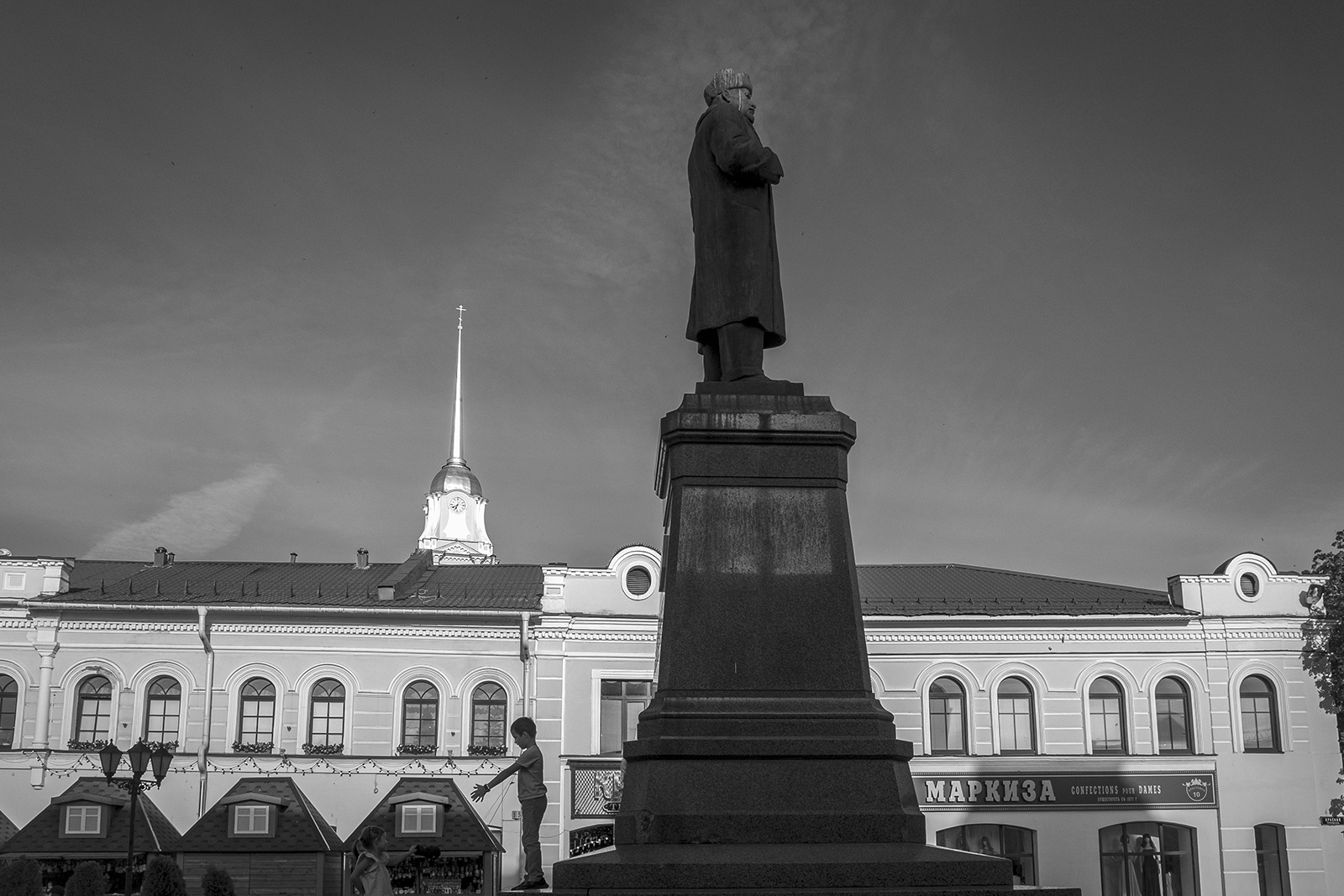
Some cities change their names naturally — through language, rivers, trade, memory, and time. Others are given a name from above: like a new passport, a party card, or a posthumous medal for a man who had about as much to do with the living city as a bronze monument has to do with a human body.
Rybinsk, in this sense, is an almost perfect example.
It had a good, organic Volga name. In it one can hear fish, water, a river pier, trade, the Sheksna, the Volga, barges, barge haulers, grain, the smell of the river and wooden warehouses. First there was the ancient settlement of Ust-Sheksna, then Rybnaya Sloboda — the Fishing Settlement — and later Rybinsk. This was not a name invented in an office. It grew out of geography and life.
But Soviet power was never especially fond of life naming itself.
In 1946, Rybinsk was renamed Shcherbakov, after Alexander Shcherbakov, a high-ranking Party official who had died the previous year. He had been a secretary of the Central Committee, head of the Moscow Party organisation, head of the Soviet Information Bureau, and one of the important figures in Stalin’s propaganda machine.
Formally, he was not a Chekist. But in the Soviet system such distinctions often mattered only for personnel files. The Party, the army, propaganda, the security organs — they were different floors of the same building.
A city on the Volga was given the name of a man from the upper floor of that building.
Then, in 1957, after Stalin’s death and after the Twentieth Party Congress, the city once again became Rybinsk. Its historical name was returned, as if someone had taken a stranger’s greatcoat off its shoulders. The Volga was again the Volga, Rybinsk was again Rybinsk, and one might have thought the story would end there.
But Soviet memory worked in cycles. It did not so much remember as rename.
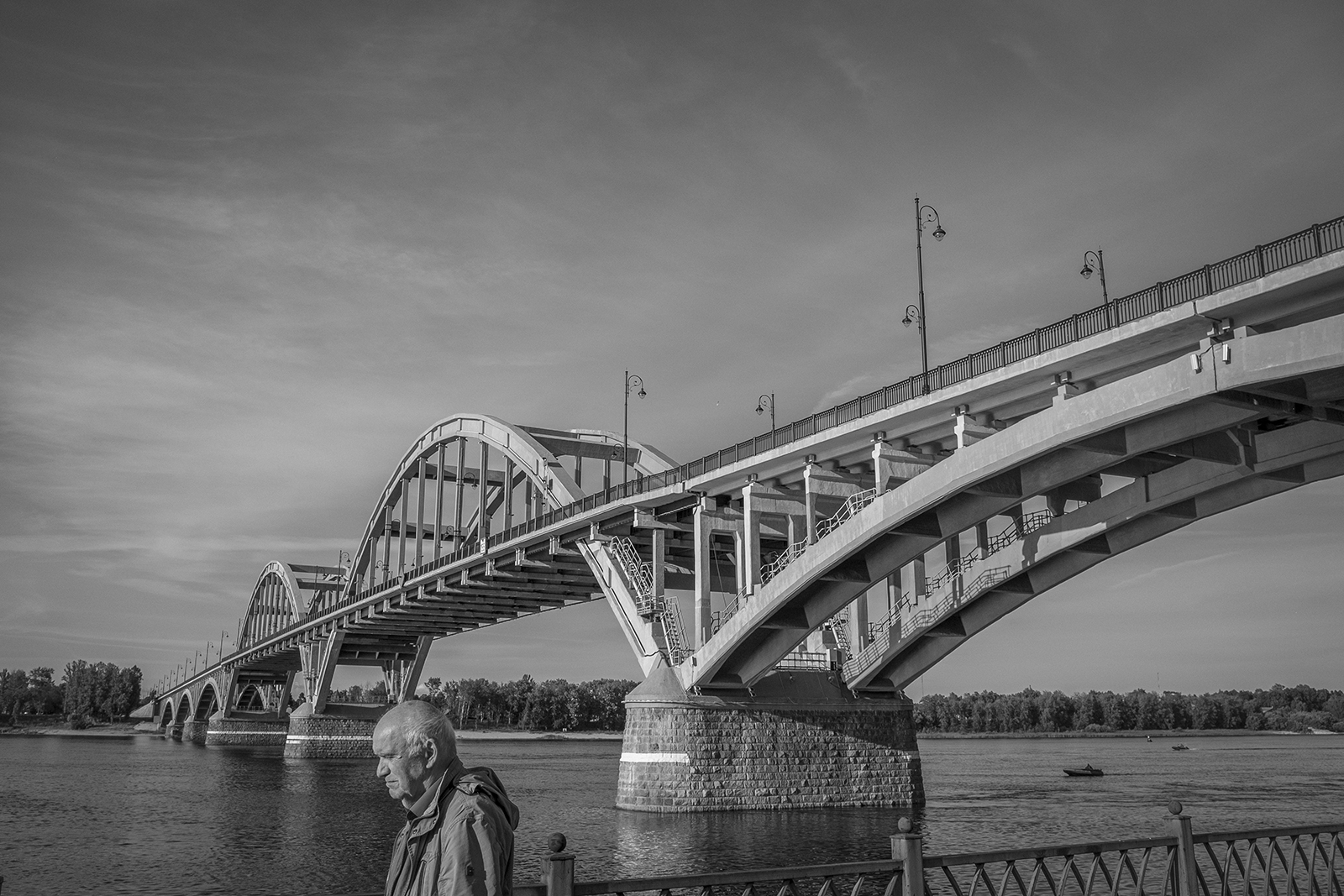
In 1984, Rybinsk was deprived of its own name once again. This time it became Andropov, after Yuri Andropov, the recently deceased former chairman of the KGB and short-lived General Secretary of the Communist Party.
Here the connection with the city was more understandable in biographical terms. Andropov had studied at the Rybinsk River Transport Technical School, worked at the Rybinsk shipyard, and began his Komsomol career there. But that does not make the logic of the renaming any less strange. An old Volga city was turned for several years into a posthumous token of gratitude to a man who had headed the Soviet system of state security.
Once again, the city was issued someone else’s passport.
I understand perfectly well that in the Soviet tradition all this was considered normal. A major official dies, and immediately something must be named after him: a city, a factory, a street, an institute, a ship, or a district. Preferably before the man has even had time to cool down in the mausoleum-like language of state obituaries.
Soviet power had a remarkable talent for turning the death of officials into geography.
But there is more here than an administrative habit.
Renaming a city is not simply a matter of changing signs. It is an attempt by power to enter everyday language. A person buys a ticket not to Rybinsk, but to Andropov. Writes a letter not to Rybinsk, but to Shcherbakov. Is born, studies, gets married, leaves, returns — all this no longer happens in a city, but in an ideological monument.
This is how power makes memory compulsory.
Not personal memory. Not family memory. Not historical memory. Compulsory memory.
You may know nothing about Shcherbakov, but you live in Shcherbakov. You may have nothing to do with the KGB, but your city is called Andropov. Even if you do not care, the state has already pronounced the necessary name on your behalf.
In 1989, Rybinsk once again regained its historical name. For the second time in one century, the city seemed to wake up and say: no, thank you, I am still Rybinsk.
This return of the name seems important to me. Because the true name of a city is not always the oldest and not always the most beautiful. But it should belong to the place itself, not to yet another dead official.
Especially since the Soviet shadow in Rybinsk is already thick enough without any renaming. Genrikh Yagoda was born here — one of the future heads of the Soviet security organs, People’s Commissar of Internal Affairs, a man whose name is linked to the early machinery of repression, camps, fear, and that part of Soviet history which cannot be washed clean by memorial plaques or cautious museum wording.
The city was never called Yagoda — thank God. But the fact of his birth in Rybinsk adds another layer to its local history. The Volga, merchants, grain trade, industry, Soviet power, Party renamings, the KGB, the NKVD — these things do not belong in separate drawers. They are part of the same historical cupboard, from which every now and then a skeleton, an archival note, or a portrait of a man in uniform falls out.
And this is where Rybinsk becomes especially interesting.
It is not merely a city that was renamed twice. It is a city in which one can see very clearly how Russian history treats place. At first, a place lives by itself — by the river, by the water, by the pier. Then power arrives and says: from now on, you will be called this. Later the power changes, and the old name is returned. Then another wave of the same power arrives and says: no, from now on, you will be called something else.
And the city survives all of it.
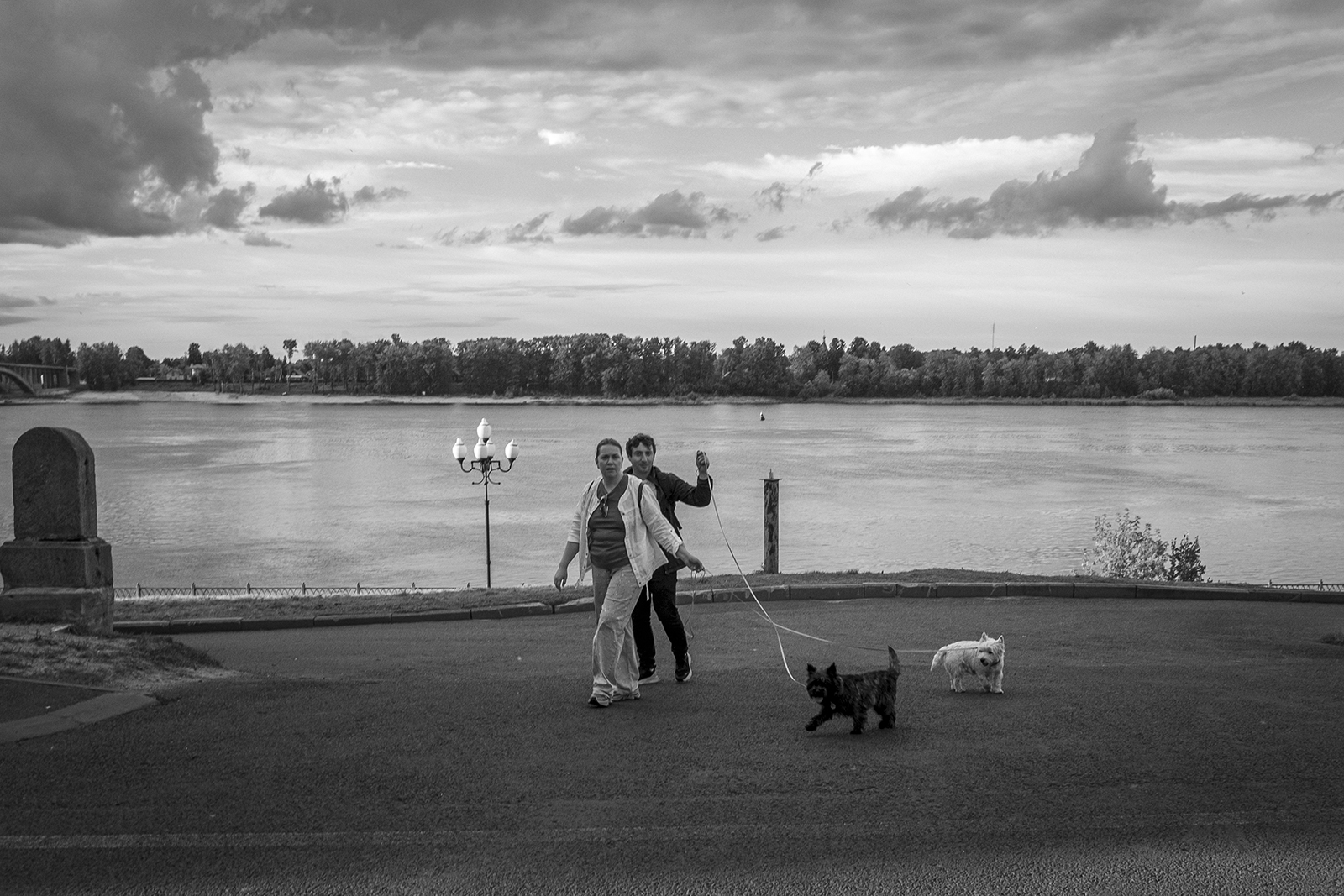
People continue to go to the market, get married, argue, fish, work at the factory, look at the Volga, wait for the bus, drink tea, and bury their relatives. History above changes the signs; life below continues to flow.
Perhaps this is where the real Russian resilience lies: not in heroic speeches, not in officials, not in monuments, but in the ability of a place to outlive those who tried to impose their names upon it.
Rybinsk twice became someone else’s monument. First Shcherbakov, then Andropov. But in the end, it became Rybinsk again.
And that, perhaps, is good news.
Because a city, like a person, may be given an imposed biography. It may be issued someone else’s passport. It may be given a name by those who regard memory as an administrative resource.
But real memory lies deeper. It is not in what officials called the city. It is in how the city returned to itself.
Oleg Klimov, Photographer's Diary. July 25, 2026, Rybinsk.
Available for Editorial Assignments
Photographer's Diary
Subscribe
Share the story — make the world freer: