
A Town Without a Bridge
Approximate reading time: 2–3 minutes. По-русски
The town of Tutaev (map) stands on both banks of the Volga and still manages without a bridge. Here, the absence of a bridge explains more than the presence of a Lenin monument. On one side of the Volga is the Borisoglebsk side; on the other, the Romanov side. Before the revolution, the town was called Romanov-Borisoglebsk. Then, as often happens in Russia, a new power arrived, renamed everything, while the Volga remained where it was and continued to divide the town more calmly and more convincingly than any administrative decision.
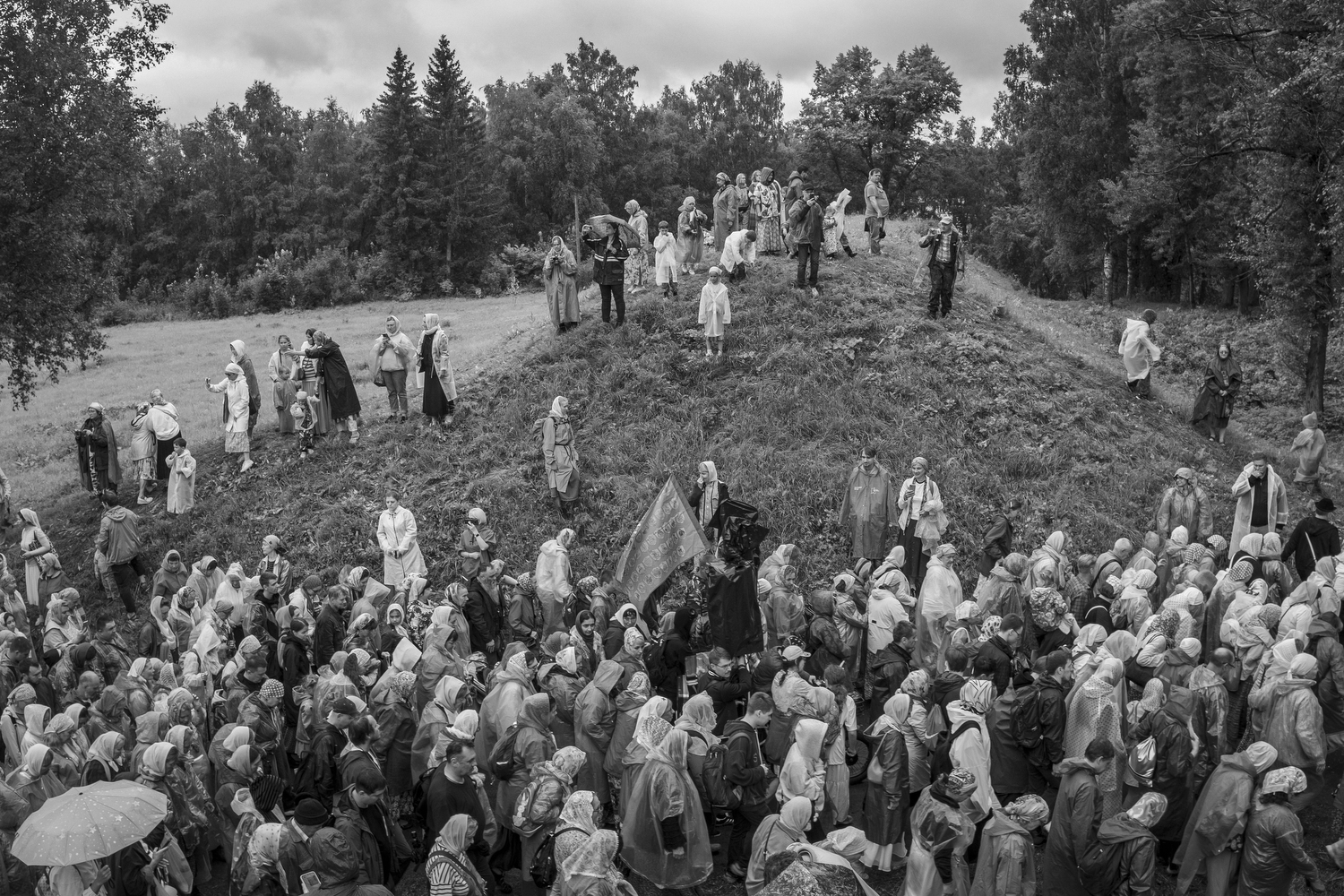
The Tutaev religious procession with the icon of the All-Merciful Saviour is one of those rituals in which religion and provincial everyday life mix without any staging. People walk because this is how people walked before them; because someone is ill, someone remembers, someone believes, someone came along for company, and someone simply cannot miss the day when the whole town suddenly becomes a road.
The Soviet authorities did not like religious processions and banned them. Society had its own officially approved faith, called Marxism-Leninism. Any procession not organised by the Communist Party aroused suspicion. Especially when people were not following the portrait of yet another leader, but an image older than all Party secretaries, chairmen, department heads, and their official cars.
During perestroika, in 1989, the tradition of religious processions was revived. Soviet power was already breathing heavily, and the icon of the Saviour returned to the streets of the town, as if it had simply waited out an unfortunate historical period.
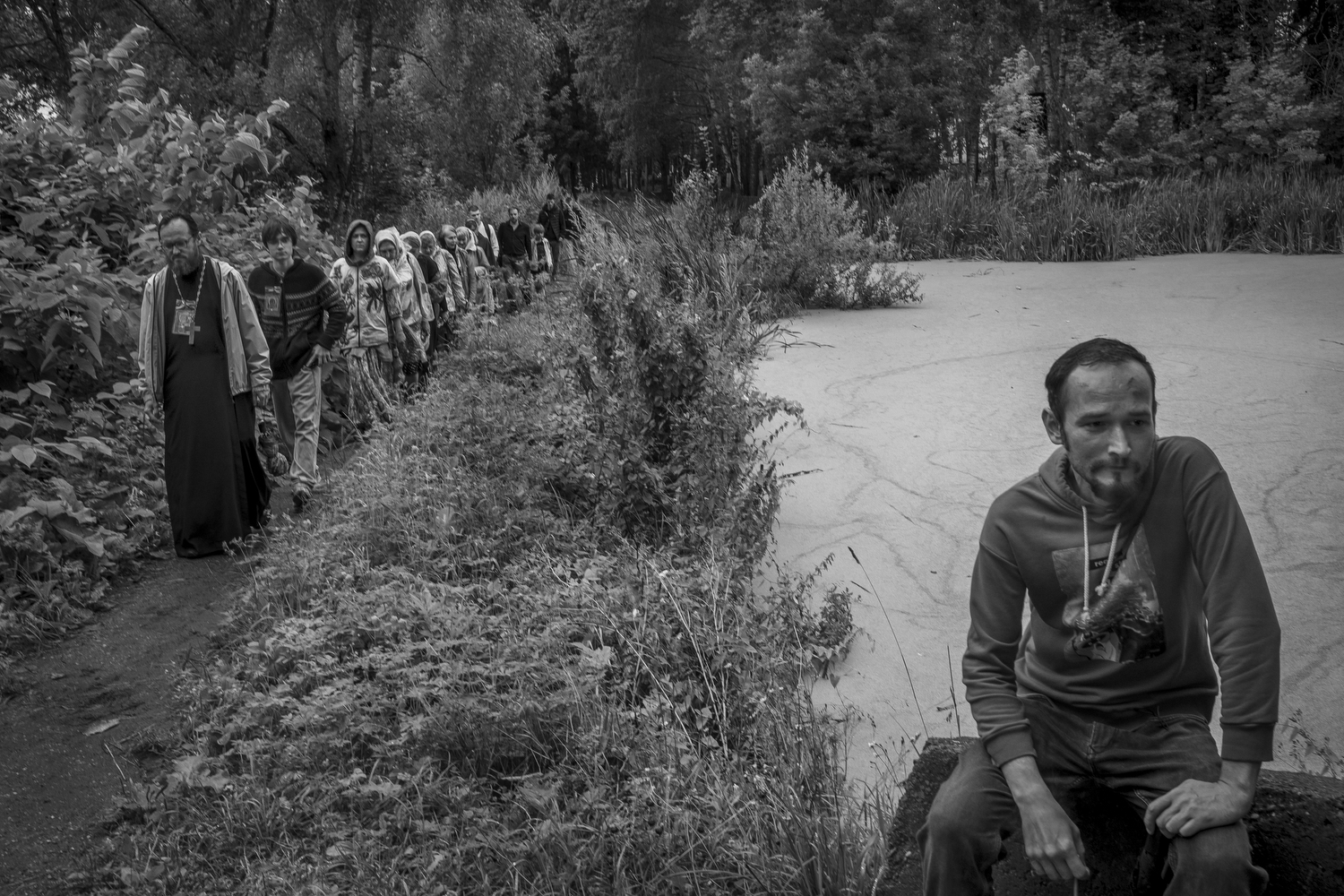
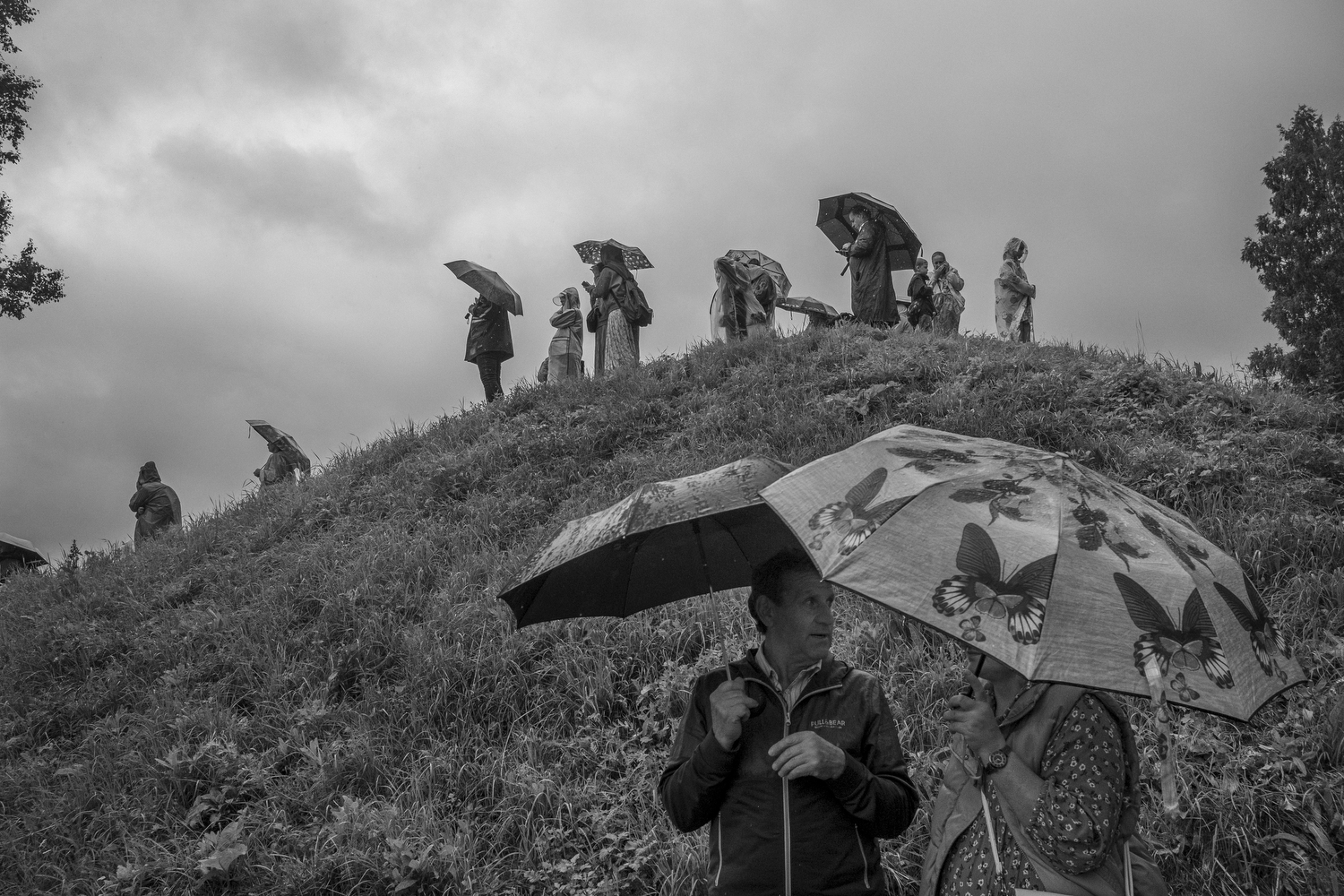
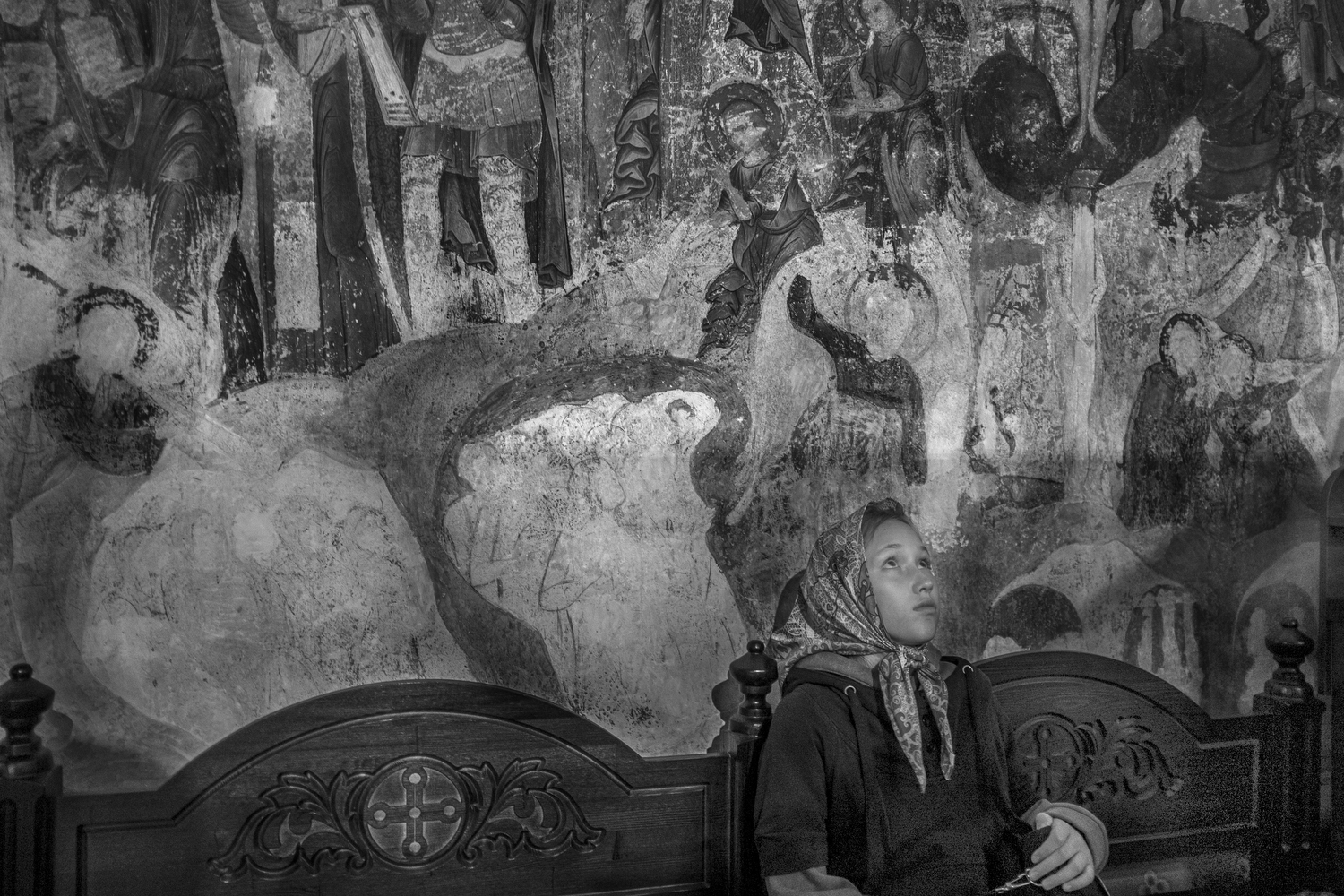
The procession lasts several hours. It moves from church to church, stopping along the way, gathering around itself old people, children, priests, pilgrims, local residents, accidental spectators, photographers, and those who seem to have stepped out merely to take a look, but for some reason soon begin walking too. In the provinces, it is difficult to remain an “accidental spectator” for long. Sooner or later, you are drawn into the common rhythm: bells, choir, footsteps, heat, dust, the smell of grass, the Volga somewhere to the side, a phone in someone’s hand, a headscarf, a boy on a bicycle, a dog by the roadside.
Photographically, it is a remarkable event. Not because it is “beautiful,” although of course it is beautiful. What matters more is that the procession reveals the town not as a façade, but as an internal structure.
On an ordinary street on an ordinary day, people usually go their separate ways. Here, suddenly, they all move in one direction. Each person has a reason of their own, but the route is shared. Someone prays, someone talks, someone films on a phone, someone carries water, someone is tired, someone cries, someone makes sure a child does not run underfoot, and someone simply walks in silence, because silence is sometimes more precise than any words.
Holiness, if it exists at all in public space, does not have to look like a Byzantine fresco after restoration. Sometimes it looks like an elderly woman in comfortable shoes, a man with a red face from the heat, a bored teenager, a priest as tired as everyone else, and the huge icon of the Saviour slowly floating above people’s heads — first across the Volga, then through the streets, and then back to the cathedral.
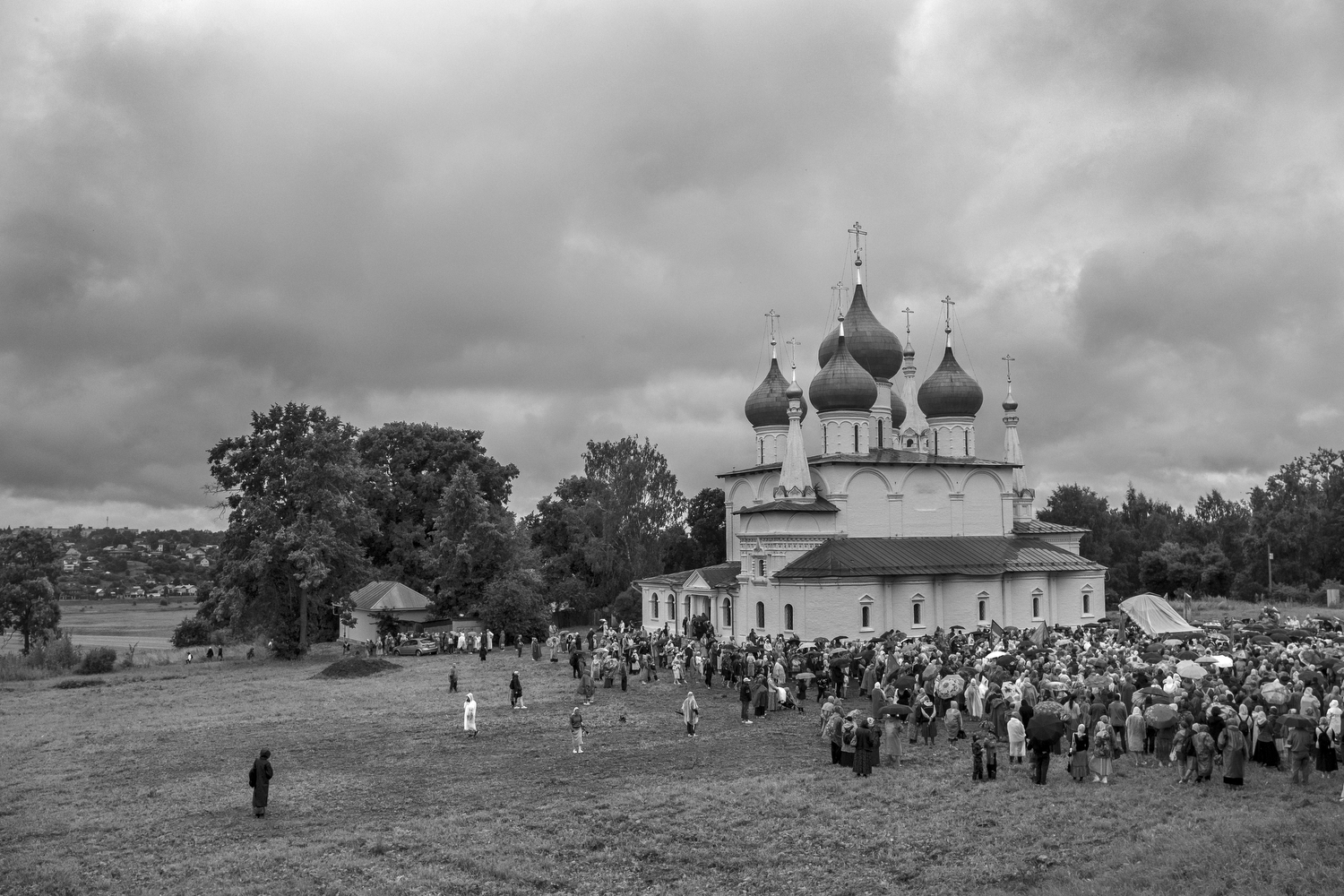
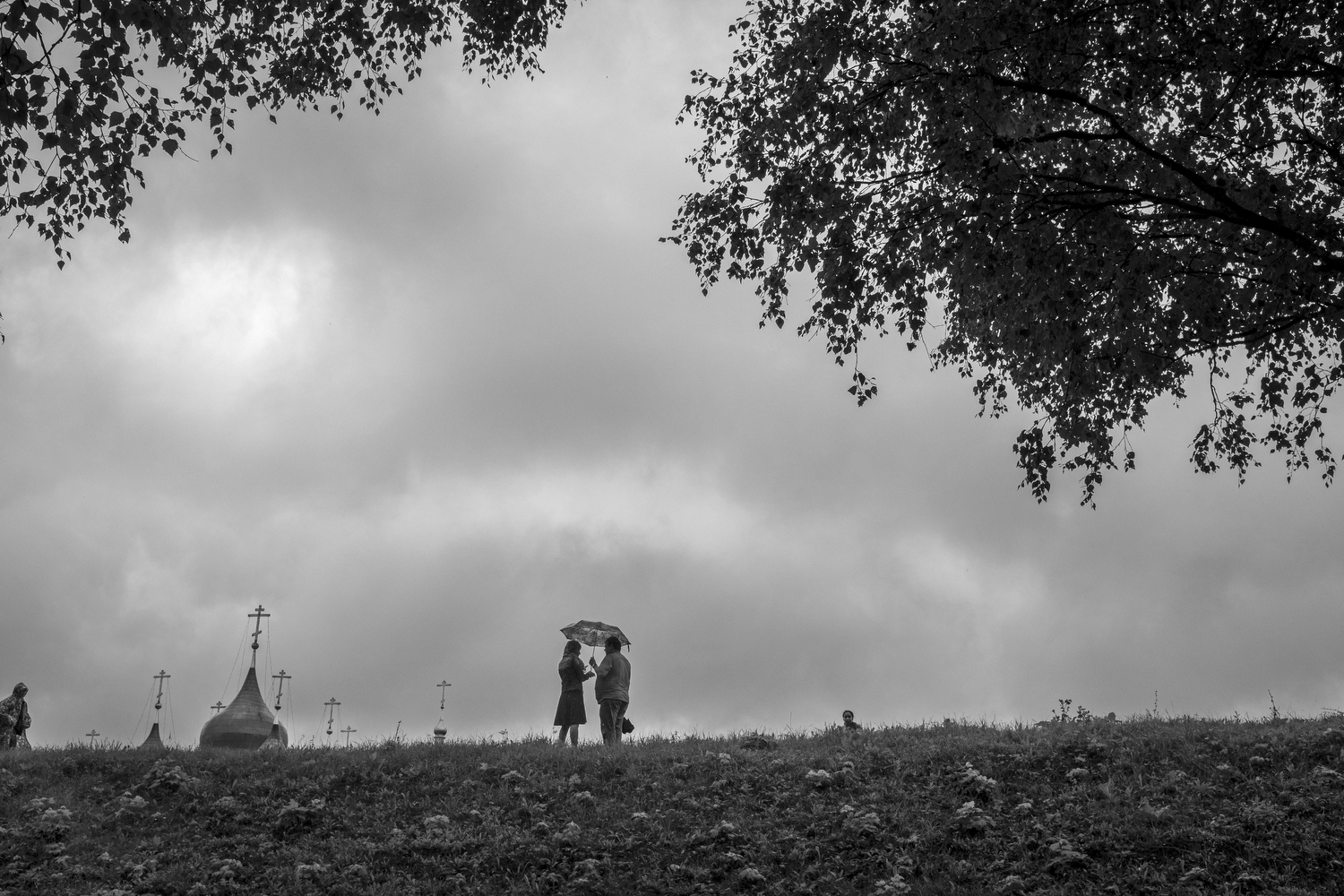
For a photographer, this is not simply a religious event. It is a rare moment when the town itself comes out into the street and becomes visible. Not a tourist postcard, not a façade for an administrative report, but a town as a sum of faces and of that strange Russian ability to keep walking even when it is not entirely clear where the road leads.
Perhaps this is the main meaning of the procession. Not that people necessarily arrive at a final answer. But that they walk together.
For Tutaev, a town without a bridge, that is already quite something.
Oleg Klimov, Photographer's Diary. July 26, 2026, Tutaev, Russia's Gold ring.
Available for Editorial Assignments
Photographer's Diary
Subscribe
Share the story — make the world freer: