
The Last August of the Soviet Union
Approximate reading time: 1–2 minutes. По-русски
On 19 August 2026, thirty-five years will have passed since the attempted coup in the Soviet Union. In the decades since, the USSR has disappeared, while Russia has lived through economic upheaval, the armed constitutional conflict of 1993, wars in Chechnya and Ukraine, and the steady concentration of political power. The democratic expectations associated with August 1991 have given way to an authoritarian system in which political opposition and independent media have largely been suppressed, blocked or forced into exile.
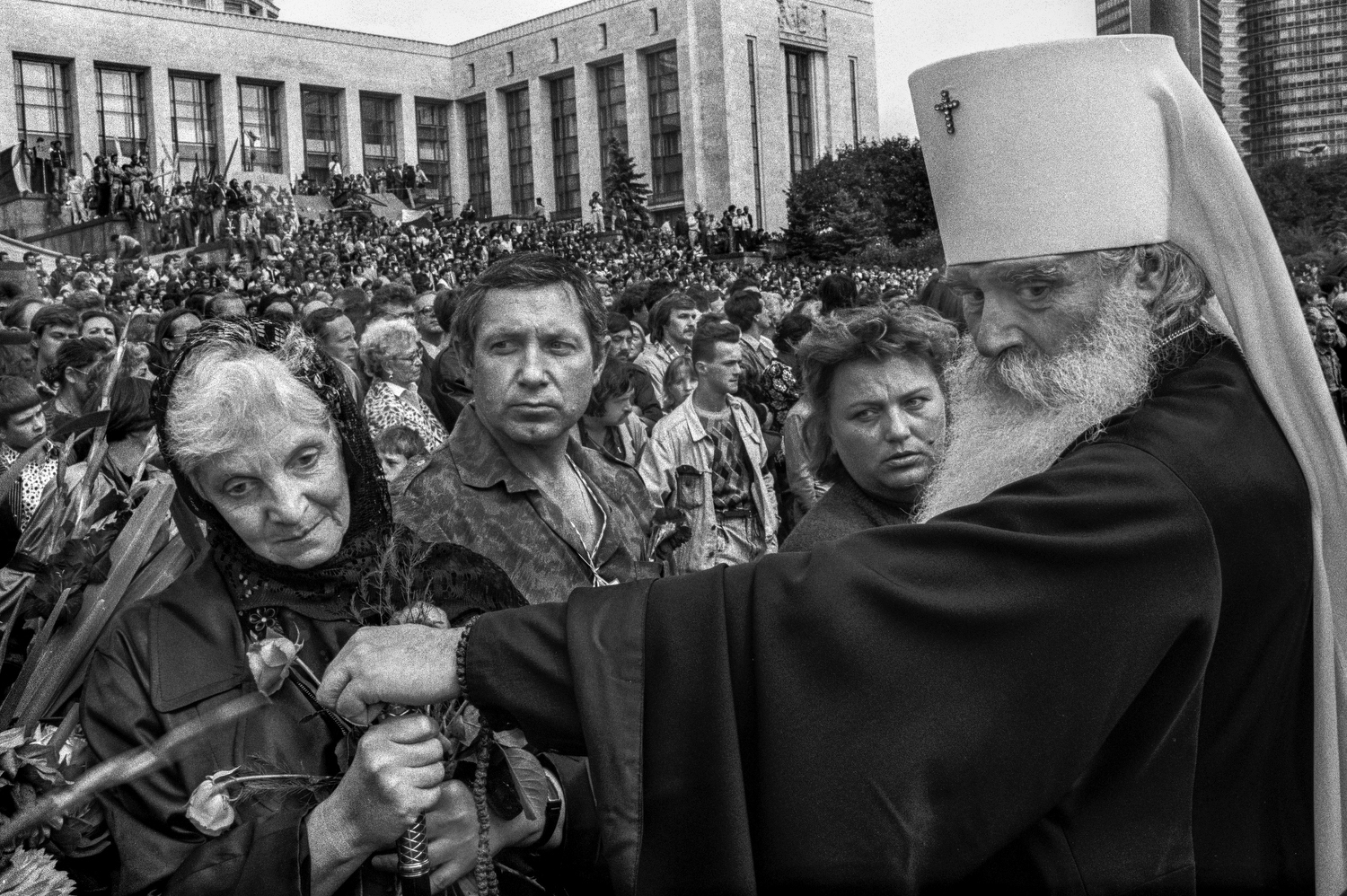
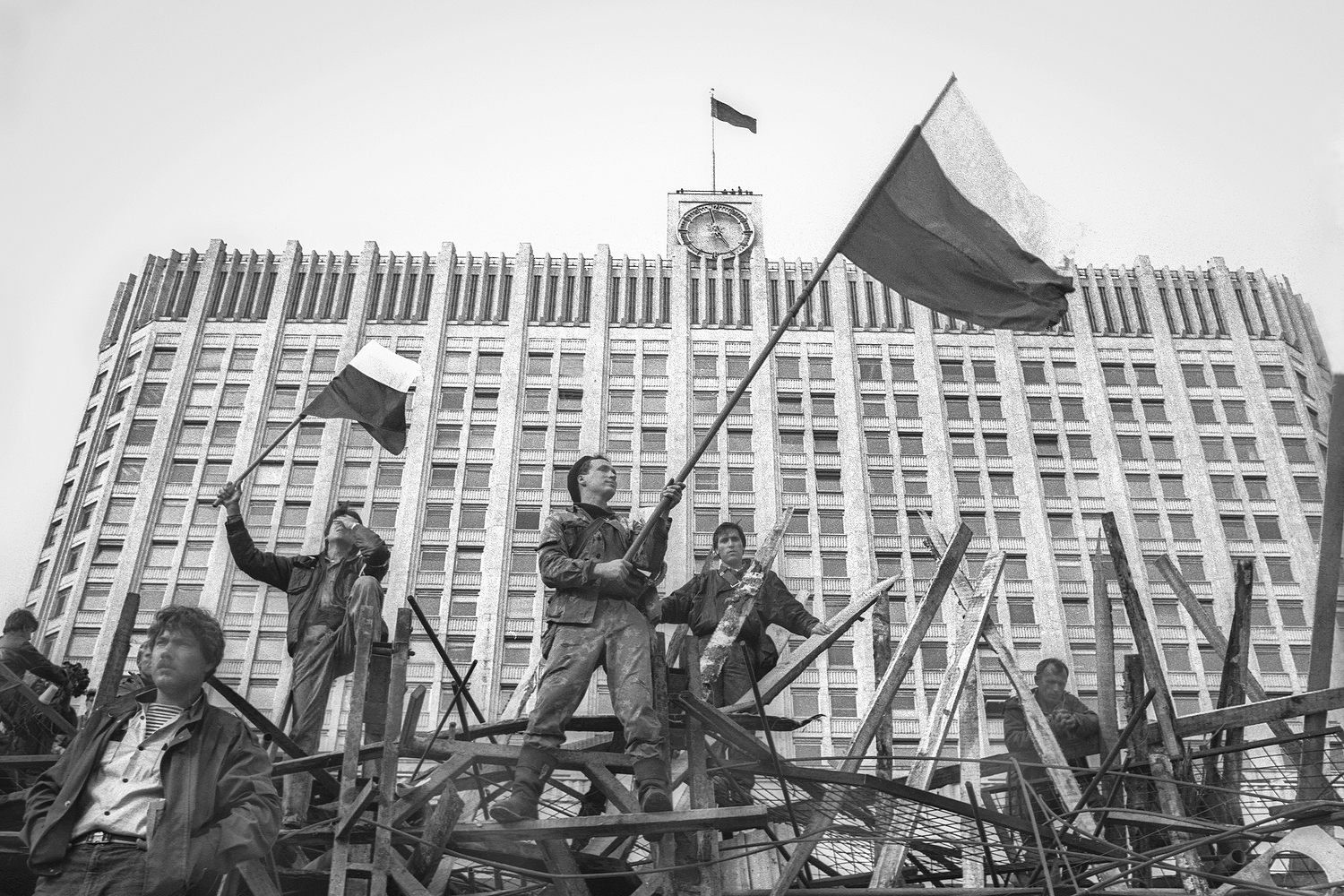
These photographs are available now for editorial licensing in connection with the anniversary, as well as for publications, exhibitions and historical research. Please register to request high-resolution files.
On 19 August 1991, a group of senior Soviet officials formed the State Committee on the State of Emergency (GKChP) and attempted to seize power while Mikhail Gorbachev, President of the Soviet Union, was isolated at his residence in Foros, Crimea. Tanks and armoured vehicles entered Moscow. Thousands of people gathered around the Russian White House, then the seat of the Russian government and parliament, built barricades and resisted the coup. Boris Yeltsin, President of the Russian republic, addressed the crowd from the top of a tank.
During the night of 20–21 August, Dmitry Komar, Ilya Krichevsky and Vladimir Usov were killed in a confrontation with an armoured column at a road tunnel on Moscow’s Garden Ring. By 21 August, the coup had collapsed and troops began to withdraw from the city.
The failed takeover decisively shifted political power away from Gorbachev and the Soviet institutions toward Yeltsin and the Russian leadership. It accelerated the disintegration of the Soviet Union, which ceased to exist by the end of December 1991.
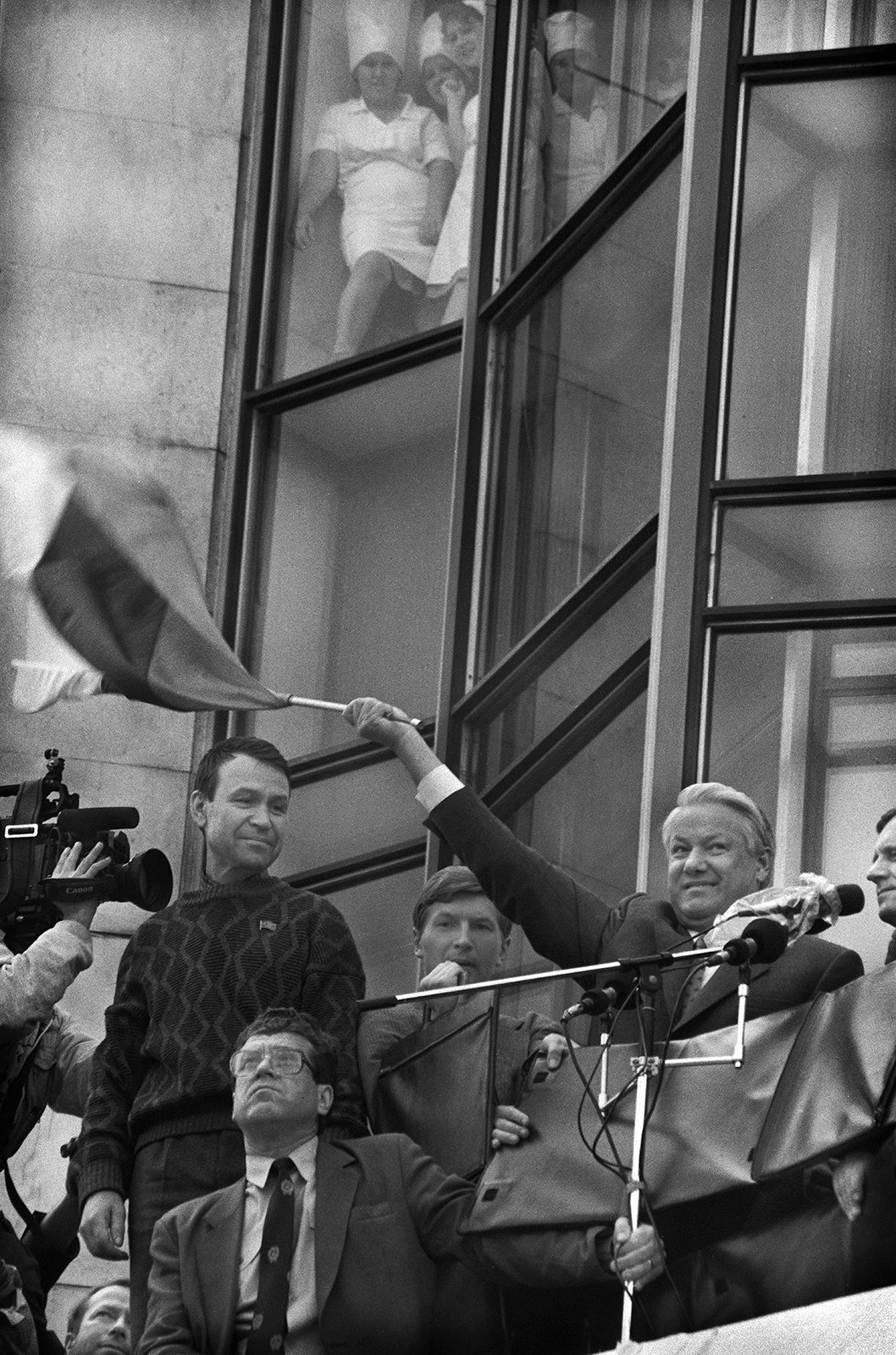
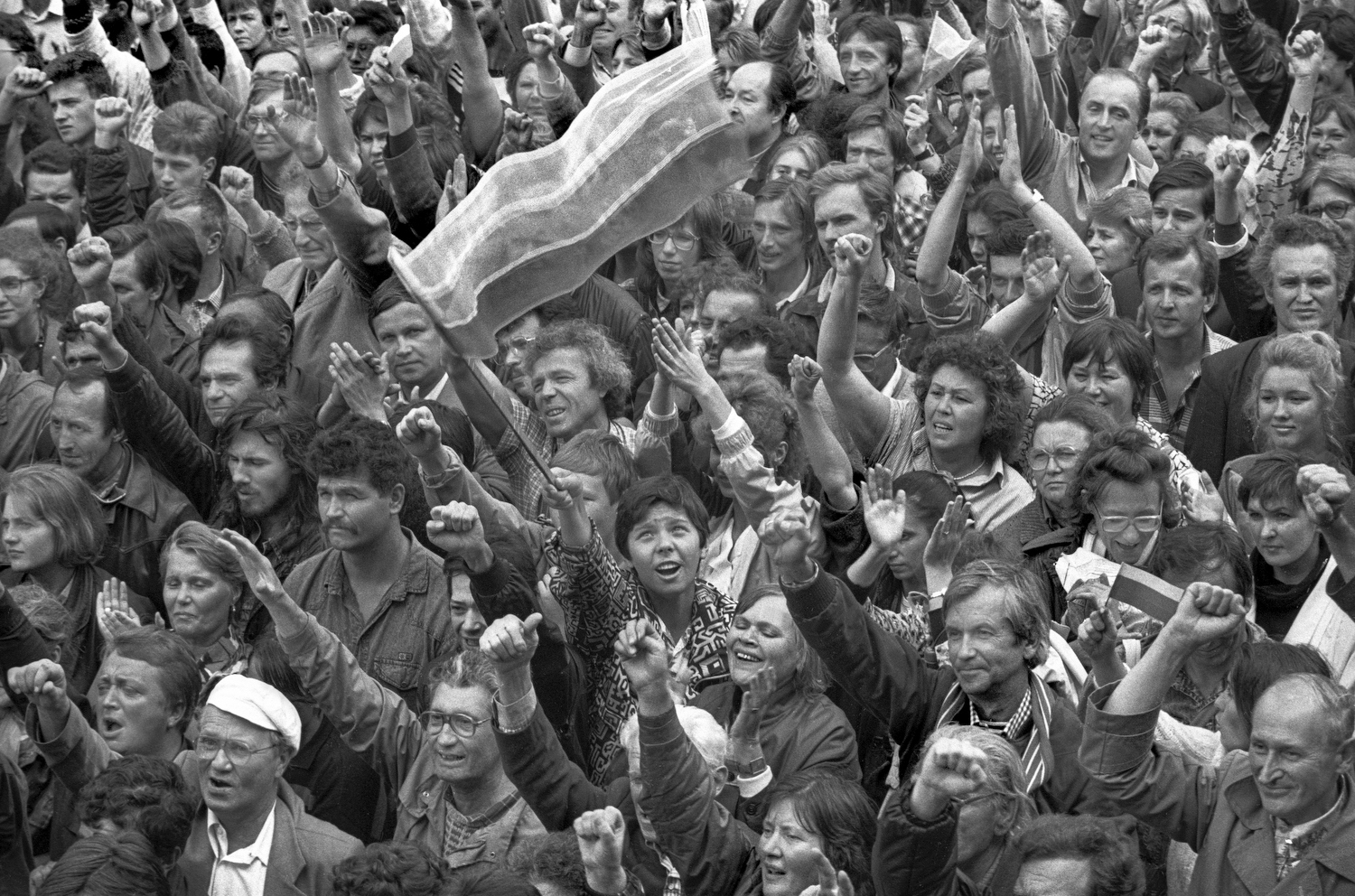
These photographs record not only a political confrontation, but Moscow suspended between two historical realities: soldiers waiting for orders, citizens building barricades, improvised flags, fear, rumours and an unexpected sense of public solidarity. At that moment, the outcome—and the future of the country—remained unknown.
Oleg Klimov's High-Res Archive by Freelancer/Liberty.SU
Available for Editorial Assignments
Photographer's Diary
Subscribe
Share the story — make the world freer: