
The Right to Look and the Right to Be Seen
Approximate reading time: 10–12 minutes. По-русски

Hello, photographers,
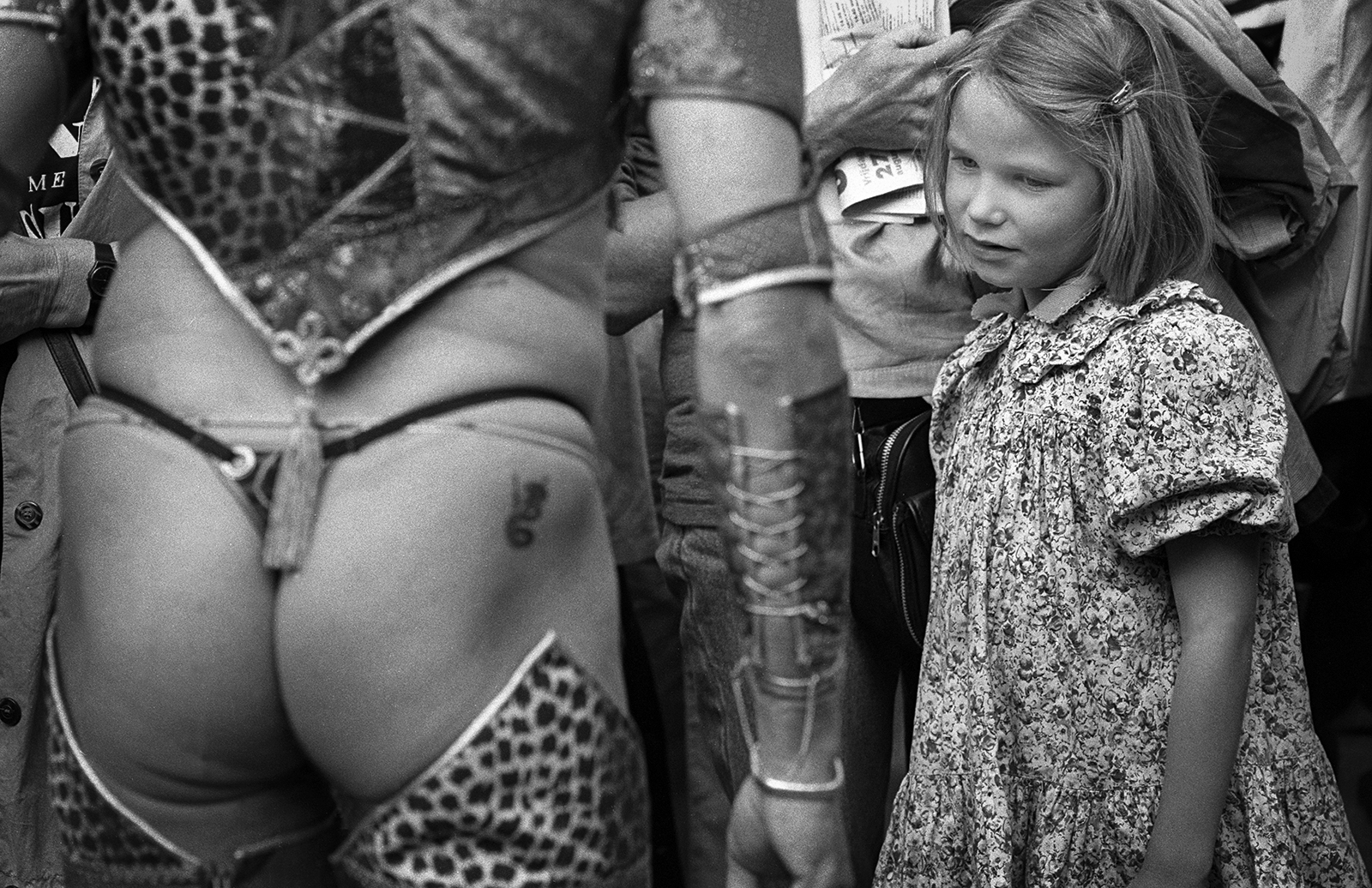
This week’s overview has turned out to be no shorter than the previous one. But if last time we spoke about Russia, today let us speak about women — women in photography in general, and in documentary photography in particular.
I should clarify from the beginning: this is not about slogans, nor about a seasonal fashion for the word “female.” What matters here are three different, though closely connected, questions.
The first is women photographers: who gets assignments, grants, festival invitations, museum exhibitions, book contracts, access to archives, editorial offices, and agencies.
The second is subjects associated with women’s experience: the body, violence, motherhood, illness, care, labor, migration, war, memory, domestic space, vulnerability, and resistance.
The third is the female or feminist gaze. And this is not a biological category, but a question of power: who looks, who has the right to tell, who becomes the object of an image, and who is allowed to become the author of their own visibility.
In other words: who gets the right to look — and who gets the right to be seen?
The current interest in women in photography is not simply a “theme of the season.” It is an attempt to correct an old institutional imbalance. In 2015, The State of News Photography, a study conducted by World Press Photo, the University of Stirling, and the Reuters Institute for the Study of Journalism, showed that men made up about 85 percent of the surveyed photojournalists. Women were less represented in major media, received fewer assignments, and were more often found in lower income groups.
At the same time, the profession of “photographer” as a whole looks different. According to the U.S. Bureau of Labor Statistics, in the category Photographers, women made up 49.9 percent in 2015 and 50.7 percent in the 2025 table. In other words, in the broader profession — commercial, wedding, studio, product, media, and other forms of photography — parity is almost possible. But photojournalism and documentary photography are structured differently. There, it is not enough to have a camera. What matters is access: to an editor, an assignment, a war, a dangerous subject, a long-term project, a budget, insurance, publication, and archive.
This year, PHotoESPAÑA 2026 made this shift especially visible. One of Europe’s largest and most prestigious photography festivals is taking place in Spain, with the Netherlands as this year’s guest country. The program includes more than 300 visual artists, and around 65 percent of them are women. This is no longer just a symbolic gesture. It is a change in festival policy.
This year, PHotoESPAÑA 2026 made this shift especially visible. One of Europe’s largest and most prestigious photography festivals is taking place in Spain, with the Netherlands as this year’s guest country. The program includes more than 300 visual artists, and around 65 percent of them are women. This is no longer just a symbolic gesture. It is a change in festival policy.
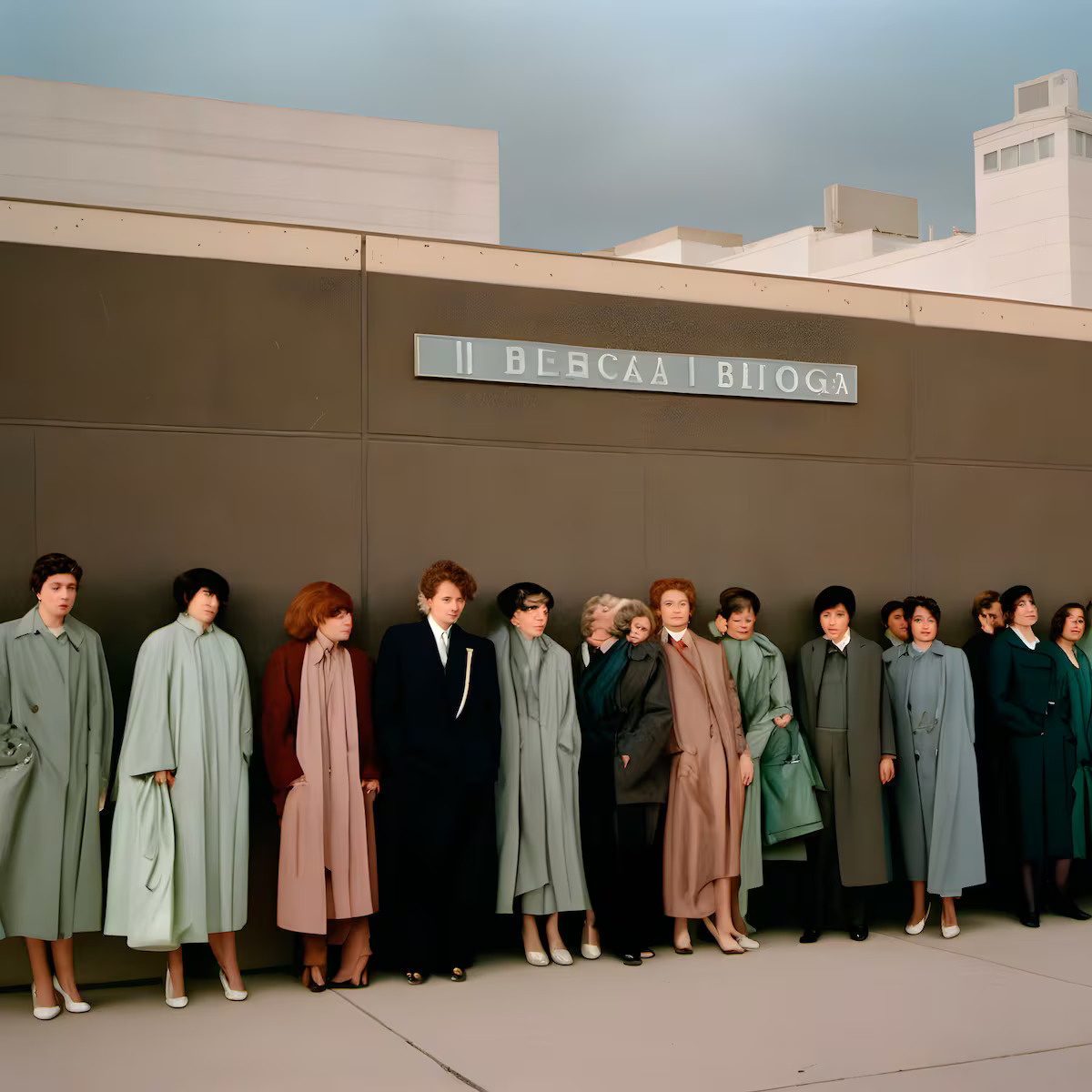
For me, the Netherlands in this context is not accidental. In the early 1990s, when I was often in Amsterdam and still very much shaped by the manners of a Soviet intelligentsia family, I once offered my hand to a Dutch woman I knew as she was getting off a tram. She looked at me with surprise and asked rather sharply: “Are you proposing marriage to me?” I was embarrassed and replied: “No, I just wanted to help you get off the tram.” She immediately answered: “I can manage that myself, and no worse than you.”
Since then, I have been more careful with cultural codes. What is considered politeness in one culture may look like paternalism in another. Photography works in a similar way. The same gesture of looking can be care, power, curiosity, intrusion, or solidarity — depending on who is looking, at whom, and within what system that gaze exists.
The focus of PHotoESPAÑA 2026 on women is important not in itself, but through the subjects it brings forward. The program includes works about the female body, illness, domestic violence, and experiences that for a long time remained invisible or were considered “too private” for public discussion. For example, Laia Abril’s project on endometriosis turns medically and socially silenced pain into a visual investigation. This is precisely the case when photography does not simply show something, but restores a public status to a subject.
Why has the “women’s theme” become so visible now?
First, an infrastructure of support for women photographers has appeared. Women Photograph, for example, is an international platform created to support women and nonbinary visual journalists. It is not only a database, but also grants, mentorship, workshops, and professional networks. In other words, this is not about compliments. It is about access to work.
Second, museums and festivals have begun to revise their own histories. The exhibition The New Woman Behind the Camera, shown at the Metropolitan Museum of Art in 2021, presented 185 works by 120 women photographers from more than 20 countries, made between the 1920s and the 1950s. Importantly, this was not an exhibition “about femininity.” It was an attempt to show women as full professionals in reportage, ethnography, fashion, advertising, the avant-garde, and documentary photography.
Third, support is becoming financial, not only symbolic. PhotoVogue Festival 2026 was dedicated to the theme Women by Women. Its open call received almost 100,000 submissions from more than 9,500 artists from 149 countries and territories. The exhibition presented 45 main artists and 150 shortlisted participants. As part of the PhotoVogue/Pandora Grant, photographer Delali Ayivi received a €20,000 grant. Leica also launched the LOBA Women Grant in 2026 for women photographers: €10,000, a Leica Q camera, and professional support for the project.
This is an important shift. Visibility without money often remains a beautiful gesture. A grant, an assignment, a publication, a book, an exhibition, a museum acquisition — these are the real mechanisms through which photography becomes a profession, not merely a presence in an Instagram feed.
It is often said that digital photography made it much easier for women to enter the profession. There is some truth in this. Digital technology lowered several barriers: the cost of each frame, dependence on photo labs, the weight of equipment, the speed of sending images to editors, and the possibility of independent publication through a website, blog, social media, Substack, or Instagram.
But that is only part of the story.
The digital revolution opened doors, but at the same time it destroyed much of the old economy of the profession. Staff positions disappeared, fees declined, and freelance work became increasingly precarious — unstable, poorly paid, and often without guarantees. So yes, the digital camera allowed more people to photograph and publish. But behind the open door there was often no longer a proper salary, editorial support, or the old professional structure.
And, of course, women were strong in photography long before the digital era. It is enough to remember Dorothea Lange, Margaret Bourke-White, Lee Miller, Gerda Taro, Inge Morath, Mary Ellen Mark, Susan Meiselas, and Diane Arbus. Personally, I was fortunate to work with, or cross paths with, photographers such as Lyalya Kuznetsova, Bertien van Manen, Donna Ferrato, and Lise Sarfati. They truly influenced my understanding of the profession and of photography itself.
This means that the barrier was not only technological. It was institutional.
Who gets the assignment? Who goes to war? Who is trusted with a “dangerous” subject? Who is represented by an agency or media outlet? Who gets published? Who is included in history? Whose archive is preserved by a museum — and whose archive is thrown away by relatives after the photographer’s death? I know examples of that too.
Diane Arbus was not a “women’s photographer” in today’s industry sense. Her participation in the 1967 MoMA exhibition New Documents, alongside Lee Friedlander and Garry Winogrand, became one of the key moments in the redefinition of documentary photography: from social reportage aimed at reforming society toward a more personal, unsettling, existential view of reality.
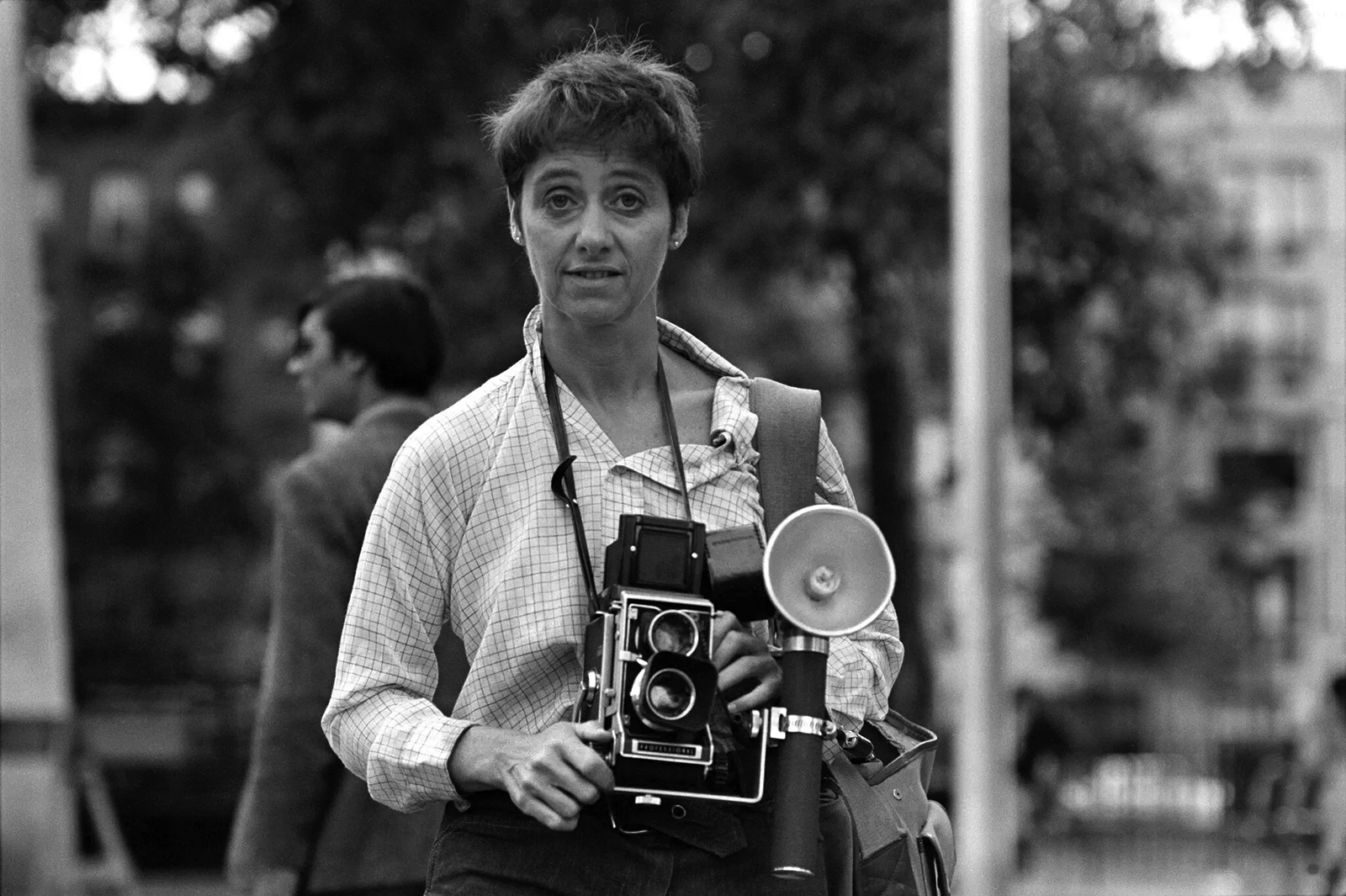
Arbus photographed otherness, vulnerability, normality as a mask, and people on the edge of social visibility. In this sense, she is important not because she was a woman, but because she radically changed the very possibility of the documentary gaze. She always positioned herself as a documentary photographer, although today she is often called an artist. That, too, is a symptom: when documentary photography enters the museum, it often changes its name.
Donna Ferrato is another example. Her book Living with the Enemy, published by Aperture in 1991, became one of the first major documentary projects about domestic violence as a hidden social catastrophe. The work grew out of an act of violence Ferrato witnessed and photographed in 1982, and then became a long-term project about what happens behind closed doors.
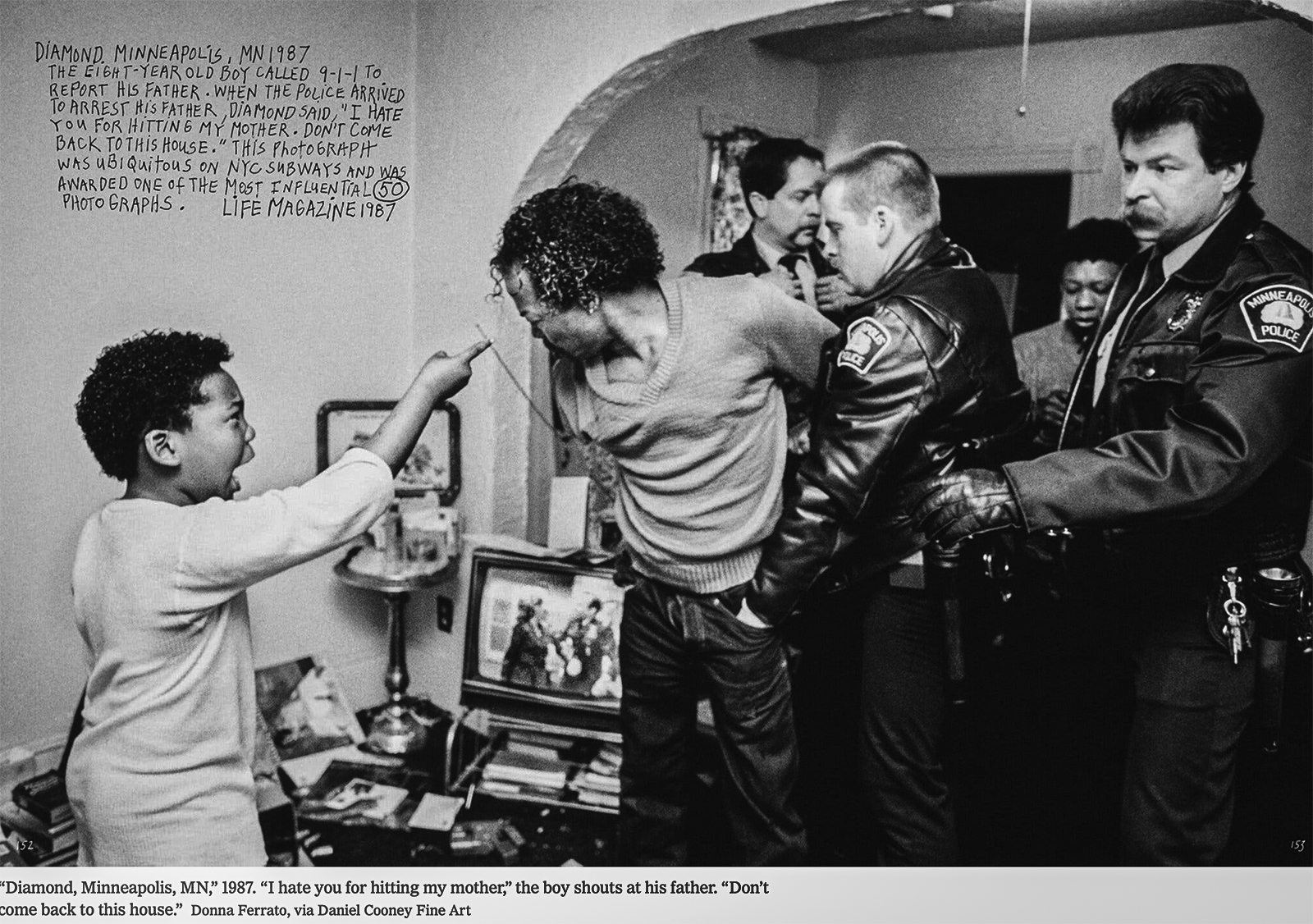
This is a case where a “women’s subject” does not mean a private identity. Domestic violence is a social, legal, political, and visual subject. But it was a woman photographer who gained access, sustained the distance, and transformed private violence “behind closed doors” into public testimony.
That is why I think it is dangerous to speak about women in photography only in the language of celebration, quotas, or fashionable festival themes. The more important question is: who controls the visual story of the world?
Photography has always been connected to power. A camera is not only a tool of observation, but also a tool of selection. We choose whom to look at, whom to bring closer, whom to leave outside the frame, whom to call a hero, a victim, a witness, a criminal, a mother, a body, a face, or a statistic.
When women receive more opportunities to work in documentary photography, it is not only the list of authors that changes. The map of the visible changes. Subjects enter it that were once considered secondary, too private, too bodily, too domestic, or “small” compared with war, politics, and catastrophe.
But it is often in these “small” subjects that the real politics of life is found: who cares, who suffers, who remains silent, who is forced to endure, who disappears from the archive, who has no right to their own image.
In this sense, women’s photography is not a separate shelf in the history of photography. It is a way of testing the entire history of photography again: whom we called authors, whose subjects we considered important, whom we trusted with the right to bear witness, and whom we left in the role of an object.
The conclusion is simple, but not very comfortable.
It is not enough to say: “Let us show more women photographers.” We must ask: who distributes assignments, money, attention, museum walls, bookshelves, archives, and historical memory?
And even more importantly: who gets the right to look — and who gets the right to be seen? This is where the new visual politics of documentary photography begins.
Oleg Klimov, Weekly Review, May 25–31, 2026, Photographer’s Diary
Available for Editorial Assignments
Photographer's Diary
Subscribe
Share the story — make the world freer: